
























Colin Allred Enters Head-to-Head Texas House Primary After Redrawn District Forces Two Democrats

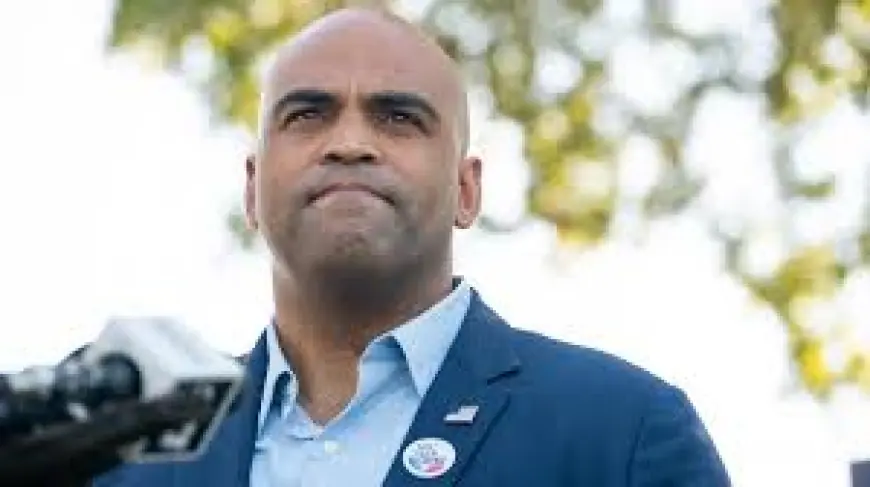
Colin Allred has launched a campaign to contest a Texas House primary against Johnson, a race reshaped when a redrawn congressional district put two Democrats in direct competition. The matchup matters now because the new lines have concentrated Democratic contenders into a single contest, elevating consequences that extend beyond state politics.
Colin Allred Challenges Johnson in Texas House Primary
The decision by Colin Allred to challenge Johnson marks a clear escalation in a primary that was altered by recent redistricting. The action — a primary campaign aimed at unseating a named rival — follows the adjustment of district boundaries that set the immediate conditions for this head-to-head contest. What makes this notable is that the candidate dynamics were not the only thing affected: the redrawing has converted what might have been two separate paths to office into a single, winner-take-all confrontation.
Campaign activity is centered on the Texas House primary itself, where voters now face a choice between two Democratic contenders rather than a broader field. The concentrated matchup turns ordinary primary mechanics into a decisive test of political alignment within a compact electorate. Allred’s entry focuses attention on how those voters respond when presented with two Democrats vying for the same seat.
Redrawn congressional district Forces Two Democrats into One Race
The catalyst for the current contest is a redrawn congressional district that forced two Democrats into the same primary, a structural change with clear cause-and-effect implications. Because the district lines were adjusted, candidates who might otherwise have competed in separate districts are now competing against each other. The direct effect is a primary that has become more competitive and concentrated.
This consolidation has measurable impact: two Democrats are now in contention for a single nomination, altering campaign strategy, resource allocation and voter outreach. Parties, campaign teams and voters are all responding to the logistical reality that only one of those candidates can prevail in the primary, heightening the intensity of canvassing, messaging and fundraising efforts within the affected geography.
The stakes are framed as extending beyond Texas, signaling that the outcome may carry implications for broader political calculations. Observers attentive to the national map will be watching how the compacted contest influences party cohesion and electoral strategy elsewhere, given that similar redistricting moves can change partisan dynamics in other states as well.
Implications for Primary Dynamics and Broader Stakes
The immediate effect of the contest is to transform a routine primary into a bellwether of intra-party alignment. With two Democrats in a single primary, voters will determine whether one candidate’s appeal—to particular constituencies, policy priorities or campaign styles—can outmatch the other’s within the same district. The race therefore becomes a concentrated test of message discipline and grassroots strength.
Officials and campaign operatives are adjusting to the new landscape: the redistricting produced a structural change that directly prompted Allred’s challenge, and that challenge, in turn, has intensified scrutiny of how Democratic primary voters in the district will decide. The broader implication is that redistricting can quickly reshape political contests and elevate local primaries into contests with national resonance.
As this primary unfolds, the two named actors—Colin Allred and Johnson—will remain the focal points of voter choice in a single, consequential nomination fight created by the redrawn district. The outcome will determine which of the two Democrats advances and how the political calculations prompted by the redistricting will play out in future races.