

























Cristiano Ronaldo sidelined by hamstring injury, Al-Nassr confirm

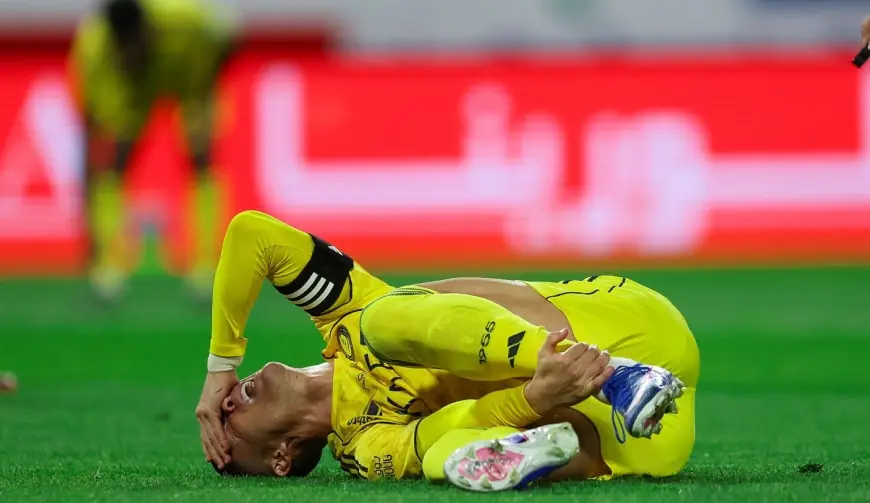
cristiano ronaldo has been diagnosed with a hamstring injury by Al-Nassr after picking up the problem in the closing stages of their 3-1 victory over Al-Fayha. The club says he has started a rehabilitation programme and will be assessed day by day, a development that immediately clouds his availability for March league fixtures and forthcoming international friendlies.
Cristiano Ronaldo: injury details and treatment
Al-Nassr confirmed the diagnosis and disclosed that Ronaldo sustained the issue during the closing stages of the match on February 28, when he had earlier missed a penalty in the 12th minute and was substituted in the 81st minute after signalling to the bench. The club has not specified whether the problem is a strain or a tear; coach Jorge Jesus had described the issue as "muscle fatigue" after the game. The player, who is 41 years old and has scored 21 goals this season, was photographed training with weights in the team gym while the club notes he has started a rehabilitation programme and will be under evaluation day by day.
The immediate effect is clear: medical management and monitored recovery now take precedence over match participation. That process — daily evaluation combined with on-site rehabilitation — means selection for short-term fixtures is uncertain and will depend on measurable progress in strength and pain-free movement rather than a fixed calendar return.
What makes this notable is the convergence of physical and scheduling pressures; the player’s current training activity indicates medical care is underway, but the absence of a definitive timeline leaves team staff and national team selectors without firm assurances.
Al-Nassr: squad impact, fixtures and AFC postponements
Ronaldo’s withdrawal from immediate match action creates a tactical and competitive problem for Al-Nassr as they seek to protect a slim lead at the top of the Saudi Pro League. The club are due to face Neom SC and Al-Khaleej in March, fixtures for which the forward’s participation is now in doubt. His role as the division’s leading scorer — 21 goals this term — means his absence would have a measurable impact on the team’s goal output and match-day planning.
External developments have also reshaped the calendar. The Asian Football Confederation has announced the rescheduling of several high-profile matches, including the AFC Champions League Elite 2025/26 Round of 16 first-leg ties that were originally slated for March 2-3, 2026. The governing body said it is closely monitoring the evolving situation in the region and has moved those fixtures, a decision that unintentionally gives Al-Nassr additional time to manage rehabilitation without immediately encountering knockout-stage matches.
Sensational travel claims have complicated the picture off the pitch: flight tracking data showed that a private jet linked to the player departed Saudi Arabia for Madrid in the middle of the night after a separate security incident — a drone attack on the U. S. embassy in Riyadh — prompted heightened concern. That movement prompted questions about whether he left the country, while other information points to him receiving treatment at the Al-Nassr training ground. The contrasting accounts leave supporters and officials balancing security worries with the club’s stated medical plan.
The timing matters because team and national commitments fall in quick succession: league matches in March and international friendlies for Portugal against Mexico and the United States are imminent, and any prolonged absence at this stage of the season could affect both Al-Nassr’s title push and preparatory plans ahead of major international tournaments. For now, the clear causes — an in-game hamstring problem, substitution in the 81st minute and subsequent medical assessment — lead directly to the effects being played out: a rehabilitation programme, daily evaluation and uncertainty over match availability.
Club medical staff and coaching personnel will continue to issue updates as the day-by-day assessments progress, with concrete selection decisions to follow only when measurable recovery milestones are reached.