























Robert Thomas Draws Multiple Inquiries as Trade Deadline Nears

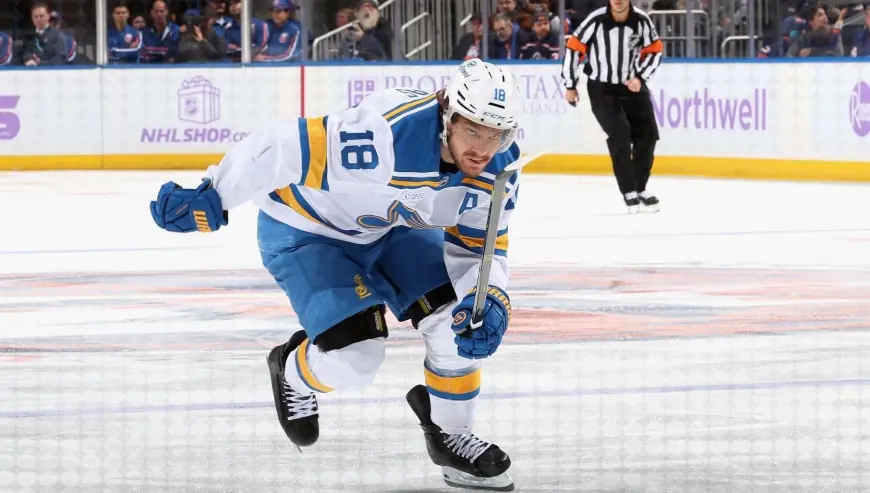
St. Louis forward robert thomas has become a focal point of trade discussions as the NHL deadline approaches, drawing interest from teams across the league. His recent return to the Blues’ lineup and his contractual protections have sharpened the stakes for any potential deal.
Robert Thomas' return and demonstrable on-ice value
Thomas rejoined the Blues for a 3-1 victory over the Minnesota Wild, his first game since Jan. 10, and produced a primary assist on the opening goal before sealing the result with an empty-netter that helped end a 10-game road losing streak. He had missed the prior 13 games, a span that included a 4-8-1 stretch for the club, and re-entered without much practice after stepping away for personal reasons earlier in the week. Coach Jim Montgomery called his handling of the puck "really good, " noting that Thomas made high-quality plays through the neutral and offensive zones despite the limited preparation.
Measured performance data underline why teams are circling: Thomas has 97 goals and 344 points in 340 games since the start of the 2021-22 season, an average of roughly 1. 01 points per game. This season he has played 43 games with 12 goals and 35 points, and he averages 18: 55 of ice time, the highest among St. Louis forwards. Those figures help explain why multiple clubs view him as a potential top-line or high-end second-line center.
Montreal Canadiens interest and the Blues' asking price
The Montreal Canadiens are among the clubs monitoring Thomas but are weighing the cost carefully. General Manager Kent Hughes has emphasized restraint in roster moves, and Montreal has been resistant to trading prized prospects and young players unless the return matches the player’s value. St. Louis has communicated that it is seeking a transformative package for Thomas—assets the team believes will fuel a retool rather than a short-term patch.
That asking price has included interest in specific Montreal assets: the Blues have shown a marked appetite for Michael Hage and Kaiden Guhle in prior discussions. Montreal has hesitated because parting with either player would represent a steep price; executives have circled back to St. Louis but remain reluctant to surrender those pieces unless the Blues lower their demands. Blues management, including Vice President of Hockey Operations Peter Chiarelli and General Manager Doug Armstrong, has been active in scouting and in talks about what would constitute adequate value.
Maple Leafs outreach, Utah connection and the contractual hurdle
Toronto also reached out. Maple Leafs General Manager Brad Treliving checked in with the Blues last week, making it clear that teams with immediate championship hopes are exploring what it would take to add Thomas. Executives have flagged the price as steep—players such as Easton Cowan and Matthew Knies were named among the kinds of assets a deal would likely require—and the inquiry has cooled amid questions about whether trading those pieces would serve Toronto’s long-term plan.
The Utah Mammoth have emerged as another suitor, a move strengthened by the fact that Mammoth General Manager Bill Armstrong formerly directed amateur scouting in St. Louis and was involved in scouting and drafting Thomas. That organizational link could make Utah a natural destination, but any trade faces a central contractual obstacle: Thomas holds a full no-trade clause and can veto deals he does not approve.
What makes this notable is the interplay of immediate performance, long-term contract control and the Blues’ stated retooling needs. Because St. Louis lacks a clear internal replacement and is intent on adding high-value, NHL-ready assets, the team has leverage to demand a substantial package—while Thomas’s ability to block moves limits where that package can realistically land him. The timing matters because the March 6 trade deadline compresses decision windows for contenders and bidders, forcing clubs to balance urgency against the cost of surrendering core prospects and roster pieces.
As the deadline approaches, the Blues have signaled they will only trade their No. 1 center if the return clearly accelerates their rebuild; teams that want Thomas must be prepared to offer premium pieces and to secure his consent. That confluence of on-ice productivity, contractual protections, and high trade valuation has kept Robert Thomas at the center of one of the market’s most consequential storylines.