






















Su24: Qatar Intercepts Third Wave Over Doha as Claims Swirl Around Khamenei and Regional Strikes

Qatar said its air defences intercepted a third wave of Iranian missiles over Doha and warned it reserves the right to respond, as the exchanges of strikes and counterstrikes across the Middle East prompted questions about the status of Iran’s supreme leader and the fate of senior commanders. su24 The sequence of strikes has already touched markets, national security postures and public messaging from leaders in the region.
Qatar: air defences, interceptions and reserve right to respond
Qatar strongly condemned what it called Iranian missile attacks on its territory as a blatant violation of sovereignty after authorities said air defences intercepted multiple waves over Doha. Officials urged calm while emphasising that the state reserves the right to respond. The interceptions were described as a third wave over the Qatari capital, and authorities have been monitoring the situation as events continued to unfold.
Damage in Tehran and claims about Ayatollah Ali Khamenei
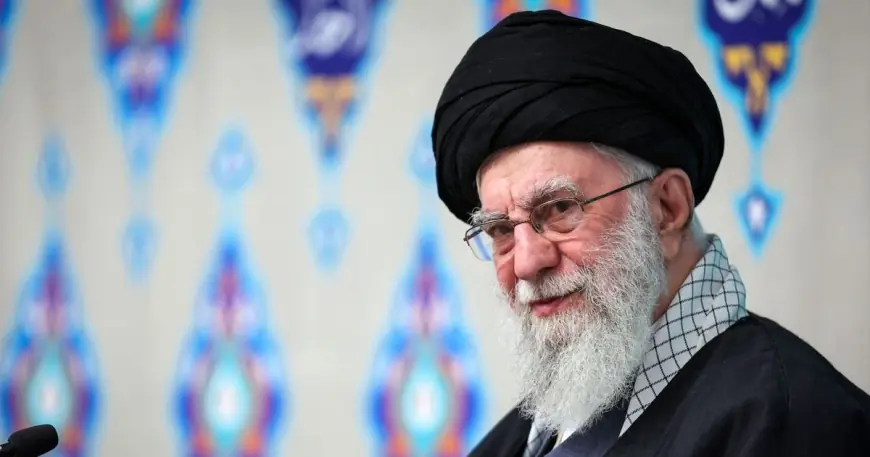
Explosions were heard in Tehran and other Iranian cities in an operation the US government has named Epic Fury. Satellite images showed damage to the compound of Iran’s supreme leader, Ayatollah Ali Khamenei, with at least four buildings struck in central Tehran, though it appears the supreme leader was moved before the morning attack. Israel’s leader, Benjamin Netanyahu, declared that Khamenei "no longer exists" and said "all indications show this tyrant is no longer with us, " while Iran’s Foreign Minister Abbas Araghchi said the supreme leader was "alive" as far as he was aware. Khamenei had been due to give a speech on Saturday evening but had not been publicly heard from by nightfall.
Claims of killed commanders and official denials
Reports across the region claimed two top Iranian leaders were killed in a series of attacks launched by the US and Israel. Names circulated that included the Revolutionary Guard’s commander Mohammed Pakpour and Iran’s Defence Minister Amir Nasirzadeh; the defence minister was quoted saying Iran "may have lost one or two commanders" while denying that the supreme leader had been killed. A foreign ministry spokesperson insisted key officials were "safe and sound, " acknowledging that some commanders had been martyred but stressing that the Iranian nation and its armed forces were taking necessary measures to defend the country "in the most strongest way possible. " It remains unclear which officials have been killed or injured and whether the operation has concluded.
Su24 and the wider military escalation
Iran launched retaliation strikes on Israel and on several countries across the Middle East, including states that host US military bases; Qatar and the United Arab Emirates were named among those struck. The exchanges between the US, Israel and Iran have prompted an intensification of active defences and public statements from leaders on both sides. The military actions have produced an environment of hurried claims and denials, with substantial uncertainty over verified casualties and the full scope of targeted sites.
Market reaction, investor focus and broader economic signals
Investors have turned attention to the impact on oil prices and the knock-on effect on inflation, a concern for markets already uneasy about the backdrop for stocks. Technology sector events intersected with the geopolitical shock: Apple opened several days of announcements with a new iPhone and a refreshed iPad Air, the latter described as featuring a new chip but little else. Nvidia’s fourth-quarter results were due after the closing bell on Wednesday, as artificial intelligence concerns continued to grip markets. Separately, a proposed merger between Paramount Skydance and Warner Bros. Discovery was noted for its potential to create a single behemoth streaming platform; and consumer device makers such as Xiaomi continue to emphasize powerful camera sensors, large batteries and selective global availability in their flagship designs.
Sport scheduling, political rhetoric and public appeals
Amid the upheaval, Iran’s national football team stood listed in Group G and was scheduled to play New Zealand, Belgium and Egypt from June 15–26, with its three group games slated for Los Angeles and Seattle. Political rhetoric escalated: Netanyahu urged the Iranian public to capitalise on what he called a "once in a generation chance" to overthrow the regime and encouraged mass street action. Meanwhile, promotional copy in one of the publications covering the events included a prompt inviting readers to make that outlet a preferred search source for future headlines.
What makes this notable is the convergence of immediate military action, high-stakes political messaging and real-time market sensitivity—all unfolding with unresolved verification of top-level casualties and damage. The timing matters because leaders, markets and audiences are responding to both physical strikes and competing narratives that are shaping rapid strategic and economic decisions.