























West Indies Vs India: Samson’s unbeaten 97 hands India control of semi-final destiny and shifts pressure onto England

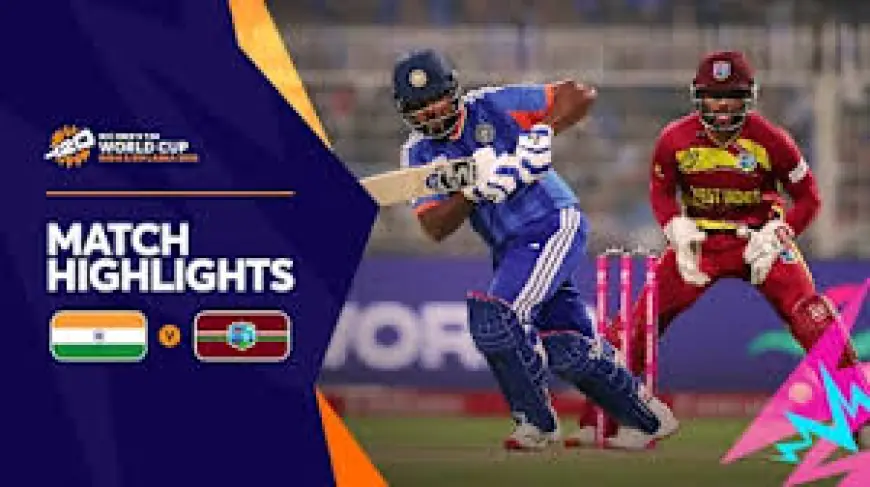
Here’s the part that matters: the result of west indies vs india changes who carries the momentum into the T20 World Cup last four. Sanju Samson’s unbeaten 97 not only completed a tense chase at Eden Gardens but also secured India a runners-up finish in Super 8s Group 1, setting up a semi-final with England at the Wankhede Stadium in Mumbai on Thursday (13: 30 GMT). England now inherit the immediate pressure of facing tournament co-hosts in form.
West Indies Vs India shifts semi-final balance onto England
Samson’s return to the XI and his match-defining knock recalibrates semi-final matchups: India, sealed as Group 1 runners-up behind South Africa, will meet England in Mumbai on Thursday at 13: 30 GMT. For England and India this is a familiar path—this will be the third time in three T20 World Cups that the two sides meet in a semi-final. The recent pattern in prior tournaments is notable: the team that prevailed in those England–India semi encounters in the last two editions went on to win the title, with England winning in Adelaide in 2022 and losing in Guyana two years ago.
Match snapshot and Samson’s innings
- Venue and stage: Men’s T20 World Cup, Super 8s Group 1 at Eden Gardens, Kolkata.
- West Indies 195-4 (20 overs); top score Roston Chase 40. Jasprit Bumrah 2-36.
- India 199-5 (19. 2 overs); Sanju Samson 97* (50 balls) with 12 fours and four sixes. Tilak Varma 27. Romario Shepherd conceded the last two scoring shots (a six and a four) that finished the chase.
- Samson faced 50 deliveries and finished the chase with four balls to spare; the winning sequence was a six followed by a four off Romario Shepherd.
- India’s batting line showed Samson’s dominance: his 97* drove the successful chase of 196.
How West Indies put 195 on the board
Roston Chase was handed an opening slot for the first time in Twenty20 internationals and top-scored with 40 off 25, powering early partnerships of 68 off 53 with Shai Hope and 34 off 16 with Shimron Hetmyer. The second partnership ended when Jasprit Bumrah dismissed both batsmen in a single over, and Bumrah finished with figures of 2-36. Rovman Powell and Jason Holder then revived the innings, adding 76 off the last 35 balls to reach 195-4; the pair finished unbeaten with knocks of 34 and 37. Shai Hope’s innings was a subdued 32 off 33, and the innings was aided by three dropped catches in the field.
Fielding lapses, bowling and turning points for India
India chose to insert West Indies but were sloppy in the field, dropping three catches and missing a run-out chance; Abhishek Sharma was singled out for a particularly poor fumble. Those lapses helped produce a competitive total. On the flip side, Jasprit Bumrah’s slower ball outfoxed Roston Chase and then drew the thin edge from Shimron Hetmyer, shifting momentum mid-innings. In India’s chase, Tilak Varma’s quick 27 off 15 provided a supporting burst, but Samson’s composed, chanceless knock was decisive. Jason Holder returned bowling figures of 2-38 while batting contributions from Powell and Holder fell short once Samson settled in.
Tournament context, schedule consequences and adjacent results
India’s win ensured they finished as Group 1 runners-up behind South Africa, and they will now meet Group 2 winners England at the Wankhede Stadium in Mumbai on Thursday (13: 30 GMT). The other semi-final is scheduled for Wednesday and will be New Zealand—runners-up in England’s Super 8s group—against South Africa, who sealed top spot by defeating Zimbabwe by five wickets in Delhi. Earlier in the event South Africa beat New Zealand by seven wickets in the first group stage encounter, continuing a 100% record against New Zealand in five T20 World Cup meetings, though the teams had not met in 12 years before this tournament.
Fixture uncertainty this weekend was notable: a potential relocation of a semi-final to Colombo was removed when Pakistan, needing an emphatic win over Sri Lanka, prevailed by only five runs. That narrow margin, plus scheduling choices for the final round of fixtures, meant tickets went on sale only last Tuesday and sales were launched for two finals in two countries at less than two weeks’ notice. England completed their last Super 8s fixture on Friday and then spent two days in Colombo waiting for confirmation of where their semi-final would be played—a delay extended by the decision not to schedule the final round of group fixtures simultaneously and by primetime broadcast slots being spread across three days. It may irritate some that India had the advantage of knowing only a reunion with Pakistan could have diverted their semi-final from Mumbai.
Quick Q&A — concise stakes and signals
Q: Who starred in the chase? A: Sanju Samson, unbeaten on 97 off 50 balls, with 12 fours and four sixes; Tilak Varma added 27 off 15.
Q: What changed for the semi-finals? A: India finished Group 1 as runners-up and will face England in Mumbai on Thursday (13: 30 GMT); New Zealand face South Africa in the other semi-final on Wednesday.
Q: Which match facts are most likely to signal momentum? A: Samson’s sustained form in a high-pressure chase and India’s recovery after fielding lapses will be watched; confirmation will come from lineups and pitch reports ahead of the Wankhede fixture.
It’s easy to overlook, but Samson’s recall after being left out on the eve of the tournament — and his recall following India’s humbling Super 8s defeat by South Africa — is a practical reminder of how quickly selection narratives can flip in a short T20 campaign.
The real question now is how England will respond when they arrive in Mumbai to face tournament co-hosts who have just completed a nervy, high-stakes chase.