

























Daylight Saving Time 2026 Starts Sunday March 8 — The Earliest Possible Date This Year

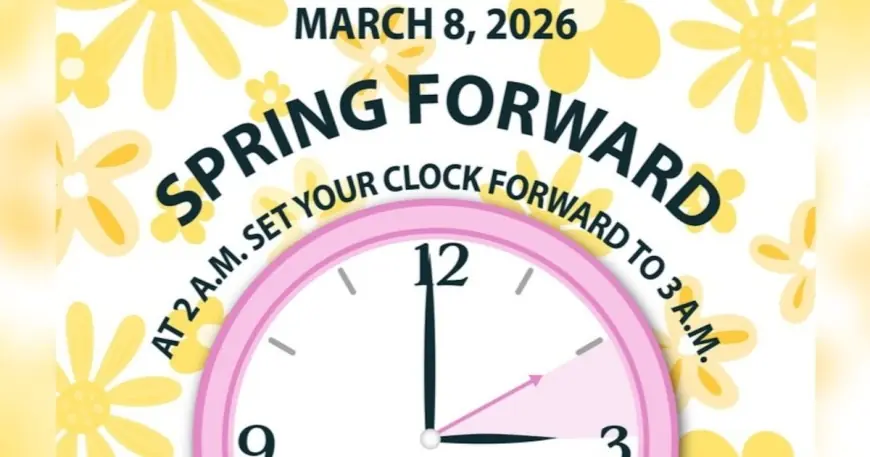
Daylight saving time is six days away. Clocks across most of the United States will spring forward one hour this Sunday, March 8, 2026 — the earliest possible date the time change can occur under federal law. Set your clocks before bed Saturday night and prepare to lose an hour of sleep as the country shifts into longer, brighter evenings.
Daylight Saving Time 2026 Start Date, Time, and What Changes
When local standard time reaches 2:00 a.m. on Sunday, March 8, 2026, clocks are turned forward one hour to 3:00 a.m. local daylight time. Sunrise and sunset will be about one hour later on March 8 than the day before. There will be more light in the evening and less light in the morning.
Because March 1 falls on a Sunday in 2026, March 8 is the earliest possible date daylight saving time could occur this year. DST always falls on the second Sunday in March under the Energy Policy Act of 2005.
Most people change their clocks before going to bed on Saturday night, March 7, rather than waking up at 2:00 a.m. to do it. Phones and connected devices will update automatically.
When Does Daylight Saving Time End in 2026 — Fall Back Date
Daylight saving time runs for nearly eight months in 2026 and ends Sunday, November 1, 2026. At 2 a.m. local time, clocks fall back one hour, returning most of the country to standard time.
November 1 is also the earliest possible date on which daylight saving time can end, since the first Sunday in November falls as early as possible this year.
That gives the United States a full 34 weeks of extended evening daylight — from the second week of March straight through Halloween weekend.
Which States Do NOT Observe Daylight Saving Time
Hawaii and Arizona, except the Navajo Indian Reservation, are the only two states that do not observe daylight saving time. The U.S. territories of Puerto Rico, Guam, American Samoa, and the U.S. Virgin Islands also do not follow the time change.
For residents of those states and territories, Sunday is just another Sunday. The rest of the country wakes up Monday, March 9, operating one hour ahead of where they were Friday morning.
Daylight Saving Time Health Risks: Car Crashes, Heart Attacks, and Sleep Loss
Fatal car crashes temporarily jump in the first few days after the spring time change, according to studies of U.S. traffic fatalities. The risk is highest in the morning, and researchers attribute it to sleep deprivation caused by the abrupt one-hour shift.
The American Heart Association points to studies suggesting an uptick in heart attacks on the Monday after daylight saving time begins, and in strokes for two days afterward. Researchers believe the abrupt circadian disruption may exacerbate factors such as high blood pressure in people already at risk.
Sleep experts recommend shifting bedtime 10 to 15 minutes earlier each night starting now, getting morning sunlight early next week to reset the body clock, and avoiding caffeine late in the afternoon in the days following the time change.
Will Daylight Saving Time Be Abolished — The Daylight Act of 2026
A recent Gallup poll found that 54 percent of Americans favor ending the practice of changing clocks twice per year — a dramatic shift from 1999, when 73 percent of Americans favored daylight saving time.
Florida Representative Greg Stube introduced the Daylight Act of 2026, which calls for modifying clocks by only half an hour rather than a full hour — a proposed compromise between permanent standard time and permanent daylight saving time advocates.
Two additional House bills would give individual states the option to observe year-round daylight saving time. It remains unclear whether Congress will pass any of the four daylight saving time bills currently introduced. Should Congress enact permanent daylight saving time, Americans may not have to change their clocks again after March 8.
Until any legislation passes, the time change is happening Sunday. Set your clocks, protect your sleep, and drive carefully Monday morning.