























Oil surges and Stock Futures sink as stock futures slide after U.S., Israeli strikes kill Iran's supreme leader


stock futures fell as oil prices jumped following U. S. and Israeli strikes on Iran that killed its supreme leader. FOLLOW LIVE: Trump speaks on Iran strikes.
Stock Futures and market open
Stocks sharply dropped at the opening of trade on Monday, with stock futures reflecting the risk as markets reacted to the surge in crude. The broad S&P 500 fell 0. 5% and the tech-focused Nasdaq Composite traded about flat while the Dow Jones Industrial Average dropped more than 200 points. The Russell 2000 index, which tracks smaller companies, declined 0. 2%.
Oil benchmarks and price moves
U. S. crude oil soared more than 6. 5%, while Brent, the international oil benchmark, surged 7% on Monday morning. For U. S. crude oil, the move pushed prices higher by nearly $5 per barrel. Even before the weekend's escalation, oil prices had risen 17% this year off President Donald Trump’s ramped-up rhetoric against the Iranian regime, and the Trump administration has also ratcheted up sanctions on Iran in recent months.
Gas prices and pump impact
Retail gas prices move about 2. 5 cents for every $1 move in the price of crude oil, so already a nearly 13 cent-per-gallon increase could be on the horizon for consumers. Prices have already started rising at gas pumps nationwide, GasBuddy, a price-tracking service, noted. "The national average is now up to $2. 96/gal, " GasBuddy analyst Patrick De Haan wrote on X. "I believe we may see it touch $3/gal later tonight as the jump in prices begins to show up at more stations. "
Shipping, Strait of Hormuz risk
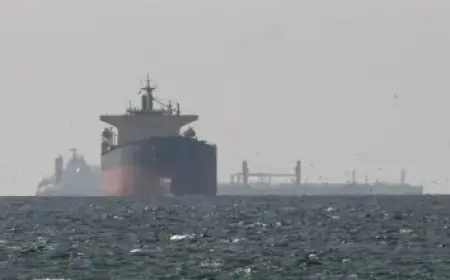
While Iran's oil production is estimated to be less than 5% of global output — most of which goes to China because of U. S. sanctions — it has major influence over the Strait of Hormuz, a critical passageway for more than 20% of the world's daily oil demand. A closure or restriction there can quickly rock the global oil market, and it would be among the worst-case scenarios for the oil market, longtime industry analyst Andy Lipow said Sunday. On Saturday and Sunday, at least six of the leading cargo shipping companies said they were halting or diverting ships that were originally set to sail through the key waterway.
Global market reactions and safe havens
Stocks faced steeper losses across Europe and Asia. The pan-European Stoxx 600 closed down 1. 7% and Germany's DAX plunged 2. 5%. France's benchmark stock index slid 2. 2%, and Italy's 2%. Japan's Nikkei stock index also ended lower by 1. 4% overnight. The U. S. Dollar Index rose more than 1%, and the price of precious metals rose, with gold futures jumping 1. 5% or more than $75, an indication that investors and traders are flocking to "safe haven" assets in the wake of the conflict. "The scale [of Iran’s retaliation] has been a big, big surprise, " Jorge León, head of geopolitical analysis at Rystad Energy, said on Saturday. "This is a totally different world from what the market was anticipating. " Luis Costa, Citigroup's global head of emerging markets strategy, warned Sunday night: "Historically, geopolitical oil shocks fade quickly, but if this episode lasts longer, markets may see extended volatility. "
Eight oil-rich nations that are part of OPEC+ said they planned to increase production by more than 200, 000 barrels of oil per day starting next month in a move aimed at calming markets. JPMorgan Chase analysts said the trajectory of oil prices will ultimately depend on four variables: how much supply is disrupted, how long a disruption lasts, whether supply from other sources can be mobilized quickly and what comes next.
FOLLOW LIVE: Trump speaks on Iran strikes.
FOLLOW LIVE: Trump speaks on Iran strikes