





















Senegal PM Ousmane Sonko Says Pastef Could Quit Government if President Faye Breaks with Party Vision

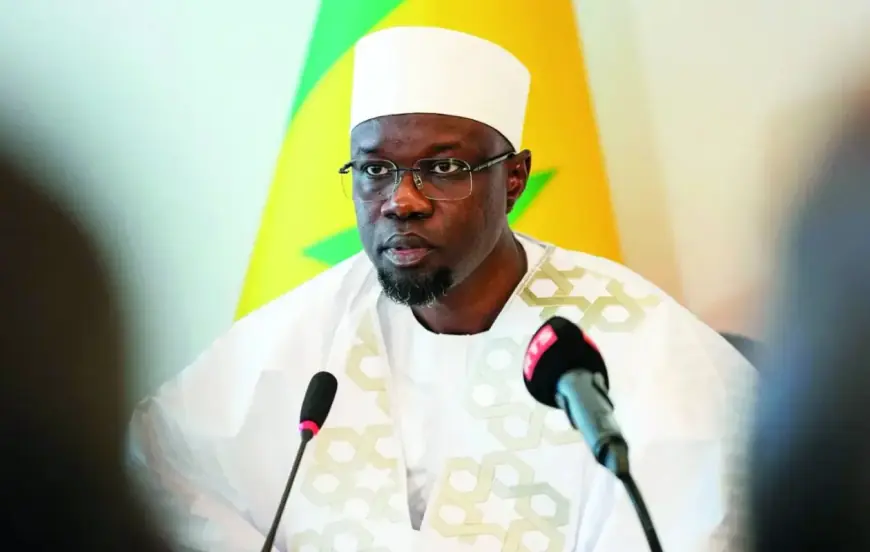
DAKAR — Prime Minister Ousmane Sonko said on March 2 that his party, Pastef, would be prepared to leave the government and return to the opposition if President Bassirou Diomaye Faye departs from the party's vision, a declaration that intensifies a week of tensions over domestic unrest and stalled international lending talks. The warning matters now because it comes as Senegal negotiates with the International Monetary Fund while coping with campus violence and questions about coalition unity.
Senegal: Sonko frames departure as response to a potential break with President Bassirou Diomaye Faye
Speaking in a live broadcast on Sunday, Sonko said the dispute between himself and President Faye would be "moot" if the president remained aligned with the party. He described the current arrangement as a "soft power-sharing" situation when alignment exists, and said that if a clearer break occurs the alternatives are either a "more difficult cohabitation" or Pastef reverting to opposition. Sonko added that "Pastef has no problem with either of these options. " He framed the move as a principled choice rather than a tactical retreat.
IMF negotiations and frozen lending programme
Senegal is pursuing new lending from the International Monetary Fund while attempting to raise cash, and the situation has been complicated by long drawn-out negotiations. The IMF froze a $1. 8 billion programme in 2024 after Sonko's government discovered misreported debts from the previous administration estimated at more than $11 billion. Any suggestion of discord between Sonko and Faye raises the possibility of further delays in those talks, a dynamic that previously affected international markets when Sonko announced that the IMF had proposed a debt restructuring he said Senegal would not accept; that announcement sent the country's international bonds sharply lower at the time.
Coalition tension: Sonko criticizes the coalition's "newcomers"
Sonko rejected the image that Pastef opposes coalitions, saying "PASTEF is not refusing to work or to form coalitions, " but insisted the party will not tolerate attempts by others to lead it when, in his view, Pastef "already holds all the power. " He accused recent entrants to the political scene of fomenting division rather than unity, asserting that "you join a coalition and you want to divide, to play games to separate and better rule"—behavior the party will not accept.
PASTEF's alliances, history and the 2024 election
The party emphasized that alliances must respect political weight and legitimacy acquired at the ballot box, particularly in the 2024 elections. Sonko pointed out Pastef's history of mergers since 2015, saying "PASTEF was formed through mergers since 2015. We have always collaborated. " He named Cheikh Tidiane Dièye and Aïda Mbodj as examples of constructive partnerships and noted that Pastef has granted parliamentary and ministerial positions to its allies as part of those collaborations. The party rejected being portrayed as inward-looking or hegemonic, saying "we must not be portrayed as people who don't want to form coalitions. "
Political backstory: 2024 election, appointments and recent signs of dissension
Sonko was a prominent opposition figure under the previous administration but was barred from running in the 2024 presidential election due to a legal conviction. He selected a little-known replacement candidate, Bassirou Diomaye Faye, described as a longtime aide and Pastef member. After Faye's election, Faye appointed Sonko as prime minister. Since then, signs of dissension have emerged: in November the camps of Sonko and Faye issued conflicting statements over leadership of the ruling coalition. Sonko has argued that much of the current media controversy stems from newcomers, claiming that "95% of the noise comes from them. "
Domestic unrest and the stakes for governance
Tensions in the country have risen amid violence at universities and the broader fiscal squeeze tied to IMF negotiations. Sonko presented his warning about leaving government as tied to those larger governance questions—if the president diverges from Pastef's vision it could alter the balance of power in a country already navigating a frozen $1. 8 billion IMF programme and an alleged $11 billion in misreported debts uncovered by the current government. What makes this notable is how personal political alignment within the ruling movement is now positioned as a determinant of whether Senegal proceeds with or retreats from an incumbent governing arrangement, with direct consequences for international negotiations and domestic stability.