
























Diego Garcia at the Centre of a Diplomatic Standoff as UK Withholds Permission for US Use of Bases

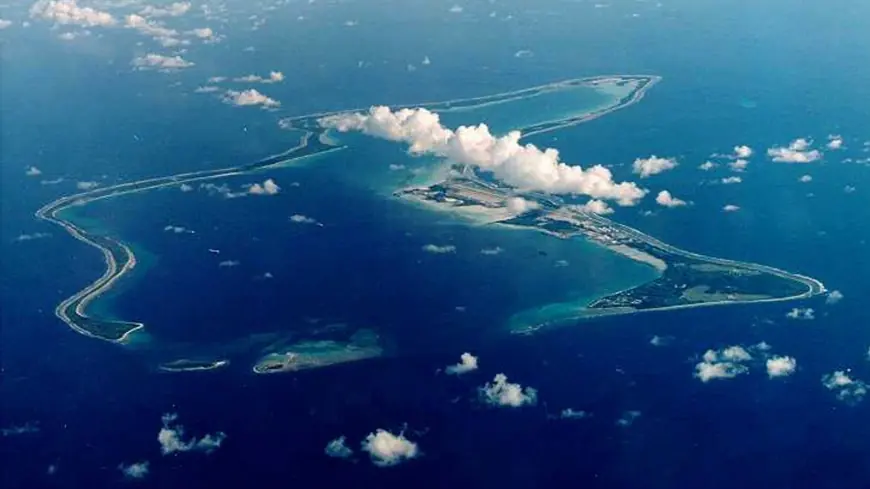
The UK government has not given permission for the US to use UK military bases to support potential US strikes on Iran, and diego garcia is explicitly tied up in the dispute over the Chagos Islands deal—a development that has prompted renewed criticism from the US president and intensified the UK political debate.
Why diego garcia and RAF Fairford matter for the Iran crisis
The US has previously used RAF Fairford in Gloucestershire and the UK overseas territory base on Diego Garcia in the Indian Ocean to carry out strikes in the Middle East. Press coverage links the current row to Pentagon preparations for possible strikes on Iran; insiders believe those preparations may have shifted the president's understanding of the strategic significance of the island, which is the largest in the Chagos archipelago.
UK refusal to grant operational permission and official reaction
The UK government has declined to grant permission for US use of its bases for potential action against Iran. A government spokesperson reiterated that, as a routine position, operational matters are not commented on and stressed that there is a political process ongoing between the US and Iran, which the UK supports. The spokesperson added that Iran must never be able to develop a nuclear weapon and that the priority is security in the region.
Trump's shifting stance on the Chagos deal and the Diego Garcia linkage
The US president has repeatedly changed his position on the UK plan to transfer sovereignty of the Chagos Islands to Mauritius while securing continued use of the military base through a lease. After signalling formal support from his administration, the president posted renewed criticism of the deal on his social platform, warning against any loss of access to the base on Diego Garcia and linking the arrangement to the US’s ability to respond to Iran. Earlier fluctuations in his view include criticism in January, a later endorsement following a phone call on 5 February, and prior backing last year; most recently his post invoked the possibility that the United States might need to use Diego Garcia and the airfield at Fairford to counter a potential attack by what he described as a dangerous regime.
Legal and operational constraints on using UK bases
Pre-emptive strikes would face scrutiny under the UK's interpretation of international law. UK policy holds that US bases in the UK, including Fairford—which is identified as the home for US B-2 bombers in Europe—are used for operations only if the UK government agrees and such use is legal. Neither RAF Fairford nor Diego Garcia were used in the US strikes on Iran's nuclear facilities carried out last year; at that time a senior UK defence source said Washington had not sought permission. More recently, RAF Fairford and other UK bases were used by the US in support of an operation to seize the registered tanker Bella 1 earlier this year.
Iran negotiations, military movements and the immediate timeline
The US has been pressuring Iran to curb its nuclear programme and has threatened possible strikes if Iran fails to do so. Military assets including warships, aircraft and other forces have been moved to the region in preparation for a possible strike, even as some progress has been reported at talks between American and Iranian negotiators in Switzerland. The president said the world would find out "over the next, probably, 10 days" whether a deal with Iran will be reached or military action will follow. These competing tracks—diplomatic talks and heightened military readiness—form the backdrop to the base-permission dispute.
Domestic UK politics and the parliamentary path for the Chagos agreement
The Chagos Islands arrangement has produced intense domestic politics. The UK government has defended the deal as crucial to guaranteeing the long-term future of the joint military base on Diego Garcia and to national security. The US government expressed formal support for the agreement as recently as Tuesday. The UK prime minister spoke with the US president on Tuesday after that US support was given, though an official readout of the call made no mention of the Chagos plan. There is hope within government that the US president may change his mind again.
The bill setting out the agreement was expected to return to the House of Lords soon but was delayed amid uncertainty about the US position; speculation that it might return the following week has been overtaken by expectations that it will not be laid before parliament for several weeks. Under parliamentary rules, if the bill is not passed before the end of the current parliamentary session in May, it would have to be presented again. One former government official who worked closely on the deal has expressed concern that the agreement might be scuppered.
Political responses and the diplomatic push in Washington
Political opponents are pressing the US to block the plan, arguing the agreement requires American buy-in. The shadow foreign secretary is due to deliver a speech in Washington, DC next week and is expected to hold talks with US officials about the Chagos arrangement. In public statements, some critics have declared the deal effectively dead in the water and said it cannot proceed without the support of American allies, warning of limited parliamentary time to advance it. The UK government continues to present the arrangement as the only way to secure the base’s long-term future.
Recent developments make clear that access to diego garcia and RAF Fairford is now a diplomatic and parliamentary flashpoint, entwined with fast-moving discussions over Iran and wider transatlantic security cooperation. Details may continue to evolve as diplomatic and legislative timelines progress.