
























Voo disruptions escalate after Middle East bombings shut Gulf airspace

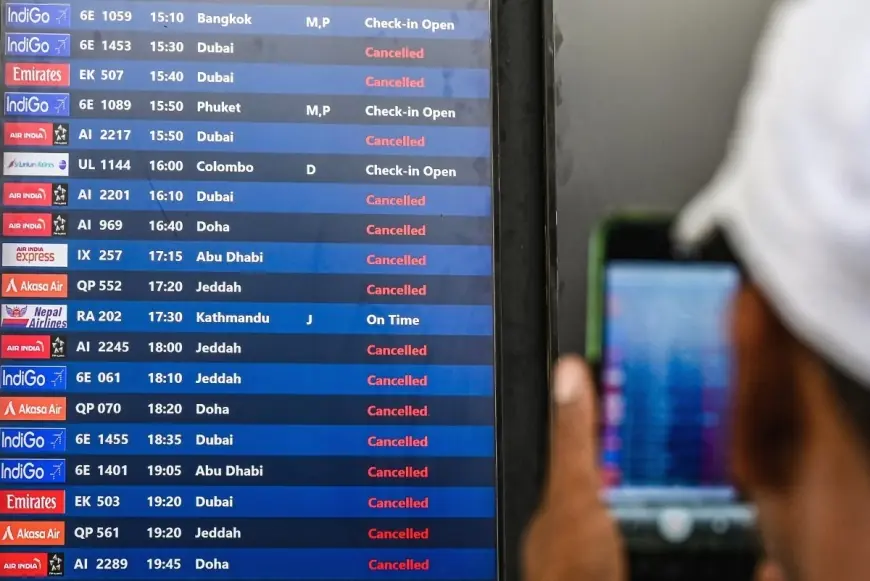
Missile strikes in the Middle East prompted the closure of airspace in nine countries and led to the cancellation of more than 2, 800 flights on Sunday, leaving thousands of travelers stranded and prompting major carriers to suspend operations. The scale of the interruption has paralyzed key Gulf hubs and cascaded delays and diversions across multiple continents.
Voo cancellations and Gulf airspace closures
The immediate cause was a wave of missile and drone attacks attributed to Iran in response to a U. S. and Israeli offensive the previous day, which led authorities to shut airspace over Israel, Qatar, Syria, Iran, Iraq, Kuwait, Bahrain, Oman and the United Arab Emirates. That decision resulted in the cancellation of at least 2, 800 flights on Sunday alone, and a flight-tracking snapshot from March 1 showed a marked absence of aircraft over Iran and other Persian Gulf states.
Because Dubai, Abu Dhabi and Doha serve as crossroads for Europe, Africa and Asia, the closures hit global connectivity hard. Analysts estimate that those terminals handle roughly 90, 000 connecting passengers every day, a concentration that enlarged the ripples of disruption when routes were suspended or diverted.
Airlines, airports and passengers: injuries, a death and mass cancellations
Airports in the United Arab Emirates reported casualties after the attacks. The international airport in Dubai recorded four people injured, while Abu Dhabi’s Zayed airport reported one death and seven injured after a drone strike. Passenger accounts described panic as explosions and military overflights were heard, and many travelers were later sheltered in hotels and instructed to avoid windows because of the risk of flying glass.
Major carriers adjusted operations in response. Emirates suspended all flights in Dubai until the afternoon of the following Monday. Air India halted services to Israel, Qatar and Saudi Arabia with a planned resumption on Tuesday. The Israeli carrier El Al announced plans to prepare repatriation flights for citizens stranded abroad and paused ticket sales for flights up to March 21. Those airline actions compounded the cancellations and left thousands of tourists and other travelers stranded in locations as far afield as Bali, where more than 1, 600 travelers were unable to leave.
Reroutes, costs and cascading delays across continents
Carriers that continued flights were forced to reroute around the closed airspace, steering southward over Saudi Arabia. That shift has produced longer flight times and higher operational costs, while also contributing to delays at European and Asian airports. London, Paris, New Delhi and Bangkok all logged dozens of cancellations in the period of disruption.
Communications channels became congested as hundreds of thousands of travelers sought updates, with hotlines and airline portals overloaded. The noted that confusion persisted as many passengers remained without clear timelines for the reopening of airports or the resumption of scheduled services.
What makes this notable is how quickly regional military escalation translated into a global transportation crisis: the closure of a handful of Gulf airspaces effectively froze transit through hubs that underpin hundreds of international connections every day. The timing matters because the region’s airports function as vital transfer points; when they stop, the disruption radiates worldwide.
Authorities and airlines are now managing repatriation plans and operational pauses while monitoring security conditions. For travelers, the immediate effects have included canceled voos, extended hotel stays and limited mobility until airspace restrictions are lifted and carriers restore normal schedules.