

























Gold Price surge pushes gold price near $5,300 as investors seek safety

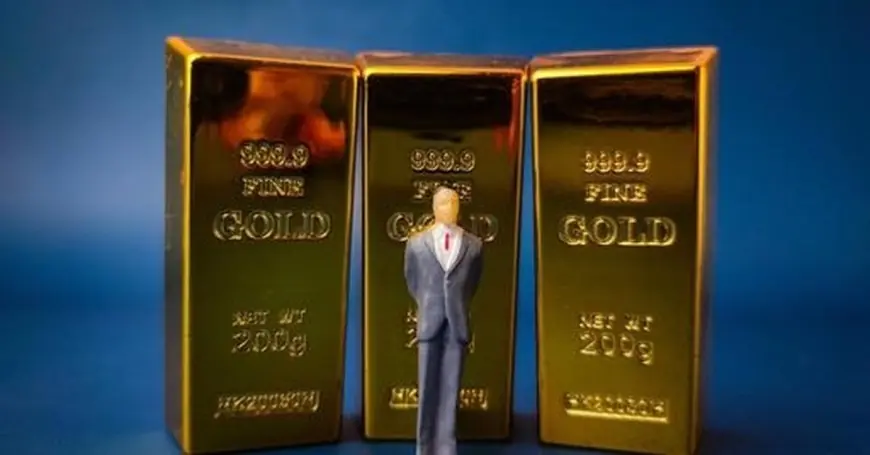
Gold price has spiked as investors rush toward the metal, a surge that matters because it is reshaping where market participants are parking capital amid volatile conditions. As of February 27, 2026, prices are approaching $5, 300 an ounce, driven by factors that traders and analysts say merit close attention.
February 27, 2026 levels reflect inflation, central bank accumulation and demand
On February 27, 2026, gold prices were approaching $5, 300 an ounce, a rise the context links to persistent inflation, aggressive central bank accumulation and a widespread appetite for stability amid market volatility. Those three forces are presented as the primary drivers pushing the market toward unprecedented price territory in the past year.
Gold bars at the center as what was niche becomes mainstream
Investors have been described as flocking to gold as prices near $5, 300 an ounce, and reporting in the context notes that what was once a niche investment has now become mainstream, with gold bars at the center of the surge in demand. The narrative highlights that over the past year the precious metal has reached heights that even seasoned market watchers could hardly have predicted.
Physical properties, dollar linkage and the risk of paper losses
One key reason investors favor the metal is its perceived ability to retain value over time: gold bars do not rust, corrode or expire, and their physical properties remain intact. However, the context makes clear that gold bars can still lose value in ways investors might not expect. The metal’s market price is tied to the U. S. dollar, and when the dollar strengthens, the dollar-denominated value of gold can fall even if nothing about the metal itself has changed. The context warns that investors who buy at a price peak and later sell during a dollar rally can face real losses, at least on paper.
Premiums, storage costs and liquidity problems in a crisis
Buying physical gold is not just buying a spot price. The context notes that investors typically pay a premium above the spot price, and those premiums vary depending on the size of the bar, the mint and the dealer. That means the spot price must rise sufficiently for a buyer to break even; if an investor purchases during a period of high premiums and the market cools, they could be underwater before the metal’s market price moves against them. Storage and security add further friction: physical gold requires a home safe, a bank vault or a third-party depository, all of which carry ongoing costs that the context says quietly erode returns. In a true financial crisis, the context cautions, selling physical bars quickly and at a fair price can be difficult—dealers may widen their spreads and buyers may become more cautious, so the theoretical value of the metal does not always translate into immediate cash.
Analyst forecasts, the "Big Picture Gold Update" and stated uncertainty
The context cites a forecast led by registered CMT and technical analyst AG Thorson in a "Big Picture Gold Update, " which projects a move toward $8, 000 an ounce and beyond. The context also includes a fragment that reads: "Now, with gold prices approaching $2, 000 per ounce much sooner than expected, even targets"—that fragment is unclear in the provided context and cannot be completed from the material provided. Overall, the context balances bullish technical calls with repeated warnings from experts about risks and unpredictable market swings despite the metal's historic resilience.
What investors must weigh
The material in the context presents a mixed picture: investors are increasing allocations to gold as a perceived safe haven, lifting the metal toward roughly $5, 300 an ounce as of February 27, 2026, while analysts like AG Thorson offer far-higher targets even as commentators underscore the dollar linkage, premiums, storage costs and liquidity risks that can turn a safe-haven bet into a complicated trade.