

























Gold Price Today Rises in India as City Rates Stabilize and Geopolitical Tensions Add Pressure

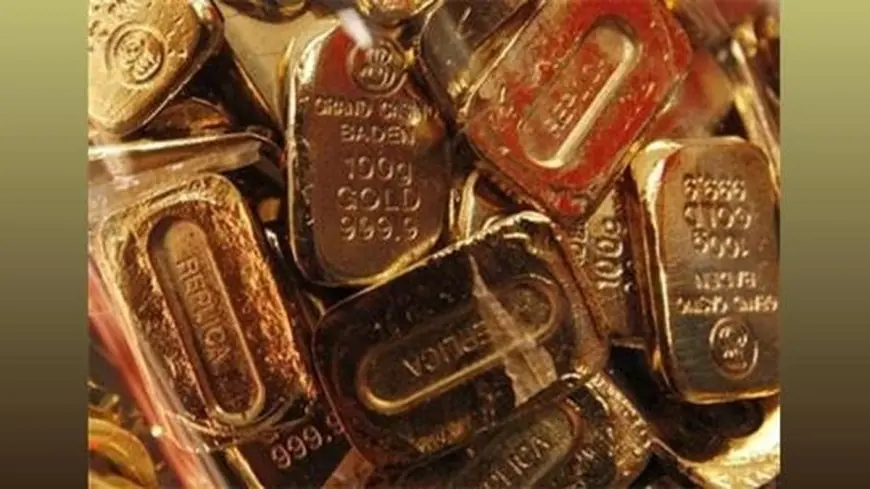
Gold price today climbed in India, with benchmark per-gram and per-tola quotes higher versus Friday, a move that intersects month-end stabilization in several cities and renewed safe-haven flows tied to Middle East tensions. The mix of daily price updates, domestic physical demand and central-bank activity helps explain why the recent uptick matters for consumers, investors and traders.
Gold Price Today: headline domestic moves and daily quotes
Domestic quotations showed gold at 15, 775. 80 Indian Rupees (INR) per gram on Monday, up from INR 15, 517. 94 on Friday. Measured by the traditional unit, the price rose to INR 184, 004. 70 per tola from INR 180, 998. 20 per tola on Friday. These daily reference rates are produced by adapting international prices (USD/INR) to local currency and measurement units, with updates published each day based on market rates taken at the time of publication; local retail rates can diverge slightly from the reference figures.
City-by-city stabilization and recent February volatility
After a volatile February, bullion markets in India and Australia settled into a steadier phase. India’s MCX gold futures held near INR 161, 720 per 10 grams on February 28. Silver showed city-level consistency in late February, stabilizing around INR 2, 85, 000 per kilogram in major centers such as Delhi, Mumbai and Bengaluru. In Delhi, silver stood at ₹285 per gram, ₹2, 850 for 10 grams and ₹2, 85, 000 per kilogram for a fourth consecutive session.
Bengaluru closing rates on February 28 were recorded as: 22K gold at Rs 15, 925 per gram, 24K gold at Rs 17, 375 per gram, and silver at Rs 3, 00, 700 per kilogram. Similar price alignment was noted across Delhi, Mumbai, Chennai, Kolkata, Hyderabad, Kerala, Pune and Ahmedabad, where silver was uniformly priced at ₹2, 85, 000 per kilogram. Earlier in February, silver reached ₹3, 50, 000 per kilogram on February 1, plunged to ₹2, 55, 000 on February 18, then recovered to ₹3, 00, 000 by February 23 — a net monthly drop of about 18. 57% from the February peak.
Hyderabad morning spike and wedding-season pressure
In Hyderabad, domestic markets saw another sharp move on Sunday morning: the price of 10 grams of gold increased by ₹4, 000 and silver per kilogram rose by ₹25, 000. As of 6 am in the Hyderabad bullion market, the 10-gram price of 22-carat gold stood at ₹1, 58, 660, while 24-carat gold was ₹1, 73, 090 per 10 grams; silver was trading at ₹3, 25, 100 per kilogram. Traders in Hyderabad noted prices may rise further by afternoon. With the wedding season underway, rising bullion prices are likely to strain household budgets, and analysts warn that prolonged price acceleration would make gold and silver increasingly unaffordable for middle-class families.
Geopolitical tensions driving safe-haven flows
Escalating tensions involving Iran, Israel and the United States have unsettled global financial markets and prompted a shift of funds from equities into gold and silver. International market updates showed gold prices nearing $5, 300 per ounce as investors sought safe havens. In India, the price of 10 grams of gold has crossed ₹1, 62, 000, with analysts warning that if the conflict intensifies, prices could soon approach ₹1. 70 lakh. Silver is also expected to follow the uptrend, with forecasts noting the possibility of silver crossing ₹3. 20 lakh per kilogram.
Market channels cautioned that if tensions push crude oil prices higher and the Indian rupee weakens, import costs would rise and domestic gold prices would climb further.
Structural drivers: central banks, correlations and the bigger picture
Gold’s role as a store of value and safe-haven asset remains central to its recent strength. Central banks are the largest official holders of gold and tend to buy the metal to diversify reserves and support perceived currency strength. Central banks added 1, 136 tonnes of gold, worth around $70 billion, to their reserves in 2022, the highest yearly purchase since records began, with emerging-economy central banks in China, India and Turkey among those increasing holdings rapidly.
Gold typically shows an inverse correlation with the US Dollar and US Treasuries and often moves opposite risk assets. Geopolitical instability or recession fears can quickly push the price higher; lower interest rates tend to support gold while higher rates can weigh on it. Most moves depend on US Dollar behavior because the asset is priced in dollars.
Investor implications, trading notes and disclaimers
For investors and consumers, the present mix of city-level stabilization, daily reference gains and geopolitical risk implies both near-term price sensitivity and continued attention to physical demand. For Australian investors, the interplay between Indian demand and the Australian dollar matters for miners and listed producers; cost guidance, grade profiles and hedge books at major producers such as Northern Star and Evolution Mining warrant monitoring.
An automation tool was used in creating this post. References, analysis and trading strategies are provided by third-party providers; a general risk warning emphasizes that trading may result in the loss of entire capital and may not be suitable for everyone. Readers are advised to consider legal disclosure documents and understand risks before trading. The narrative about direct exposure strategies in one late-February item is unclear in the provided context.