
























Qatar Airways Halts Flights as Qatar Closes Airspace, Stranding Transit Passengers Worldwide

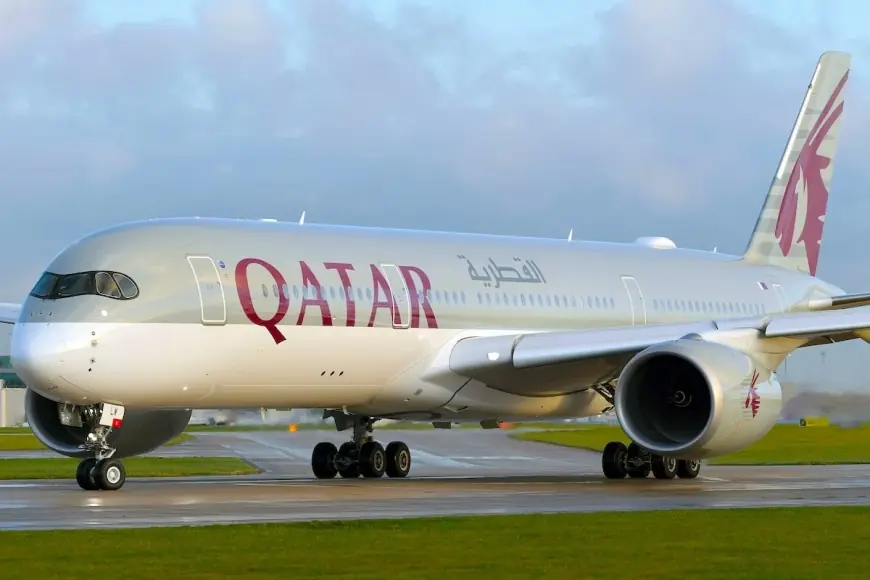
Qatar Airways has temporarily suspended flight operations to and from Doha after Qatari airspace was closed, a move that immediately rippled through global travel because the airline’s network is built around high-volume connections via Hamad International Airport. The carrier said operations will restart only after Qatar’s Civil Aviation Authority declares the airspace safe to reopen, and it plans to issue its next formal update by Tuesday, March 3 at 1:00 a.m. ET (9:00 a.m. Doha time).
For passengers, the practical reality is that this isn’t a routine delay—it’s a hub shutdown. When Doha pauses, long-haul itineraries that rely on tight connections between Europe, Asia, Africa, and the Americas can unravel in a single wave: missed onward flights, baggage stuck mid-route, crews out of position, and aircraft parked away from their scheduled rotations. That kind of disruption is hard to “catch up” from quickly, even once flights resume.
Doha hub disruption hits global connections
Qatar Airways’ strength—its role as a connector airline—becomes its vulnerability during airspace events. A point-to-point carrier can cancel a route and reset. A hub-and-spoke operator has thousands of passengers in motion at any moment, many traveling on multi-leg tickets that depend on a precise choreography of arrivals and departures in Doha.
The immediate choke points tend to look the same in every large disruption: transit passengers who can’t legally enter the country without visas, travelers whose onward flights are operated by partner airlines with different rebooking rules, and families trying to reroute as inventory vanishes seat by seat. Even if your original departure airport is far from the Gulf, a Doha connection means you’re exposed to decisions made hundreds or thousands of miles away.
Cargo is the quieter casualty. Doha’s role in air freight is significant, and when widebody passenger flights are grounded, belly cargo capacity disappears too. That can delay high-value shipments—pharmaceuticals, electronics, time-sensitive perishables—and force freight forwarders into longer routings that raise costs across supply chains.
Rebooking rules, refunds, and what travelers can do now
Qatar Airways has been steering passengers to monitor flight status through its official channels and wait for operational updates tied to the airspace reopening. Behind the scenes, the airline has also circulated force-majeure style guidance that typically allows date changes within a defined window around the disruption period and re-accommodation where seats exist—though availability is the limiting factor, not policy.
If you’re holding a Qatar Airways ticket now, the main decision is whether to wait for the Doha restart or proactively reroute through a different hub. Waiting can be smarter if you’re already close to your travel date and the airline is likely to protect your itinerary. Rerouting can be smarter if you have hard commitments and can find an alternative path before seats disappear—especially for complex itineraries with multiple passengers.
There are also two common pitfalls in disruptions like this. The first is “separate-ticket” travel—when the Doha leg and the onward leg were booked independently. In that case, missed connections can become the passenger’s financial problem rather than the airline’s. The second is payment timing: if you rebook yourself, keep documentation clean and immediate, because reimbursement disputes often hinge on whether the original carrier offered a workable alternative at the time.
Service updates and near-term operational changes
The airline has framed the suspension as strictly safety-driven, linking resumption to an official airspace safety decision rather than a timetable it controls. That language matters. It signals that even if aircraft and crews are ready, the restart depends on external clearance—and that clearance can change quickly in either direction.
Separately, Qatar Airways has also published an unrelated but concrete operational change for U.S. travelers: from March 13, 2026, its check-in area at Houston’s George Bush Intercontinental is set to move from Terminal D to Terminal E, while lounges and departure gates remain associated with Terminal D. In normal times, that’s a simple wayfinding note. In disruption periods, details like this can compound traveler confusion—especially for those rebooked onto different departure dates.
What happens next: the restart scenarios
The next 24–72 hours will determine whether this disruption is a sharp shock or the start of a longer stop-start cycle.
One path is a rapid reopening: Qatar’s airspace reopens, Qatar Airways launches a controlled restart, and priority is given to outbound relief flights, stranded transit passengers, and aircraft repositioning. Even here, expect a messy first day—delays, rolling gate changes, and limited customer-service bandwidth—because crews and planes won’t be where the schedule says they should be.
A second path is a phased reopening with partial corridors. That often means limited arrivals and departures at first, strict slot controls, and a backlog that takes days to clear. The airline may prioritize certain long-haul routes where alternative options are scarce and focus on stabilizing the network before restoring full frequency.
A third path is the most disruptive: extended closure or repeated short closures. That creates whiplash—flights announced, then pulled; travelers sent to airports, then turned back; partner airline protection becoming harder as other carriers fill up. In that scenario, the practical advice shifts from “wait for the update” to “secure any workable routing you can live with.”
For Qatar Airways, the underlying issue isn’t only operational. It’s reputational. The airline’s brand is built on reliability and seamless transfers; an airspace shutdown is outside its control, but the quality of re-accommodation, clarity of communication, and speed of recovery will define how passengers remember this episode long after Doha reopens.