

























“Punch Monkey” Goes Viral, Turning a Baby Macaque’s Plush Toy Into a Global Obsession

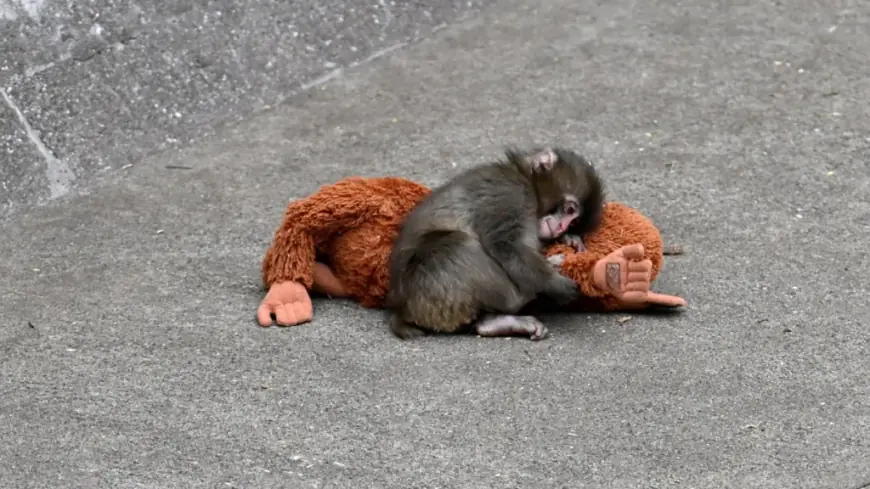
“Punch Monkey” is the nickname now widely used online for Punch, a baby Japanese macaque living at Ichikawa City Zoo in Chiba, Japan, whose attachment to a large stuffed orangutan plush has sparked a surge of attention—and a surprisingly serious debate about animal welfare, captivity, and the unintended consequences of viral fame.
The fascination accelerated in mid-to-late February 2026 (ET) as clips spread showing Punch clinging to the plush for comfort after being rejected by his mother and jostled by other monkeys in the troop. Keepers introduced the toy as a calming object while they worked on social reintegration. Viewers, meanwhile, latched onto a simple, emotional narrative: a vulnerable infant animal, a substitute “security blanket,” and a visible struggle for acceptance.
Punch Monkey and the plush craze
What began as empathy quickly turned into consumer behavior. The orangutan plush Punch clutches—often identified by fans as a specific, widely sold model—has been flying off shelves in multiple countries, with shoppers treating it as both a collectible and a symbol of solidarity. The dynamic is familiar: a single photogenic detail becomes the artifact of the moment, and owning it becomes a way to participate in the story.
That demand spike matters because it shows how modern attention works. A zoo animal’s personal coping mechanism was translated into a global merchandising moment almost overnight—without the zoo necessarily controlling the narrative or the downstream effects. In the best-case version, the attention becomes sustained interest in animal care standards. In the worst-case version, it becomes a template for fetishizing captive wildlife and normalizing primates as “cute” objects rather than complex animals with difficult needs.
Ichikawa City Zoo under a brighter spotlight
Punch’s story has also dragged a harsher subject into the open: what captivity looks like for social primates when group dynamics turn hostile. Japanese macaques are intelligent, hierarchical, and highly social. Rejection—especially of a vulnerable infant—can have cascading consequences, including stress behaviors and developmental setbacks. The plush reads as adorable on camera, but in context it’s also a sign of how badly Punch needed comfort and stability.
Zoo staff have emphasized that the goal is not permanent reliance on a toy, but gradual reintegration—helping Punch build safe relationships in the troop, learn grooming and play norms, and reduce isolation. That’s a long, careful process, and it can be undermined by the very thing that fuels the clips: crowd attention, noise, and the pressure to “show” the animal to visitors who arrive expecting a performance.
The real test isn’t whether Punch is “cute.” It’s whether the conditions around him support a normal macaque life—space, enrichment, the ability to retreat from stress, and a stable social pathway back into the group.
Animal welfare ripple effects, from Japan to Texas
The “Punch Monkey” wave has produced a second-order effect: it’s renewing attention on where Japanese macaques exist outside Japan—and not always by choice. One surprising example is South Texas, where macaques have lived for decades after being relocated in the early 1970s. That population’s history has been used as a cautionary tale: primates transplanted into unfamiliar environments can trigger ecological, ethical, and regulatory problems that linger long after the original decision-makers are gone.
This is where viral compassion can backfire. When primates trend, a small but real subset of viewers interprets the story as proof that monkeys can be pets, props, or lifestyle accessories—exactly the misconception welfare advocates spend years trying to undo. The public may see one baby and one plush; the animal-care world sees long-term commitments, specialized facilities, and the high risk of suffering when primates end up in private hands or unsuitable settings.
Punch’s fame could push things in either direction. It can deepen public understanding of primate welfare—or become another fast-moving distraction that sells toys and burns out before any real change occurs.
Over the next several weeks, the trajectory likely hinges on a few triggers:
If the zoo demonstrates visible social progress—Punch being groomed, tolerated, or played with—the story shifts from rescue imagery to rehabilitation, and the attention may calm into something healthier.
If the clips keep emphasizing distress or conflict, the zoo may face mounting pressure to modify housing, restrict viewing conditions, or provide clearer welfare transparency.
If the plush trend continues at scale, brands and resellers may inflate scarcity, turning a welfare-adjacent story into a pure profit cycle—one that risks attracting the wrong kind of attention to primates.
And if policymakers or animal-welfare groups successfully harness the moment, “Punch Monkey” could become a rare viral episode that produces lasting public education about why primates don’t belong in private ownership and why social animals need more than survival—they need stability.
Punch didn’t choose any of this. But the global response to “Punch Monkey” is revealing: in 2026, a single image can trigger a worldwide wave of empathy, commerce, and controversy in the same breath. The question now is whether that attention helps the animal at the center of the story—or merely uses him as the latest symbol to pass through the feed.