
























World News Today: Trump-Iran War Spreads to Gulf Hubs as US Embassy Kuwait Issues New Warnings

A fast-moving U.S.-Iran conflict widened across the Gulf into Monday, March 2, 2026 (ET), after Iranian missiles and drones struck or were intercepted near key partners’ urban and energy infrastructure—while a separate friendly-fire incident in Kuwait underscored how quickly high-tempo air defense can turn chaotic. In Kuwait City, U.S. diplomatic officials issued fresh guidance telling Americans not to come to the embassy and to take cover amid what they described as an ongoing missile and UAV threat.
The developments have compounded travel disruption across the region, heightened fears around embassy compounds and major airports, and pushed Gulf states into a more overt crisis posture—exactly the kind of escalation that turns “news today” and “world news” into a single, dominating story line.
Trump Iran: mixed signals on talks, push for leadership change
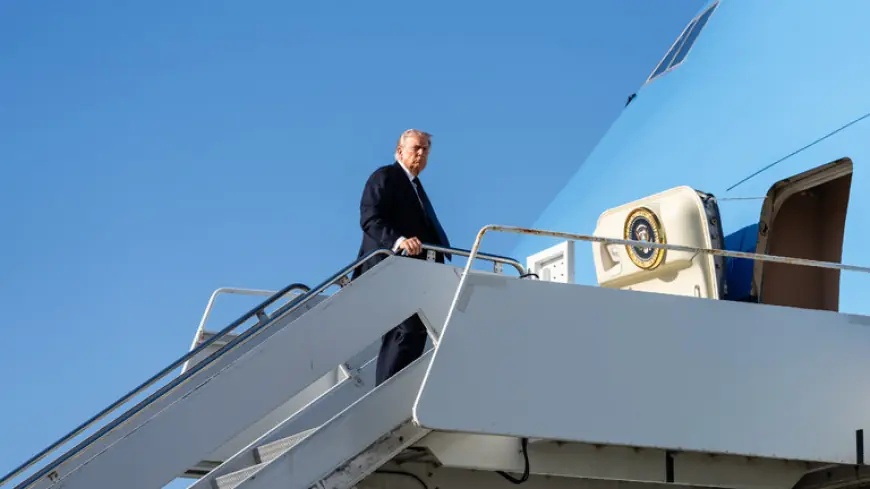
Donald Trump, now back in the White House, used a series of statements and interviews over the last 24–48 hours to project momentum in the campaign against Iran, describing an operation that could run for “weeks” while also floating the possibility of talks—an ambiguity that can be strategic in wartime. The messaging has oscillated between coercive diplomacy (“talks” as an off-ramp) and maximal political aims (publicly favoring a new Iranian leadership), signaling to allies and adversaries that Washington is not yet narrowing its end-state.
That matters because Iran’s incentives hinge on whether it believes the U.S. is seeking limited military objectives—or something closer to regime change. The more Tehran reads Washington as committed to a transformational outcome, the stronger the temptation to expand retaliation beyond strictly military targets, aiming instead at the economic lifelines of U.S. partners.
This is also why coverage from regional broadcasters has emphasized a key point of contradiction: U.S. officials and Trump allies have suggested openings for negotiations, while Iranian messaging has leaned defiant, portraying continued strikes as proof that talks—at least on U.S. terms—are not on the table. In an information war, both narratives can be “true” at once: one side signals willingness to negotiate; the other signals it won’t negotiate under fire.
US embassy Kuwait: security alerts after smoke and air defenses misfire
Kuwait became one of the day’s most sensitive flashpoints after its air defenses mistakenly shot down three U.S. fighter jets, with all crew members surviving—an incident that highlights the razor-thin margins when multiple militaries operate under time pressure, ambiguous radar tracks, and the constant expectation of incoming drones.
At the same time, U.S. diplomatic messaging in Kuwait escalated sharply. Embassy alerts warned of a continuing missile and UAV threat, urged Americans not to come to the compound, and advised people to shelter on the lowest level of their residence. A separate notice described Kuwait’s airspace as closed and urged vigilance as the situation evolves.
Smoke reported near the embassy area—whether from an impact, an intercept, or a secondary incident—became a catalyst for rumor, but the more important signal is procedural: when an embassy tells citizens to avoid the facility and shelter in place, it’s preparing for the possibility of additional strikes, debris hazards, or civil disruption around sensitive sites. In practice, it also changes how other governments treat risk: airlines reroute, insurers reprice, and companies activate evacuation and continuity plans.
Bahrain and UAE: Gulf nations brace as airports and energy nodes come under stress
Across the Gulf, Bahrain and the UAE have been pulled into the conflict’s economic and psychological center of gravity. Bahrain’s strategic relevance is inseparable from the U.S. Navy’s regional footprint there; even without confirmed catastrophic damage, the mere perception that military and logistical nodes could be pressured raises the stakes for every capital on the water.
In the UAE, the pressure has been most visible in aviation and urban confidence. When missiles and drones are airborne, airports do not need a direct hit to shut down; interceptions can scatter debris across wide areas, and uncertainty alone can force suspensions. The result is the kind of disruption that hits Dubai’s model where it hurts: throughput—tourism, transit, cargo, and the promise of frictionless connectivity.
The broader diplomatic reaction has started to take shape as well. European governments, after emergency consultations, urged restraint and warned about risks to shipping and key supply routes—language that reflects fear of a spiraling crisis affecting the Strait of Hormuz and global energy markets.
What to watch next
Five near-term triggers will determine whether this remains a severe disruption—or becomes a structural regional crisis.
First, the pace and accuracy of air defense engagements: the Kuwait friendly-fire episode is a reminder that high-volume interceptions increase the odds of mistakes, and mistakes can force political decisions.
Second, the status of civil aviation: if Kuwait’s airspace closure persists and regional reroutes expand, the knock-on effects will hit Doha, Dubai, and other hubs that anchor global travel patterns.
Third, any confirmed strike on a high-profile diplomatic or military facility: embassy compounds are symbolic targets, and even limited damage can create outsized political pressure.
Fourth, the shape of Trump’s war aims: if Washington clarifies limited objectives, it could create a negotiation channel; if it doubles down on leadership change, Iran’s incentive to widen retaliation increases.
Fifth, the economic front: insurance rates, shipping hesitancy, and energy infrastructure anxiety can compound faster than military damage—and once business confidence breaks, it’s harder to repair than a runway or a building.
For audiences tracking “news today,” the most important reality is that the conflict is now being fought on two planes at once: in the air with missiles and drones, and on the ground through the disruption of the systems that keep Gulf cities—and the global economy connected to them—functioning.