




















Austin Shooting Investigated as Possible Terrorist Act After Sixth Street Beer Garden Attack

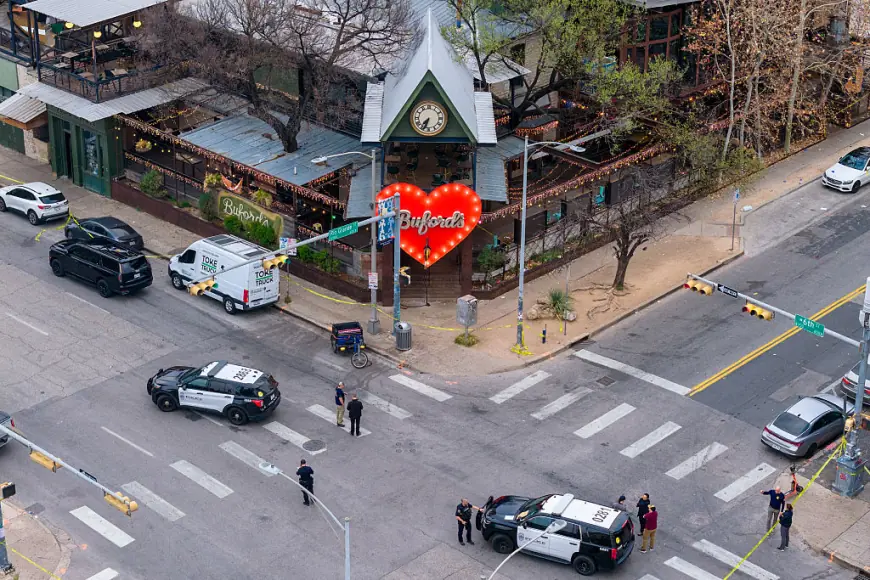
The latest austin shooting in downtown Austin left multiple people dead and several dozen wounded, and federal investigators are examining whether the attack constitutes a potential act of terrorism. The incident unfolded just after midnight on March 1, 2026, outside a popular Sixth Street beer garden and prompted a multiagency response and heightened state security measures.
Austin Shooting: FBI says indicators point to potential nexus to terrorism
Federal agents from the San Antonio Field Office of the FBI, joined by local law enforcement, have been investigating the scene and surrounding leads. Alex Doran, the acting special agent in charge of that field office, said it remains too early to determine a motive but investigators found indicators on the alleged gunman and in his vehicle that indicate potential nexus to terrorism. The suspected gunman was shot dead by officers after an exchange during the incident.
How the attack unfolded on Sixth Street
Shortly before 2 a. m. on Sunday, the suspect circled past Buford’s Backyard Beer Garden on Sixth Street several times in a large SUV before stopping and opening fire with a pistol out of the vehicle window at people on the patio and gathered outside the bar, Austin Police Chief Lisa Davis said in a press briefing. The suspect then parked the vehicle, stepped out carrying an assault rifle, and continued firing at people on the street. Responding officers shot and killed the gunman at the scene.
Casualties, victims and university community impact
Initial accounts of the austin shooting noted two people killed and 14 wounded at the scene. Later briefings stated that three people, including the suspect, were killed, and 14 were injured. All of those injured were transported to local hospitals, with three in critical condition, Austin EMS Chief Robert Luckritz said. The names of the victims were released as of Sunday night. Jim Davis, president of UT Austin, confirmed that members of the university community were among those affected, though they have not been publicly identified. He expressed sorrow for the victims and the Longhorn community and extended condolences to families, friends, classmates, professors and loved ones.
Suspect identification and background details
The Austin Police Department identified the suspect as Ndiaga Diagne, a 53-year-old man. Diagne was born in Senegal. he first came to the United States in 2000 on a B-2 tourist visa, married a U. S. citizen in 2006 and became a lawful per unclear in the provided context. Clothing worn by the suspected gunman bore the words "Property of Allah" and an Iranian flag design.
Broader context, state response and federal awareness
The shooting occurred one day after the United States and Israel launched a major military campaign against Iran. White House Press Secretary Karoline Leavitt said President Donald Trump was briefed on the shooting. Texas Governor Greg Abbott, who had expressed support for the military action, warned that anyone using the current conflict to threaten Texans or critical infrastructure would be met with decisive and overwhelming force. A day before the incident, Abbott directed the Texas Military Department to activate service members to work alongside state and federal partners to safeguard communities and critical infrastructure, and he directed the Department of Public Safety and the Texas National Guard to intensify patrols and surveillance.
Investigation activities, witness accounts and search warrants
Witness Nathan Comeaux recorded and witnessed the final moments of the incident. Local SWAT executed a search warrant at a home in Pflugerville, Texas, on Sunday, March 1, 2026, as part of the ongoing law enforcement response. Federal and local investigators continue to canvass the area, review evidence and pursue leads as they work to establish motive and any broader connections.
Recent updates indicate investigators are treating the attack as a developing terrorism investigation while crucial details about motive and certain background matters remain under review. Details may evolve as authorities release more information.