























Brent Crude Price Surges as Shipping Near the Strait of Hormuz Comes to a Standstill

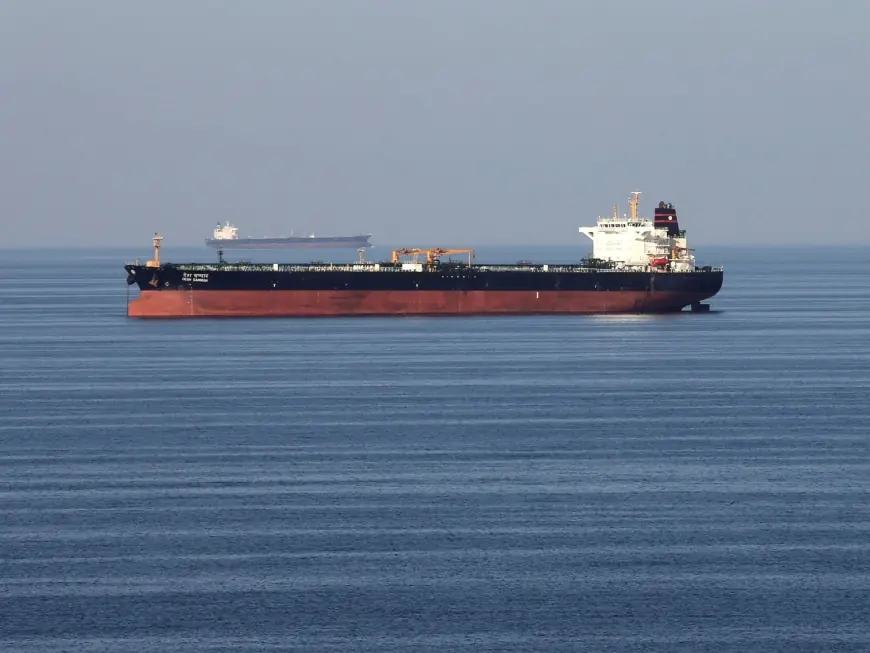
Brent Crude Price climbed sharply this week as attacks near the Strait of Hormuz and retaliatory strikes across the Middle East disrupted seaborne energy flows. The interruption to tanker traffic and new production decisions have rippled into markets, shipping lanes and consumer costs.
Attacks near the Strait of Hormuz
Vessels have been forced to anchor and international shipping at the entrance to the Strait of Hormuz has all but halted after attacks over the weekend. One account said at least three ships were attacked near the strait; the UK Maritime Trade Operations Centre (UKMTO) said two vessels had been struck and that an "unknown projectile" exploded in very close proximity to a third. Other accounts described two vessels being attacked on Sunday. Iran has warned vessels not to pass through the waterway, which handles roughly 20% of the world’s oil and gas seaborne trade, and tankers have been piling up on either side of the strait, wary of further attack or unable to secure insurance for the voyage.
Brent Crude Price surge and retreat
Brent crude initially jumped by about 10% to top more than $82 a barrel on Monday before easing back toward the high-$70s. Early-week trading placed Brent around $79. 41 per barrel, a roughly 9% rise from the prior Friday’s levels; one update put Brent back at about $79 a barrel. U. S. futures also climbed sharply, with West Texas Intermediate near $72. 79 a barrel early on Monday, up about 8. 6% from roughly $67 on Friday, while another U. S. -traded benchmark was cited near $72. 20, up about 7. 6%. Natural gas prices surged by as much as 25% in tandem with the oil moves.
Market indexes and safe-haven flows
Equity markets reacted immediately. The FTSE 100 opened nearly 1% lower, with airline stocks falling after airspace closures across parts of the Middle East. France’s CAC-40 dropped 1. 6% and Germany’s DAX fell 1. 7%. In Asia, Japan’s Nikkei slipped 1. 3%, blue-chip stocks in China were down about 0. 1%, and MSCI’s broad index of Asia-Pacific shares outside Japan fell roughly 1. 2%. Investors also pushed into safe havens: the price of gold rose about 2. 3% to $5, 395. 99 an ounce.
OPEC+ response and production figures
In a bid to cushion market disruption, the OPEC+ group agreed to raise output by 206, 000 barrels per day. A separate announcement identified eight members planning to boost supply in April: Saudi Arabia, Russia, Iraq, the United Arab Emirates, Kuwait, Kazakhstan, Algeria and Oman. The production increase was framed as larger than some analysts had expected, but questions remain over whether it will offset the immediate supply shock from halted shipments.
Analysts, officials and wider supply implications
Jorge Leon, head of geopolitical analysis at Rystad Energy, warned that the effective halt of traffic through the Strait of Hormuz could prevent as much as 15 million barrels per day of crude from reaching markets unless de-escalation signals appear swiftly. U. S. and Israeli strikes on Iran and Iranian missile barrages in response have shown no sign of abating, and U. S. President Donald Trump indicated the strikes could last weeks and might continue until stated objectives are met. Iran had previously temporarily closed parts of the strait in mid-February for a military drill, an action that produced a roughly 6% jump in oil prices in the days that followed.
Industry voices cautioned on transmission to consumers. Saul Kavonic, head of energy research at MST Marquee, said the market was not yet in panic because oil transport and production infrastructure had not been targeted as primary objectives so far. Robin Mills, chief executive of Qamar Energy and a former executive at Shell, said the jump in prices would "feed through almost immediately" because traders follow the news closely. Edmund King, president of the AA, warned the disruption would inevitably push petrol prices higher around the world.
Iran exports roughly 1. 6 million barrels of oil a day, mostly to China, and that trade could be disrupted if the strait remains unsafe; the context notes China has ample strategic oil reserves and unclear in the provided context. What makes this notable is the simultaneity of military escalation, halted tanker movements and targeted production announcements—the combination narrows near-term options for markets and raises the risk of further price repricing if traffic does not resume.