
























Cyprus News: Drone strikes and interceptions at RAF Akrotiri are disrupting families, base staff and regional defence posture

Why this matters now: cyprus news coverage of the overnight drone hit and the later interceptions shows immediate disruption for base employees and military families, and a sharper defensive stance from UK forces in the region. The sequence of a crash into RAF Akrotiri followed by two drones intercepted en route increases pressure on local authorities, base administrators and allied air defences already stretched by a wider regional campaign.
Cyprus News impact: who felt the disruption and what changed at the base
Employees and family members at RAF Akrotiri were the first to feel the operational and safety effects. Family members were moved to alternative accommodation as a precautionary measure, base staff received messages warning of an "ongoing security threat" and were told to stay away from windows and take shelter behind furniture, and the Sovereign Base Areas Administration planned a temporary dispersal of non-essential personnel from the site.
Here's the part that matters: the immediate adjustments — evacuations, sheltering, and accommodation moves — change daily life for personnel and raise questions about information-sharing between local authorities and the base.
Event details and contested attributions
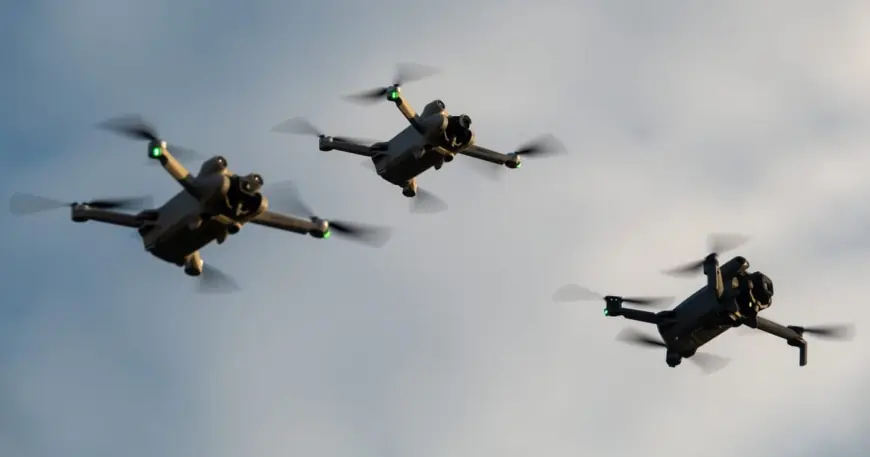
A drone struck the British Royal Air Force base at Akrotiri overnight on Sunday, causing minimal or limited damage and no casualties. The Cypriot president later said the incident involved an Iranian drone; a separate confirmation named the device as a Shahed-type unmanned aerial vehicle that caused minor damage when it crashed at 12: 03 a. m. local time. Around the same period another account placed the hit at roughly midnight local time (22: 00 GMT), which is consistent with the narrow overnight window.
On Monday, a Cypriot government spokesperson said two unmanned aerial vehicles travelling toward RAF Akrotiri were successfully intercepted. A government spokesman, Konstantinos Letymbiotis, posted that the two drones had been heading in the direction of the base at the time they were intercepted.
Local responses: alerts, airport alarm and diplomatic steps
An alarm was raised at Paphos Airport after a suspected drone was spotted, triggering evacuation instructions. The US embassy in Cyprus issued a warning of a possible drone threat in the Paphos region. At the same time, the Cypriot government said it will make formal representations to the United Kingdom over how Sunday's incident was handled locally; concerns are centred on information sharing with local authorities and residents of the wider Akrotiri area. European Commission leadership was briefed on the incident and expressed solidarity with affected member states.
Wider regional context and UK defensive posture
The incidents around Akrotiri sit inside a broader escalation that began when a US–Israel bombing campaign struck Iran. The campaign was described as massive and ongoing; those strikes reportedly killed Iran's supreme leader, Ali Khamenei, and other officials. In retaliation, Iran launched waves of attacks — more than 25 waves in one account — that have targeted multiple countries and sites across the region.
British forces have been actively engaged in regional defence operations: jets operating from RAF Akrotiri and other bases were mobilised to intercept drones and slower-moving cruise missiles, although faster-moving ballistic threats remain harder to counter. UK operations elsewhere included shooting down an Iranian drone in Iraq that was said to be heading for a western base, and a Typhoon jet used an air-to-air missile to shoot down a drone heading toward Qatar. An Iranian missile landed 400 metres from UK personnel in Iraq, and 300 British personnel were within 200 metres of an Iranian missile and drone strike on a US naval base in Bahrain; no casualties were reported in those incidents. Officials also said Iran fired two missiles into the eastern Mediterranean in the direction of Cyprus; those missiles were not believed to be targeted at RAF Akrotiri and may have been aimed at a nearby US carrier strike group.
Immediate signals, timeline and next steps
- Saturday: a large US–Israel bombing campaign against Iran began, triggering retaliatory waves of attacks.
- Saturday (regional): strikes and drone/missile activity hit multiple countries and military and civilian sites.
- Overnight Sunday (around midnight local time / 22: 00 GMT — 12: 03 a. m. local time cited in one account): a drone crashed into RAF Akrotiri, causing minor damage and no casualties.
- Monday: two additional unmanned aerial vehicles headed toward RAF Akrotiri were intercepted; warnings, alerts and temporary dispersals were announced.
The real question now is how rapidly information-sharing and local coordination around Akrotiri are improved, and whether defensive measures at the base will change further as regional exchanges continue.
Across the theatre, officials say all UK personnel in the Middle East are safe and accounted for; British troops remain on the highest state of alert and the location and positioning of forces are under review. The UK foreign office is still investigating the incident, and the defence ministry is assessing source, locations and timings as it determines how best to protect civilian sites and military assets while not being drawn into offensive operations the country has not joined.
What’s easy to miss is how historic and geographic notes compound the situation: Akrotiri sits on a peninsula at the southern tip of Cyprus, southwest of Limassol, and is one of two British bases maintained since Cyprus gained independence in 1960; one account described this as the first time a UK base on Cyprus has been hit since a 1986 rocket attack.
Writer's aside: the combination of personnel movements, public alerts and regional air-defence activity suggests command and communications frictions that will need fixing quickly to restore confidence for both residents and service families.
Key groups affected include base employees and their families, local residents near Akrotiri and Paphos Airport, emergency responders managing evacuations, and regional defence planners assessing how to deploy assets that can counter both drones and ballistic threats. Signals that would confirm a turning point include clearer information-sharing protocols between base authorities and local officials, visible changes to shelter/evacuation orders for families, or adjustments in deployment of air-defence resources.