





















Hudson Williams Mentioned as Spotlight Amid Connor Storrie's Physically Daring SNL Turn

Connor Storrie, the Heated Rivalry actor who recently catapulted to fame after starring in a steamy, hockey-centric gay romance that became a surprise TV hit, headlined his first-time Saturday Night Live appearance by leaning into his public image — and a provided headline also highlights hudson williams in connection with the episode, though details are unclear in the provided context. The episode opened with Storrie acknowledging how the show taught people about hockey and taught many straight women that their sexuality is 'gay guy. '
How Connor Storrie Used Physical Comedy on Saturday Night Live
Storrie, well aware that fans lust for him, used self-awareness as the throughline of his monologue and sketches. The studio audience, seemingly stuffed with Heated Rivalry viewers, reacted with approval when he winked at the attention paid to his rippling physique and frequent on-screen nudity. That self-awareness set the stage for the episode’s standout sketch, in which Storrie transformed his own body into the central gag.
The Bachelorette-Party Sketch: Body as Prop
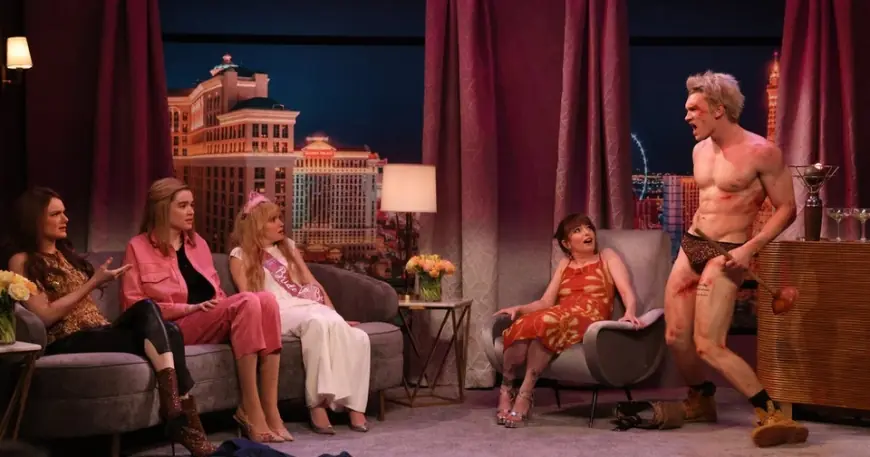
The sketch opened at a bachelorette party in Las Vegas, where friends anticipated a male exotic dancer. The stripper, played by Storrie, arrived in a mangled state: he squirmed across the hotel-room floor in pain, his body beaten and his face bloody, and said he had been hit by a car en route to the fete. The comedy came from the character’s commitment to the gig — embodying a sexy-plumber fantasy even while appearing to have fractured legs. He laboriously hoisted himself up, attempted to dance while wobbling on a plunger, and drew laughs with a line that referenced a plumber. At one point he asked a bachelorette to tie his tool belt around his thigh like a tourniquet, an action that underlined how his efforts to look sexy persisted amid physical distress.
Why the Sketch Landed: Clowning, Vulnerability and Objectification
Storrie developed the character himself, drawing on prior study of the art of clowning. That training, which hinges on a performer’s willingness to be physically vulnerable and treats the clown’s body as a primary prop, was evident in the performance. He combined those instincts with his public image to create a piece of subversive slapstick that also acted as cheeky commentary on objectification. One of the women in the sketch summed that tension up: "I'm worried about him, but I definitely don't want him to stop. "
Hudson Williams' Role and the Limits of the Provided Context
One of the supplied headlines names Hudson Williams as joining Connor Storrie on Saturday Night Live in connection with the episode. The body of the provided article focuses on Storrie’s monologue, the Las Vegas bachelorette sketch, his clowning background, and audience reaction, but it does not supply details about Hudson Williams’ role or presence; those particulars are unclear in the provided context. hudson williams is therefore identified in headline form, but the text does not elaborate further.
Additional Notes Pulled from the Provided Context
The supplied material also included a separate, brief notice that the U. S. and Israel have attacked Iran. In addition, a technical advisory from a news site appeared in the context stating the site was built to take advantage of the latest technology to improve speed and experience and that some browsers are not supported; readers were told to update or download a supported browser. The original item also included a copyright line and a note that the site is protected by reCAPTCHA and the Google Privacy Policy and Terms of Service.
Taken together, the provided context paints a picture of an SNL episode built around a host who leans into physical vulnerability and an inflated public image, while also flagging an external headline naming Hudson Williams that the available text does not explain. Details about any direct interaction between Hudson Williams and Connor Storrie on the program are unclear in the provided context.