
























Ftse 100 slips as oil spikes and geopolitical shocks rattle markets


The ftse 100 weakened as investors reacted to a weekend escalation in the Middle East that sent oil sharply higher and pushed gold to fresh record levels, weighing particularly on travel and banking stocks.
Market reaction to weekend events in the Middle East
Richard Hunter, head of markets, said investors were using the first chance to react to the weekend’s violent developments in the Middle East, and that those moves showed up in sector rotations rather than a uniform sell-off. The oil price jumped by almost 9% overnight even as OPEC announced plans to increase production, and attacks on ships in the Strait of Hormuz kept tensions high.
Ftse 100 winners, losers and the sectors that held up
Energy, defence, utilities and mining stocks provided the strongest support for the index, with BP, Shell, BAE Systems, Fresnillo and SSE singled out as holding up. Travel stocks bore the brunt of the panic: International Consolidated Airlines Group SA plunged by as much as 11% initially, while easyJet fell nearly 5%—a decline the write-up said all but cements the airline’s impending relegation at this week’s index reshuffle. Hotelier InterContinental Hotels Group was also sold down.
Banking pressure and the year-to-date picture
Banks including Barclays, HSBC Holdings and Standard Chartered were weaker as investors retrenched, though the FTSE100 remained ahead by 9% so far this year on the strength of defensive sectors. The market note repeated an invitation to readers to “join us and over 500, 000 others already investing for a brighter financial future. ”
Company spotlight: Bunzl’s turnaround work and lingering questions
The review revisited Bunzl, where a profit warning last year triggered heavy selling. A subsequent trading statement and half-year numbers in August steadied the situation, with the company resuming a £200 million share buyback and seeing a slower decline in operating profit margin. The note said Bunzl’s largest market is North America, accounting for 53% of overall revenues, and that a combination of sales weakness, product price deflation and costs tied to the rollout of its own branded offering had driven investor concern. The write-up flagged questions over Bunzl’s bolt-on acquisition policy: eight acquisitions were made during the year for a total consideration of £132 million. Annual revenues grew by 0. 6% to £11. 85 billion and by 3% at constant exchange rates, while adjusted operating profit of £910. 3 million was 6. 7% lower.
U. S. futures, oil and the wider shock to markets
U. S. stock futures moved sharply lower Sunday evening as markets digested a U. S. -Israeli bombardment of Iran over the weekend. Futures tied to the Dow Jones fell 353 points, or 0. 72%; S&P 500 futures were down 0. 68% and Nasdaq futures lost 0. 79%. U. S. oil futures rose 5. 6% to $70. 77 a barrel and Brent crude gained 5. 9% to $77. 15 after earlier spiking by more than 8%. In over-the-counter trading earlier on Sunday, Brent prices jumped about 10% to roughly $80 a barrel.
Shipping, Strait of Hormuz and supply risk
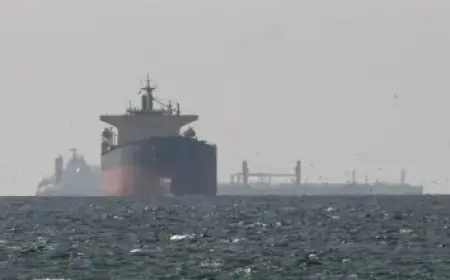
Iran pumped 4. 7 million barrels per day last year, about 4. 4% of global oil supplies, and the bigger concern is the potential for Iran to disrupt the Strait of Hormuz, through which roughly a fifth of the world’s oil passes. The Islamic Revolutionary Guards Corps warned ships that passage was not allowed and said on Sunday that it struck three oil tankers with missiles. Hundreds of tankers dropped anchor or were stationary near the strait after tanker owners, oil majors and trading houses suspended shipments through the route on Saturday as a precaution. Greece’s shipping ministry advised vessels to avoid the Persian Gulf, the Gulf of Oman and the Strait of Hormuz, and Maersk said it was suspending all vessel crossings through the strait until further notice.
Analysts, gold and geopolitical commentary
Idanna Appio, a portfolio manager and senior analyst covering sovereign debt and foreign exchanges, said a closure of the strait would hit Asia hardest because many economies there depend on those import routes. Alan Gelder, senior VP for refining, chemicals and oil markets, estimated it could take a few weeks for export flows to resume even in the most optimistic scenario where Tehran cooperates, and warned that the OPEC+ decision to boost production—with plans to increase output by 206, 000 barrels a day in April from its 137, 000-barrel monthly increments—could be moot if flows do not resume. Gold rose 2. 3% to $5, 367 per ounce as investors sought a safe haven.
Access notices and reader instructions
A separate site notice that interrupted access asked visitors to click a box to confirm they were not a robot and to make sure their browsers supported JavaScript and cookies and were not blocking them. The message advised readers they could review the site’s Terms of Service and Cookie Policy for more information, and asked anyone with inquiries to contact the support team and provide the reference ID shown with the message. The notice also pitched a subscription to receive the most important global markets news at users’ fingertips.
The next confirmed events penciled into the calendar are the index reshuffle this week, which will determine easyJet’s index status, and OPEC+’s planned output uplift in April; market participants will watch shipping lanes and any announcements on tanker traffic for signals on whether oil flows can resume.