
























Spy Stock Signals Risk as New Tariffs and Sky-High S&P Valuations Tighten Market Pressure

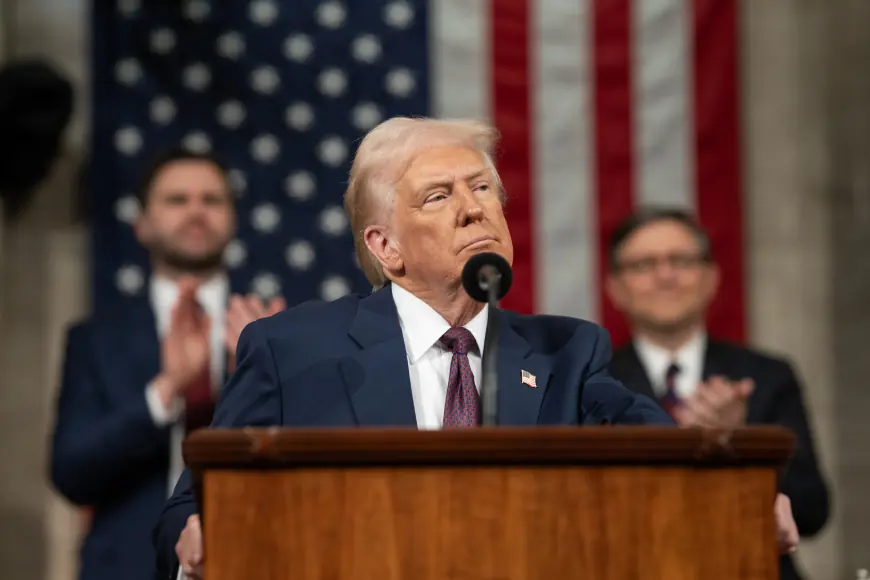
President Trump’s decision to replace struck-down IEEPA duties with a global tariff under Section 122 — initially set at 10% and raised to 15% a day later — has sharpened investor focus on Spy Stock, as the S&P 500 sits at a cyclically adjusted price-to-earnings ratio of 40. 2. The policy shift matters now because independent studies and government data point to tariffs transferring most of the burden to U. S. businesses and consumers, a dynamic that is already showing up in hiring, growth and inflation figures.
Spy Stock and the S&P 500's 40. 2 CAPE
The S&P 500’s CAPE reached 40. 2 in January 2026, the highest reading since the dot‑com era in September 2000. Robert Shiller’s CAPE framework, used to assess market valuation, has historically signaled weak forward returns when the multiple tops 40. Charles Schwab strategist Kevin Gordon highlights a divergence this year: the S&P has traded largely sideways while a benchmark for global markets outside the U. S. advanced by about 10%.
That valuation backdrop is central to current concerns about Spy Stock because stretched multiples amplify the market impact of any adverse economic shock. What makes this notable is that historically rare CAPE levels have correlated with muted or negative returns, raising the stakes for highly valued U. S. equities should growth slow or corporate profits disappoint.
Section 122 Tariffs, the Supreme Court and Import Taxes
Last year’s tariffs imposed under the International Emergency Economic Powers Act ranged from 10% to 50% on imports; the Supreme Court later found those IEEPA tariffs exceeded presidential authority. The administration then invoked Section 122 of the Trade Act of 1974 to impose a global tariff that began at 10% and was increased to 15% a day later. Section 122 duties carry a built‑in timeline: they expire after 150 days unless extended by Congress.
Estimations by the Budget Lab at Yale place the average tax on U. S. imports at roughly 16% before the Supreme Court decision and about 13. 7% afterward. Multiple research institutions — the Congressional Budget Office, the Federal Reserve Bank of New York, the Kiel Institute and the National Bureau of Economic Research — converge on a striking finding: roughly 90% of tariff costs have been borne by U. S. businesses and consumers.
The causal chain is straightforward. Higher import taxes raise costs for firms and households, leaving less discretionary income and working capital to support consumption and investment. The Congressional Budget Office notes that every dollar collected in tariffs is a dollar not available to support other economic activity, which reduces gross domestic product relative to a tariff‑free baseline.
Economic Data: Jobs, GDP and PCE Inflation
Those macro effects are already visible in official data for 2025. The U. S. added 181, 000 jobs over the year, the weakest annual gain outside the pandemic era since 2009. GDP expanded 2. 2% in 2025, the slowest growth in a decade when excluding the pandemic years. Meanwhile, personal consumption expenditures inflation reached 2. 9% in December 2025, the highest monthly reading since March 2024.
The combination of elevated inflation, slowing job gains and weaker growth tightens the margin for error for investors in Spy Stock. If tariffs continue to lift costs for firms and households, the resulting drag on consumer spending could depress corporate revenues and make richly valued equities more vulnerable to downside moves.
Investors are now balancing three concrete pressures: a high CAPE multiple that amplifies downside risk, temporary tariff authority under Section 122 that could change after 150 days, and empirical estimates showing that tariff incidence lands heavily on domestic consumers and businesses. Together these elements frame the immediate market question: can corporate earnings and growth outpace the headwinds mounted by trade policy and already elevated valuations?