

























Earthquake Shakes South-Central Nebraska; Residents From Beaver Crossing to Lincoln Say They Felt Rattling After 4.1 Event Near Cowles

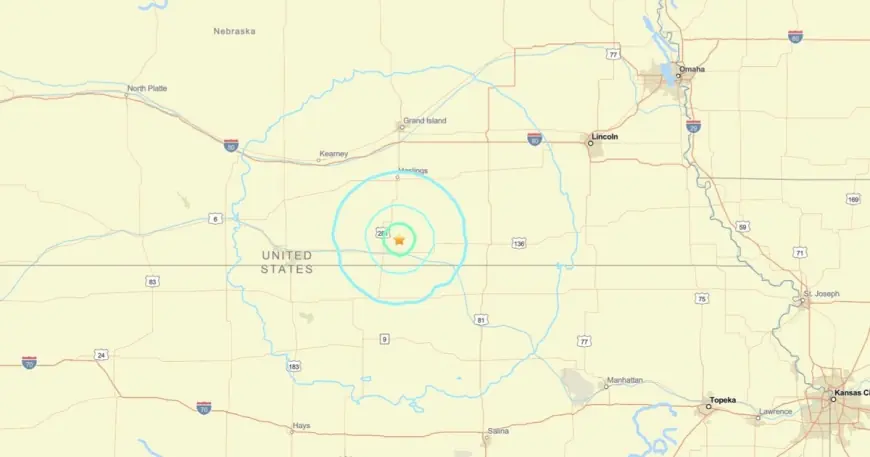
Who felt the immediate effects of the earthquake matters more than the technical labels: residents across a wide swath of south-central Nebraska—from Beaver Crossing to Lincoln—and some in Omaha and as far as Manhattan, Kansas, reported faint rumbling or rattling in homes. That spread shows the 4. 1-magnitude jolt and its smaller follow-ups registered beyond the tiny village near the state line, with personal reports describing brief, disorienting shakes.
Earthquake impact: which communities noticed the shaking and how
People described subtle sensations—floor rumbling, objects rattling, and brief shakes that some initially mistook for a passing train or a pet. A local news team spoke with two residents who described their experiences: Richard Webb said he assumed a fridge was the cause while David Crable initially thought his dog was shaking. Numerous other reports came from areas extending toward Omaha and from parts of Kansas, indicating the shaking was felt across a broad region.
Event details and recorded measurements
The U. S. Geological Survey recorded a magnitude 4. 1 event centered roughly three miles east of Cowles in Webster County, described in coverage as south of Hastings and located in south-central Nebraska near the Kansas border. There is a minor timing discrepancy in the provided context: one account lists the first quake as recorded at 12: 59 p. m., while another describes it as around 1 p. m.; unclear in the provided context. The initial event had a depth of about 2 miles and was felt across a minimum distance of 86 miles.
About an hour and a half later—described as approximately 90 minutes after the initial jolt—an aftershock of magnitude 2. 6 occurred about a mile east of the original site and was recorded at 2: 30 p. m.; its depth was nearly 3. 5 miles. A third quake, also measured at magnitude 2. 6, was recorded at 8: 45 p. m. farther south than the first two events with a depth just over three miles.
Community response and immediate reactions
Residents reported a range of reactions from casual curiosity to surprise. Some noted only a faint vibration; others said the shaking woke them or made them check for obvious causes. A local news outlet invited readers to submit photos and videos of any effects observed that day. The personal accounts collected highlight that even light quakes can register strongly in small communities where surprises stand out.
How this fits into Nebraska's seismic pattern
Earthquakes are relatively rare in Nebraska but the state typically records one or two minor events per year. The last recorded quake of magnitude 4 or above in the state occurred in December 2023 and was also located in Webster County, establishing a recent local precedent for a larger but still light event in the same county.
Here’s the part that matters for residents and local officials: the pattern of a moderate main shock followed by smaller quakes in the same area is consistent with aftershock sequences, and the geographic reach of reports demonstrates that even light events can be widely felt.
- Initial event: magnitude 4. 1 near Cowles (Webster County), depth ~2 miles, recorded at 12: 59 p. m. (one account lists around 1 p. m.; unclear in the provided context).
- Aftershock: magnitude 2. 6 roughly 90 minutes later, recorded at 2: 30 p. m., depth nearly 3. 5 miles, about 1 mile east of the first.
- Third event: magnitude 2. 6 at 8: 45 p. m., located more to the south, depth just over 3 miles.
- Reports of shaking came from Beaver Crossing to Lincoln and as far as Omaha and Manhattan, Kansas; personal reactions ranged from mistaking the tremor for a fridge or a dog to feeling the bed shake.
- Nebraska normally records one or two minor quakes per year; the last 4. 0+ event in the state was in December 2023 in Webster County.
What's easy to miss is how quickly local impressions travel: small communities tend to amplify the perception of uncommon events, and the catalogue of firsthand accounts helps map felt intensity across towns and cities. The real question now is whether local monitoring will register more aftershocks in the near term; recent notes describe two smaller events after the 4. 1 main shock.
Writer's aside: community descriptions—what people called a fridge or a dog—give the clearest window into how disruptive a light quake can feel, even when structural damage is unlikely.