























Alireza Arafi joins interim council as US‑Israeli strikes batter Tehran and the region

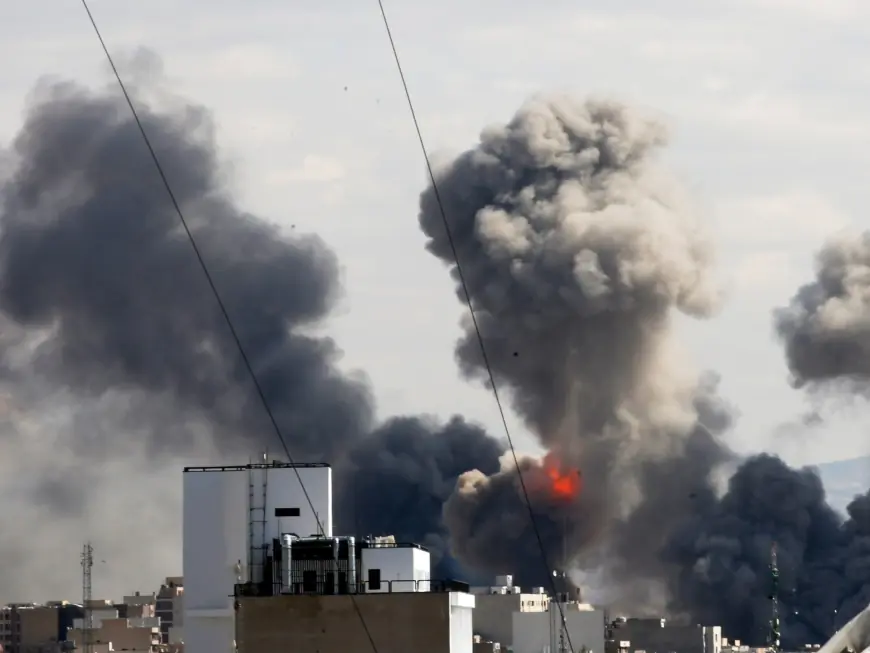
Alireza Arafi was announced on Sunday as the third member of a three‑person council that will govern Iran after the death of Supreme Leader Ayatollah Ali Khamenei, even as huge air strikes by the United States and Israel continued to hit Tehran and other cities. alireza arafi’s appointment comes amid repeated strikes on the capital, widespread internet disruption and mounting casualties both inside and beyond Iran’s borders.
Council formed immediately after Khamenei’s death; Assembly of Experts still set to choose successor
After the death of Ayatollah Ali Khamenei and several top commanders in Tehran at the start of the war on Saturday, a three‑member council will govern until the Assembly of Experts—established by laws put into motion after the 1979 Islamic Revolution—selects the next supreme leader. Masoud Pezeshkian, the Iranian president, said the new leadership council "has begun its work. " Iran’s foreign minister, Abbas Araghchi, said the process should be complete within days.
Judiciary chief Gholam‑Hossein Mohseni‑Ejei and President Pezeshkian have vowed continuity. In his first video address on Sunday, Pezeshkian called on pro‑establishment supporters to congregate at mosques and major city streets despite the war. The Expediency Council was tasked with selecting the jurisprudence expert who would join the governing body, and the third member was announced on Sunday to be Ayatollah Alireza Arafi, a clerical member of Council. alireza arafi’s selection completes the immediate trio who will hold power while formal procedures move forward.
Khamenei and top commanders killed in Tehran as the capital was rocked on Sunday
For the first time in 37 years, the sun rose on a leaderless Tehran, its streets unusually hushed after the news that Supreme Leader Ayatollah Ali Khamenei had been killed in joint U. S. ‑Israeli airstrikes. The capital was rocked numerous times on Sunday after a series of attacks hit multiple neighbourhoods, with the Israeli army saying military centres were among the targets. Iranian authorities largely refrained from discussing missile impacts, and internet connectivity remained almost entirely blocked for a second day.
IRGC and armed forces see heavy losses and vow retaliation
The Islamic Revolutionary Guard Corps, founded after the 1979 revolution and described as a sizeable military and economic force, is expected to play a key role in the response. Mohammad Pakpour, who had been appointed commander‑in‑chief of the IRGC less than a year ago after his predecessor was assassinated during the 12‑day war with Israel, was killed on Saturday. Abdolrahim Mousavi, chief of staff of Iran’s armed forces; Defence Council chief Ali Shamkhani; and police intelligence chief Gholam‑Reza Rezaeian were also among those killed.
The IRGC vowed revenge and launched what it called "the heaviest offensive operations in the history of the armed forces of the Islamic Republic against occupied lands [a reference to Israel] and the bases of American terrorists. " Army chief Amir Hatami pledged to continue defending the country, and the army said its fighter jets completed bombing runs of US bases across the region without offering footage. Police chief Ahmad‑Reza Radan said his forces are prepared to fight for "public safety" as the US and Israel have openly called on the Iranian people to protest in the streets in the foreseeable future with the goal of overthrowing the establishment.
Cross‑border exchanges leave Lebanese civilians dead and US troops killed
Hezbollah claimed responsibility for strikes on an Israeli missile‑defense site, and Israeli strikes in southern Lebanon killed at least 31 Lebanese citizens and injured 149 others; the Lebanese health ministry warned those numbers are preliminary and could grow. Lebanese President Joseph Aoun decried attacks launched from Lebanese territory and the Israeli counterstrikes, urged groups not to use Lebanon for proxy wars and warned that the operations threaten the country’s safety, saying, "This is something the state will not allow to be repeated, and the Lebanese people — who are still working to this day to heal the wounds caused by previous confrontations — will not accept it. "
Separately, three U. S. service members have been killed in action and five others have been seriously wounded, the U. S. military said.
Civilians and athletes caught up in conflict as evacuations and pleas mount
The strikes and ensuing instability have touched civilians at home and abroad. Dawn Staley, coach at the University of South Carolina, said on social media that the school is working to help three former players return home from Israel, where they are playing professionally. The trio of former Gamecocks—Tiffany Mitchell, Destiny Littleton and Mikiah Herbert Harrigan—are among those in Israel; Mitchell played last season in Seattle and Harrigan was on the Phoenix Mercury.
Staley asked for prayers for the players "who are in a war zone in Israel, " writing, "We are working a plan to get home. Let us pray for our loved ones to return home safely asap! Thank you in advance. " Littleton posted, "It’s 12: 48 am and I’m going to attempt to get some sleep, " and added, "Prayers for safety for everyone impacted. " Other players in the Israeli league with WNBA ties include Victoria Vivians, Christyn Williams, Shyanne Sellers, Arella Guirantes and Evina Westbrook. The United States and Israel launched an attack on Iran on Saturday, a move that has rippled across the region and into civilian life.
A liveblog on the events has ended.
Security chief Ali Larijani backed the constitutional process for deciding future leadership while making an outreach to countries battling incoming Iranian missiles and drones; in a post in Arabic on social media, he said "Tehran does not" — unclear in the provided context.