

























Australians to Witness Rare ‘Blood Moon’: Viewing Dates Announced

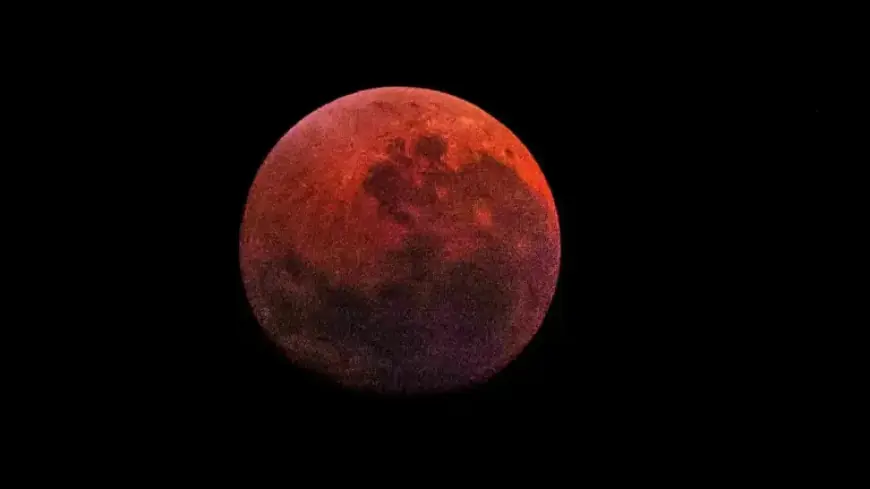
A rare astronomical event, the ‘Blood Moon,’ is set to grace Australian skies on March 3. This total lunar eclipse will be the last of its kind visible from Earth for three years. The eclipse offers a unique opportunity for skywatchers across the nation to witness the moon transform into a striking red hue.
Details of the Lunar Eclipse
The total lunar eclipse will occur when the Earth positions itself directly between the sun and the moon, casting a shadow that causes the moon to take on a reddish color. This phenomenon happens as sunlight filters through the Earth’s atmosphere. Laura Driessen, an astrophysicist from the University of Sydney, emphasizes that no special equipment is necessary. “You don’t need a telescope – just step outside and look up,” said Dr. Driessen.
Viewing Times Across Major Cities
- Sydney: Partial eclipse begins at 8:50 PM; total eclipse from 10:04 PM to 11:02 PM
- Melbourne: Partial eclipse begins at 8:50 PM; total eclipse from 10:04 PM to 11:02 PM
- Canberra: Partial eclipse begins at 8:05 PM; total eclipse from 10:04 PM to 11:02 PM
- Hobart: Partial eclipse begins at 8:05 PM; total eclipse from 10:04 PM to 11:02 PM
- Brisbane: Partial eclipse begins at 7:50 PM; total eclipse from 9:04 PM to 10:02 PM
- Adelaide: Partial eclipse begins at 8:34 PM; total eclipse from 9:44 PM to 10:32 PM
- Darwin: Partial eclipse begins at 7:34 PM; total eclipse from 8:34 PM to 9:32 PM
- Perth: Moonrise starts at 6:43 PM; total eclipse from 7:04 PM to 8:02 PM (moon already partially eclipsed)
Why Witness a ‘Blood Moon’?
Lunar eclipses are among the most accessible astronomical events. They provide a fantastic opportunity for people of all ages to engage with nature and science. Dr. Driessen noted, “Lunar eclipses are one of the most accessible and awe-inspiring astronomical events we can experience.” Be sure to mark your calendars for this rare sight in the Australian sky. For more information and updates, visit Filmogaz.com.