























Cyprus News: Drone strike on RAF Akrotiri increases immediate risks for personnel, families and regional operations

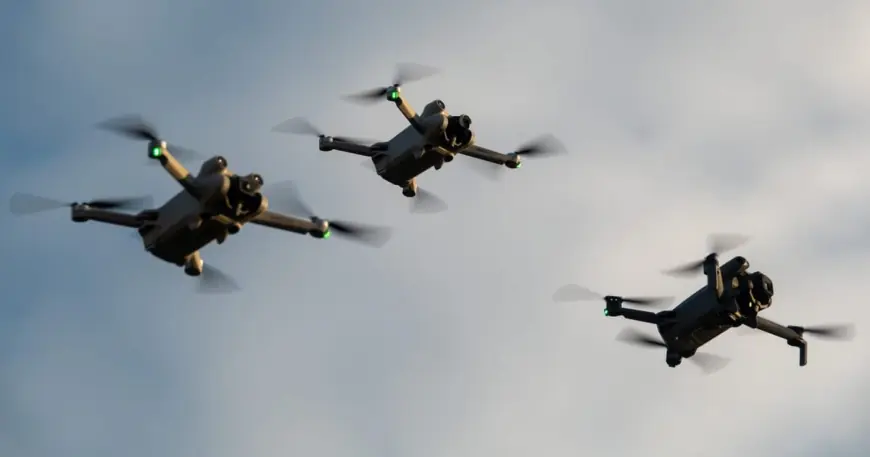
The strike on RAF Akrotiri has shifted the immediate burden onto service members, their families and nearby civilians — and it arrives as wider exchanges between Iran and US–Israeli forces escalate. cyprus news now centers on precautionary moves at the base, short-term dispersal of non‑essential personnel and a confirmed order from the UK prime minister to make bases available for defensive action requested by the US.
Cyprus News impact: who is closest to the disruption and what changes right away
Here’s the part that matters: no casualties were reported, but the base will operate under elevated protection and family members are being moved as a precaution. The Sovereign Base Areas Administration has planned a temporary dispersal of non‑essential personnel from RAF Akrotiri Station, and family members at the base will be moved to alternative accommodation. That temporary dispersal is limited to the military base only; residents of the nearby Akrotiri village do not need to leave and all other local workplaces and facilities remain open.
Event details and unresolved timing
Cypriot President Nikos Christodoulides said an Iranian drone crashed into the British RAF base at Akrotiri. The Ministry of Defence described the incident as a suspected drone strike and said the base sustained minimal damage. Two different time references appear in coverage: one notes the strike occurred at around midnight local time (22: 00 GMT) and another gives a local time of 12: 03 a. m.; the precise timing is unclear in the provided context. One account identified the unmanned aerial vehicle as a Shahed‑type drone that caused minor damage when it crashed into military facilities.
How the strike fits into a widening pattern of regional attacks
The incident at Akrotiri comes amid a broader escalation. The latest conflict began when Israel and the US launched a massive and ongoing attack against Iran’s leadership and military, with Supreme Leader Ayatollah Ali Khamenei among those killed, and Iran has replied with ballistic missiles and drones targeting US assets and allies across the region. Named locations hit in return include Israel, Bahrain, Kuwait, Qatar, the United Arab Emirates, Jordan and Saudi Arabia. Specific strikes cited include attacks on a US naval base in Bahrain, where 300 British personnel were within 200 metres of an Iranian missile and drone strike; more than 25 waves of retaliatory attacks were noted in that context.
UK military responses, movement of assets and defence posture
British defence activity has included shooting down an Iranian drone in Iraq that was said to be heading for a western base, and an Iranian missile landed 400 metres from UK personnel in Iraq who were on counter‑Islamic State operations. Another drone heading for Qatar was intercepted by a Typhoon jet using an air‑to‑air missile. British jets from RAF Akrotiri and the American Al Udeid airbase in Qatar have been mobilised to shoot down drones and slower cruise missiles, though they cannot stop faster-moving ballistic missiles. All UK personnel in the Middle East are said to be safe and accounted for, and troops remain on the highest state of alert with locations under review as the situation develops.
Political and diplomatic moves tied to the strike
Prime Minister Sir Keir Starmer has confirmed the UK agreed to a US request to use British bases for defensive strikes, described both as allowing US use for a limited defensive purpose and as permitting use to destroy missiles at source. Defence Secretary John Healey warned British troops and civilians in the Middle East are at risk from what he characterised as indiscriminate attacks, and he has said Iran is lashing out in an increasingly indiscriminate and widespread way. The Cypriot president briefed European Commission President Ursula von der Leyen, who said the Republic of Cyprus was not the target and that EU members stand collectively and firmly in the face of any threat.
- First known hit on a UK base in Cyprus since a 1986 rocket attack by Libyan militants.
- Akrotiri is one of two British bases on Cyprus; it sits on a southern peninsula southwest of Limassol and has been maintained since Cyprus independence in 1960.
- The base has been used in past operations in Iraq, Syria and Yemen.
- Officials say two missiles were fired toward Cyprus at one point, though they believe Cyprus was not the target; in other accounts Iran fired two missiles into the eastern Mediterranean in the direction of Cyprus that may have been aimed at a US carrier strike group.
- Several civilian sites have also been hit in the wider wave of strikes, including a Kuwait airport, a Fairmont hotel in Dubai and a skyscraper in Bahrain.
The real question now is whether defensive use of UK bases and the temporary dispersal at Akrotiri will be enough to reduce risk to personnel and families if the wider exchanges continue. It’s easy to overlook, but the mix of tactical defensive actions and public assurances—base operations continuing as normal while some personnel are moved—reflects a tense balancing act between deterrence and minimising disruption for nearby civilians.
Writer’s aside: the decisions to move families and temporarily disperse non‑essential staff show a cautious posture that aims to protect people without creating broader civilian displacement; that balance will be tested if further incidents occur.
The situation remains active and details may evolve as officials reconcile differing time references and additional operational facts.