
























Spacex Launch: Falcon 9 Delivers 29 Starlink Satellites from Cape Canaveral

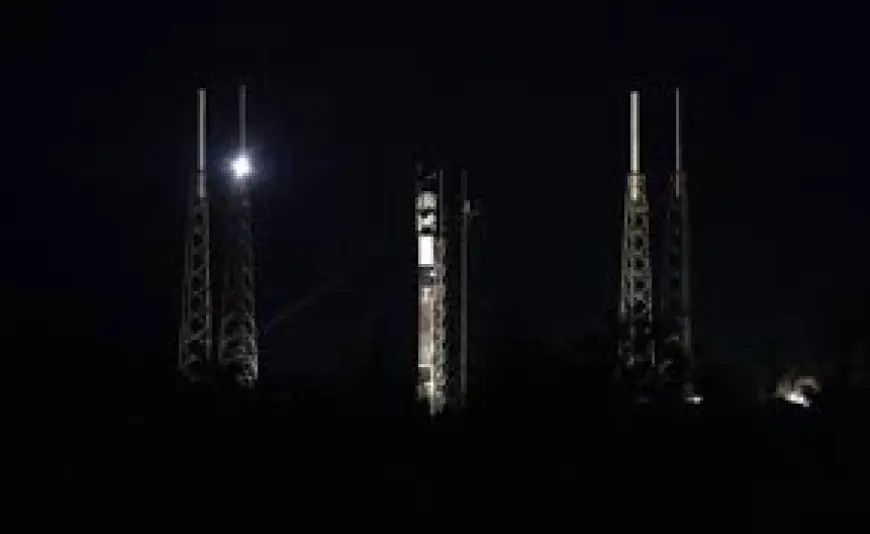
The Spacex Launch on Sunday night successfully placed 29 Starlink satellites into orbit, a confirmation logged at Mar. 1, 11: 03 p. m. EST (0403 UTC). The flight, which lifted from Space Launch Complex 40 at Cape Canaveral Space Force Station, marks another rapid turn of missions in a month that began with multiple Falcon 9 launches.
Spacex Launch at Space Launch Complex 40
The Falcon 9 rose at 9: 56: 40 p. m. EST (0256: 40 UTC) from Space Launch Complex 40. This mission, designated Starlink 10-41, was counted as SpaceX’s 22nd mission of the year to support its broadband internet constellation in low Earth orbit. The night launch followed a Sunday morning flight that placed 25 Starlink satellites into orbit, bringing the company’s tally to 566 satellites deployed so far this year.
Starlink 10-41 mission and satellite counts
SpaceX confirmed deployment of the 29 satellites after ascent. The Starlink 10-41 flight returned to a north-easterly trajectory, reversing a stretch of predominantly south-easterly trajectories that had persisted for roughly four months. The two flights on the same day—one in the morning and one at night—pushed cumulative deployments and underscored the brisk launch tempo.
Booster B1078 and droneship Just Read the Instructions
The first-stage booster for the mission carried tail number B1078 and was making its 26th flight, with a flight history that includes Crew-6, Nusantara Lima and USSF-124. Less than 8. 5 minutes after liftoff, B1078 returned to land on the droneship Just Read the Instructions, stationed in the Atlantic Ocean off the coast of South Carolina. That touchdown represented the 152nd landing on that vessel and the 580th booster landing recorded by the company to date.
45th Weather Squadron forecast and launch conditions
The 45th Weather Squadron gave the Sunday night launch a 90 percent chance of favorable conditions, while noting a small possibility of interference from cumulus clouds. The presence of low-hanging clouds did not prevent a successful ascent; earlier that same day, a cargo capsule carrying nearly 5, 500 pounds of experiments and supplies was launched on a three-day trip to the International Space Station, climbing through similar sky conditions from the same pad where Apollo-era missions once began.
Related commercial crew plans and other Falcon 9 missions
Alongside the Starlink work, officials have set new target dates for commercial crew test flights under development by two companies. Unpiloted demonstration flights for the Crew Dragon and the CST-100 Starliner are scheduled for January and March, followed by crewed orbital missions slated for mid-2019. Separately, observers were invited to follow key events of the Falcon 9 ascent that included another payload sequence: the third set of 10 next-generation satellites for Iridium’s voice and data relay fleet.
Regional tech site browser message
A Florida-based news website displayed a message explaining the site was built to use the latest browser technology and that some readers’ browsers were not supported, urging upgrades to ensure the best experience. The notice recommended downloading a modern browser to access the publication’s features.
What makes this notable is the combination of operational tempo and hardware reuse: a booster on its 26th flight returned to a routine droneship recovery less than 8. 5 minutes after a night liftoff, while fleet deployments continued unabated across multiple launches in a single day. The sequence of events—liftoff at 9: 56: 40 p. m. EST, deployment confirmation at 11: 03 p. m. EST, and the droneship recovery—illustrates a tightly choreographed cadence of launches, landings and payload deliveries that has measurable impact on constellation buildup and supply missions to low Earth orbit.