






















Khamenei’s Killing Prompts Three-Member Transitional Council and Rising Tensions

Iran announced a three-member transitional council after the killing of Supreme Leader khamenei in joint United States and Israeli strikes, a move meant to steady state functions even as the country braces for wider confrontation. The sudden leadership shift matters now because the constitution sets a clear interim procedure while military and political authorities signal both internal jockeying and continued reprisals.
Transitional council led by Ayatollah Alireza Arafi
On Sunday Ayatollah Alireza Arafi was appointed to the temporary council alongside President Masoud Pezeshkian and Supreme Court Chief Justice Gholam-Hossein Mohseni-Ejei. Arafi, 67, is a member of a powerful constitutional watchdog and sits on Council that will have a role in the selection of a future supreme leader. His appointment was confirmed by the Expediency Council, which acted to formalize the three-member body.
After Khamenei’s killing: constitutional route under Article 111
Under Article 111 of the Iranian Constitution the transitional council will carry out state duties until an 88-member Assembly of Experts selects a new supreme leader. The constitution stipulates that the Assembly of Experts must choose the successor "as soon as possible, " after nearly 37 years of rule by Khamenei. The council is presented as an interim executive mechanism, but the timeline and ultimate outcome depend on the Assembly’s deliberations.
IRGC commander killed and Ahmad Vahidi named as likely successor
The commander-in-chief of the Islamic Revolutionary Guard Corps was also killed in the same US-Israeli attack on Saturday, the second senior IRGC killing in less than a year. The next leader of the elite military and economic force has not been announced. IRGC-linked Telegram channels are citing deputy chief Ahmad Vahidi—who was appointed to that deputy position by khamenei two months ago—as a likely candidate to assume leadership of the corps.
Ali Larijani’s warnings and domestic mobilization
Iran’s security chief, Ali Larijani, has been cast as a likely pivotal figure during the transition, though observers note uncertainty about where the balance of power will lie. Earlier on Sunday Larijani accused the United States and Israel of seeking to plunder and break apart Iran and warned "secessionist groups" within the country that they would face a harsh response if they attempted action. Larijani framed the situation as national resistance, saying the nation and its soldiers would deliver an unforgettable lesson to international adversaries. Larijani is a former parliamentary speaker and senior policy adviser who was previously appointed to advise the supreme leader on nuclear strategy during talks with the administration of US President Donald Trump.
Protests, retaliation and regional impact
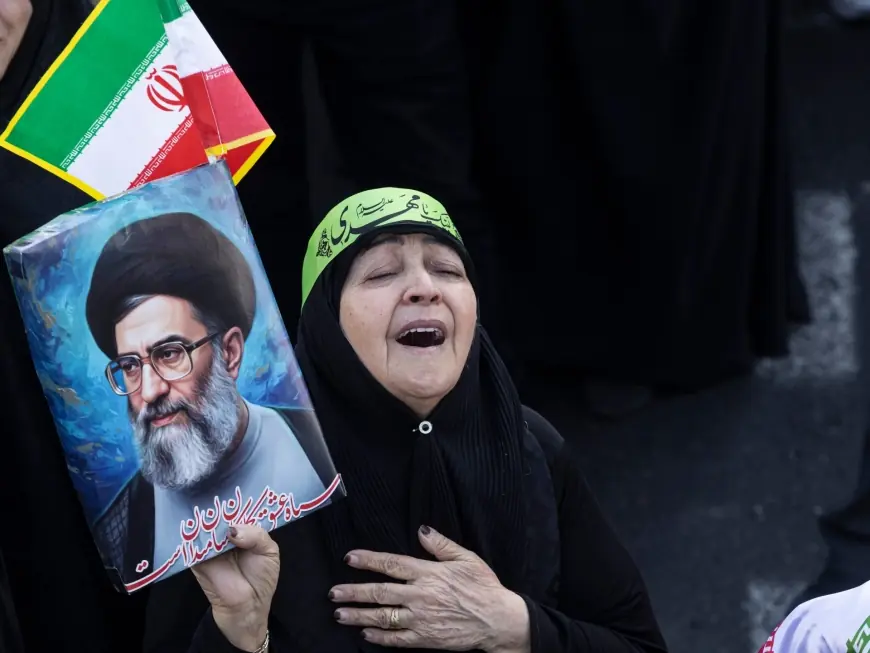
Protests erupted across Iran following the killing, and Iran’s retaliatory strikes on US assets in the region continued for a second day, intensifying fears of a wider conflict. The IRGC has pledged fierce retaliation across the region. President Masoud Pezeshkian’s office characterized the killing as "a great crime, " underscoring the political consensus behind a forceful response while the interim council begins governance.
What makes this notable is the simultaneous vacuum at both the supreme leadership and the IRGC’s top command: a constitutional mechanism exists to bridge the gap, but the deaths of both the supreme leader and the IRGC commander-in-chief in the same operation sharply compress the political and security timelines. The immediate effect is a concentrated period of decision-making—confirmation of the transitional council on Sunday, continued military action in the region, and an impending convening of the Assembly of Experts to select a new leader—while the broader implication is an unclear distribution of authority among clerical, judicial and military actors during a potentially volatile succession process.