

























Blood Moon 2026: What time is the total lunar eclipse on March 3?

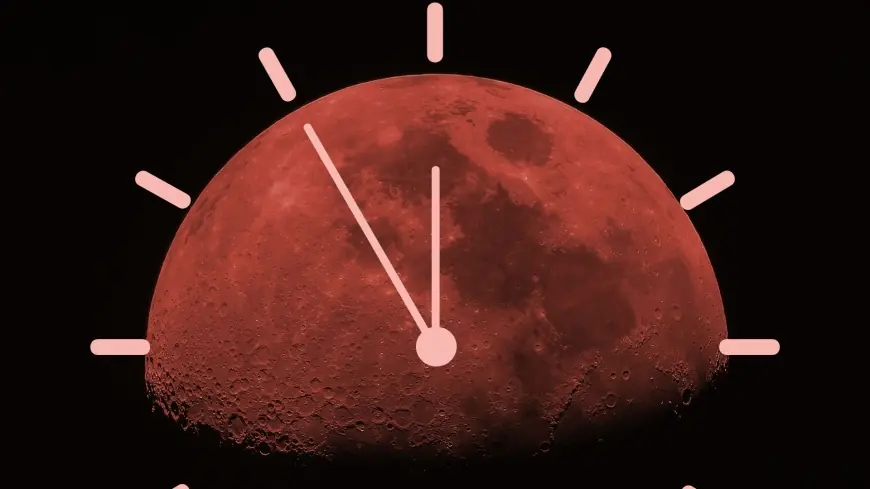
The blood moon 2026 will turn the moon blood-red for billions of people across North America, Australia and East Asia. Totality begins at 6: 04 a. m. EST (1104 GMT) on March 3 and will last about 58 minutes, peaking at 6: 33 a. m. EST (1133 GMT).
Blood Moon 2026 timing
The eclipse sequence starts well before totality. The moon enters Earth’s penumbral shadow at 3: 44 a. m. EST (0844 GMT), producing a subtle shading. Partiality begins later, at 4: 50 a. m. Eastern time (1: 50 a. m. Pacific time), and the moon moves deeper into the umbra until totality begins at 6: 04 a. m. EST (1104 GMT). The peak of totality is at 6: 33 a. m. EST (1133 GMT); totality lasts approximately 58 minutes, after which the moon will begin to exit Earth’s shadow. The overall duration of the lunar eclipse is 5 hours and 39 minutes.
Where it will be visible
The event will be visible across the Americas, including the entire Lower 48, Alaska and Hawaii, and also across Australia and East Asia. Over 40% of the world’s population—more than three billion people—will be able to see at least some of the total phase. For Alaska, Hawaii and the western two thirds of the Lower 48, observers will be able to see the entire duration of totality. On the U. S. East Coast, the moon will set and the sun will rise while totality is ongoing, producing a selenelion—when both the sun and the eclipsed moon are simultaneously visible.
Hawaii watch party details
Hawaii will be one of the places best positioned for the eclipse and will host community viewing. On Monday, March 2, from 11: 00 p. m. to 2: 30 a. m. local time the UH Institute for Astronomy and the Bishop Museum are running a watch party. Attendees can use telescopes and binoculars, and the Bishop Museum will run shows in its planetarium. UH staff will be on hand to answer questions. The moment of maximum eclipse for Hawaii is expected around 1: 30 a. m. early Tuesday local time.
What to expect during totality
During totality the moon will appear reddish because a small amount of sunlight is refracted through Earth’s atmosphere and reaches the lunar surface. That refracted light is filtered by Earth’s atmosphere in the same way that sunrises and sunsets appear red: shorter wavelengths are scattered away and longer, redder wavelengths predominate. Scientists use the Danjon Scale, ranging from 0 to 4, to categorize the shading of lunar eclipses; values run from hardly visible at 0 to bright red at 4. Historical examples include the Dec. 9, 1992 eclipse, which followed the 1991 eruption of Mount Pinatubo and was unusually dark.
Science and community reactions
Organizers of the Hawaii events said they are excited to provide keiki and families opportunities to learn more about science and astronomy. U. H. associate astronomer Roy Gal discussed the eclipse on a local morning program, explaining that a total lunar eclipse occurs when Earth comes between the Sun and the full Moon and that the moon will turn to a red, coppery, brownish color during totality. Gal said the goal for the events is to make astronomy feel fun and approachable for everyone and to inspire the next generation of local science and technology leaders. If residents miss this eclipse, they will have to wait until Dec. 31, 2028 for the next total lunar eclipse, although Hawaii will not be as well placed then; the last time Hawaii was in the path of a lunar eclipse was about six years ago.
Viewing tips and livestreams
If you cannot view the sky in person, livestreams and live blogs will be available for following the event. Telescopes and binoculars can enhance details on the lunar surface but the red coloration during totality is visible to the naked eye. Note that some contextual sunrise information in one of the briefings is truncated and is unclear in the provided context.
The March 3 total lunar eclipse will be the last total lunar eclipse anywhere on Earth until New Year’s Eve 2028–2029, making this blood moon 2026 a widely anticipated celestial event.