
























Former Iranian President Ahmadinejad Reported Killed in Israeli‑US Airstrike

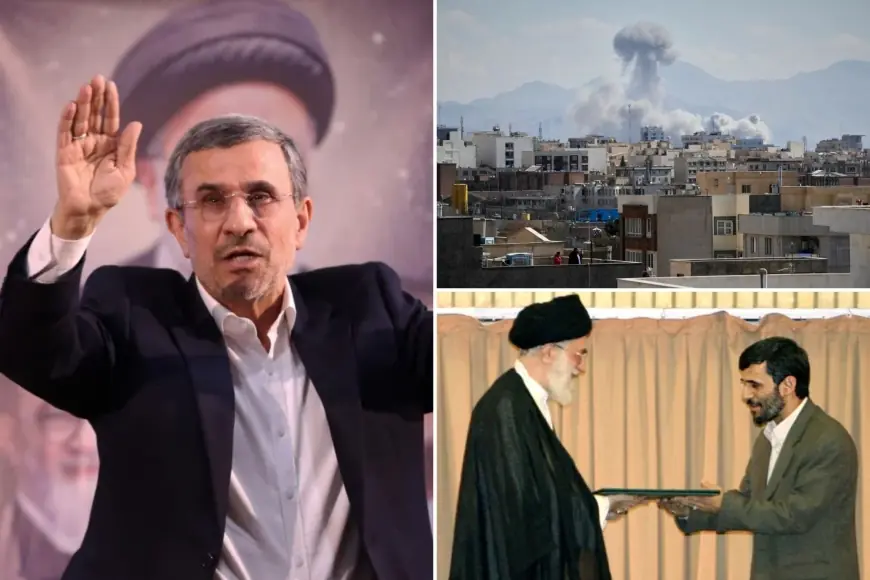
Mahmoud Ahmadinejad was reported killed in an Israeli‑US airstrike that struck his residence in Narnak, northeast Tehran, a development that coincides with a broader military operation inside Iran and could reshape an already volatile regional picture.
Ahmadinejad's death and the strike on Narnak
Multiple accounts indicate the strike hit Ahmadinejad's home in Narnak and killed him along with several bodyguards. The strike is described as an Israeli‑US operation and is said to have struck the residence directly. Coverage characterizes the outlet conveying the death notice as a domestic labor news agency and labels another outlet as pro‑regime when relaying claims about the attack.
Timing and immediate confirmations: what is known
Reports note the Narnak strike likely occurred late on Saturday, with the death notice published on Sunday. Other accounts place the action at the outset of a wider military operation inside Iran. One Israeli media report states Ahmadinejad was under house arrest at the time and was killed in a targeted strike on his residence. There was no immediate confirmation from Iranian authorities in the material provided. Precise operational details remain unclear in the provided context.
Ahmadinejad's trajectory: offices held and post‑presidential role
Mahmoud Ahmadinejad served as Iran’s president from 2005 until 2013. Before the presidency, he served as governor of Ardabil Province and as mayor of Tehran. After completing two presidential terms, he was appointed by then‑supreme leader Ayatollah Ali Khamenei to the Expediency Discernment Council, identified in the context as a 48‑member advisory council to the Office of the Supreme Leader.
Controversies, rhetoric and domestic politics
Ahmadinejad is portrayed in the provided material as a polarizing hardliner whose rhetoric and policies deepened Tehran’s international isolation. His disputed 2009 reelection prompted the mass Green Movement protests that were violently suppressed by security forces. Critics described him as a confrontational ideologue whose economic management fueled inflation. His political base is described as closely aligned with the Islamic Revolutionary Guard Corps and the Basij militia, which helped consolidate his power and suppress dissent.
International posture, sanctions and high‑profile incidents
During his presidency, Ahmadinejad became a face of Tehran’s nuclear defiance and drew international condemnation for incendiary rhetoric toward Israel and contentious remarks about the Holocaust era. The material notes a 2006 government‑hosted conference in Tehran widely condemned as a platform for Holocaust denial and references a 2005 conference titled “A World Without Zionism” in which he invoked language attributed to Iran’s founding leader that included the phrase that Israel “must be wiped off the map. ” The United Nations Security Council imposed multiple rounds of sanctions over Iran’s nuclear program during his tenure. International ties highlighted include a high‑profile alignment with Venezuelan President Hugo Chávez.
Domestic programs, later marginalization and other episodes
At home, Ahmadinejad championed the Mehr housing initiative and subsidy reforms later blamed by critics for worsening inflation and economic mismanagement. His presidency is also associated in the provided material with a public denial of the presence of homosexuals in Iran at a 2007 appearance abroad and an unusual emphasis on Shiite messianic belief. In later years he clashed openly with Supreme Leader Ali Khamenei and was repeatedly barred from running for president again, signaling his marginalization within the ruling establishment.
Broader strike campaign and leadership casualties
The same material places Ahmadinejad’s death amid a wider campaign of strikes inside Iran. It states that Ayatollah Ali Khamenei was killed in a Saturday morning opening wave of coordinated US‑Israeli strikes on Tehran that obliterated the so‑called Leadership House compound, with confirmation later emerging Iranian state‑aligned announcements and major wire reporting. The connections between those strikes and the Narnak hit are presented as part of a single, unfolding campaign in the provided context.
Details remain developing and some timing and operational specifics are unclear in the provided context. Further verification and official confirmations are not present in the material supplied.