

























Blood Moon 2026: When the March 3 Total Lunar Eclipse Will Turn the Moon Red Across the Americas and the Pacific

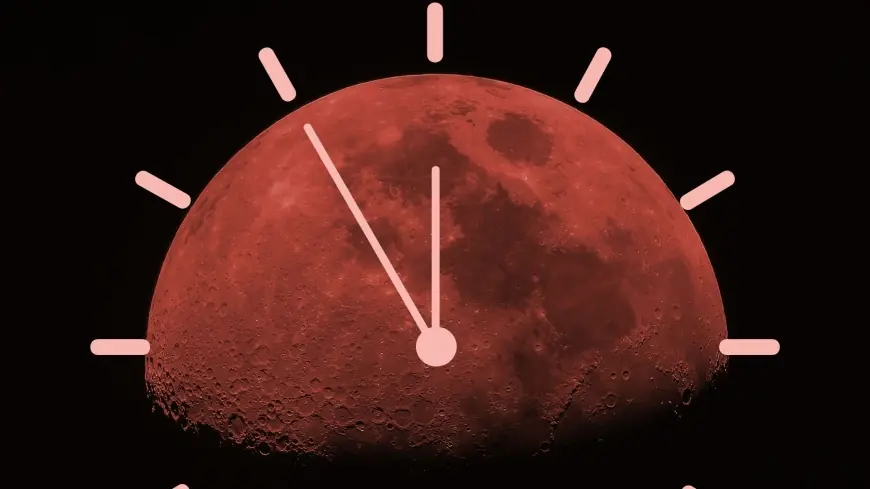
The upcoming blood moon 2026 — a total lunar eclipse on March 3 — will bathe the lunar surface in a rusty red for billions of people across North America, Australia and East Asia, delivering a dramatic sky show with global reach and several regional viewing quirks.
Timing and length of the March 3 total lunar eclipse
The eclipse sequence begins in the penumbral shadow at 3: 44 a. m. ET (0844 GMT). Partiality begins at 4: 50 a. m. ET (1: 50 a. m. PT). Totality, when the moon is fully immersed in Earth’s dark umbral shadow and takes on a red hue, begins at 6: 04 a. m. ET (1104 GMT), peaks at 6: 33 a. m. ET (1133 GMT) and lasts approximately 58 minutes. The overall event runs about 5 hours and 39 minutes from the first penumbral contact to the final penumbral exit.
Blood Moon 2026: who will see totality and where
Over 40% of the world’s population — more than three billion people — will be positioned to see at least some portion of the total phase. The eclipse will be visible across the entire Lower 48 of the United States, Alaska and Hawaii. For Alaska, Hawaii and the western two thirds of the Lower 48, observers will be able to see the full duration of totality. On the East Coast, the moon will set while totality is still underway, producing a rare selenelion: a moment when both the eclipsed moon and the rising sun are simultaneously visible.
What causes the moon to redden and what it reveals
During totality the moon does not emit its own light but is illuminated by sunlight refracted through Earth’s atmosphere. Sunlight skimming along Earth’s limb is filtered so that shorter wavelengths are scattered away and longer, redder wavelengths dominate. The eclipsed moon therefore appears as the combined light of Earth’s sunrises and sunsets at once. The exact shade — from faint brown to vivid red — can indicate atmospheric conditions and is categorized on the Danjon Scale from 0 (very dark) to 4 (very bright red). Historical examples include a very dark event following a major volcanic eruption in the early 1990s and hypothetical level-4 events that would be bright red.
Regional notes and special events — Hawaii watch party and local scheduling
Hawaii will be especially well placed to view this total lunar eclipse and will host community events. One planned watch party runs on Monday, March 2 from 11: 00 p. m. to 2: 30 a. m. local time, with telescopes and binoculars available for attendees. Planetarium shows will run alongside the outdoor viewing, and university staff will be on hand to answer questions. The moment of maximum eclipse in Hawaii is expected around 1: 30 a. m. early Tuesday local time. Organizers emphasize family-friendly programming aimed at making astronomy approachable and inspiring the next generation of local science and technology leaders. If residents miss this eclipse, the next total lunar eclipse visible from the region will be on December 31, 2028, though Hawaii will not be as favorably placed then; the last time Hawaii was directly in the path of a lunar eclipse was about six years ago.
Practical viewing tips, livestreams and additional context
Partial phases are subtle and unremarkable visually; totality is the dramatic moment. Observers who cannot attend in person have options: there will be livestreams and live blogs covering the event. For viewers tracking the schedule, note the Pacific-time equivalents already cited (partiality at 1: 50 a. m. PT, totality beginning at 3: 04 a. m. PT). Time-zone crossings mean some locales see the event late at night while others watch in the pre-dawn hours. Total solar eclipses contrast sharply with lunar eclipses in visibility: a recent total solar eclipse in the U. S. occurred on April 8, 2024, and such solar events affect narrow strips of Earth and are far rarer for any given location — on average one every 375 years — whereas lunar eclipses are visible more widely, with most locales experiencing one roughly every 2. 5 years.
Notes from the coverage and how to participate
Coverage of this eclipse has been accompanied by repeated promotional taglines emphasizing breaking space news. The coverage also notes that purchases through site links may earn an affiliate commission and that comment systems may require confirming a public display name before posting, with a suggested logout/login step to prompt that confirmation. The reporting outlet is described as part of an international media group and digital publisher. The author of recent coverage joined the publication in February 2022, completed a PhD in plant physiology in 2021, holds a Master’s in Environmental Science, is based in Nottingham, U. K., and has a stated passion for space and astrotourism.
Schedule subject to change. For viewers planning to attend local events or watch online, double-check local start times and community watch-party details before heading out.