

























Ahmadinejad’s reported killing deepens leadership shock and raises immediate security and political risks across Tehran

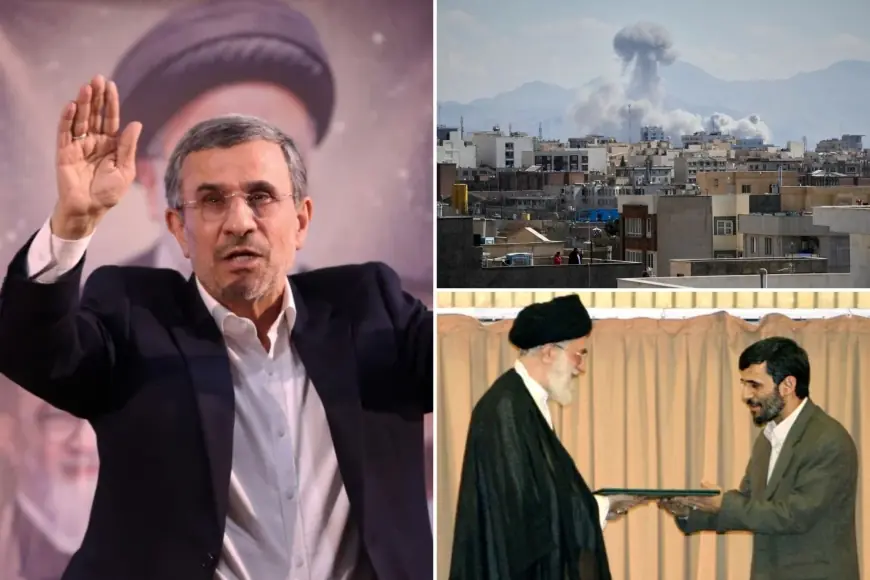
Mahmoud Ahmadinejad is reported killed in strikes on Tehran, a development that matters now because it compounds a sudden leadership rupture and will be felt first by his inner circle, Tehran’s security apparatus and rival political factions. Ahmadinejad’s death—if confirmed—adds a new layer to an already large-scale set of strikes that claim other senior figures and damaged the capital’s leadership facilities.
Immediate impact: Ahmadinejad’s circle, bodyguards and Tehran’s security posture
Here’s the part that matters: the reported strike on Ahmadinejad’s residence in Narnak, northeast Tehran, is described as having killed him and several bodyguards, which creates both an operational gap around a high-profile former president and an urgent security question for the capital. That gap will be felt most acutely among those who guarded, vetted and liaised with him, and by forces responsible for protecting senior political figures.
Strike details embedded in the wider wave of attacks
Descriptions in the available coverage present a mix of claims: one account says Ahmadinejad was killed in an Israeli–US airstrike that hit his residence; another frames the event as part of broader Israeli airstrikes at the outset of a military operation inside Iran. One outlet said he was under house arrest at the time and that the residence was the target of a targeted strike. An Iranian labor news agency released an item on Sunday saying the strike hit the Narnak residence. Timing is unclear in the available material: some descriptions place the strike late on Saturday, while others tie it to the opening wave earlier the same day. There was no immediate confirmation from Iranian authorities in the coverage provided.
Ahmadinejad’s career highlights and how they shape reaction
Mahmoud Ahmadinejad served as Iran’s president from 2005 until 2013. His rise included roles as Ardabil Province governor and as mayor of Tehran; he defeated Akbar Hashemi Rafsanjani in a surprise runoff in 2005. After two presidential terms he was appointed by then–supreme leader Ayatollah Ali Khamenei to the Expediency Discernment Council, a 48‑member advisory council to the Office of the Supreme Leader. Later clashes with the supreme leader left him marginalized and repeatedly barred from running for the presidency again.
Controversies and alignments that shaped his legacy
Ahmadinejad’s presidency was marked by several sharp controversies that shaped domestic and international responses. His disputed 2009 reelection prompted the Green Movement protests that were violently suppressed. Critics blamed elements of his economic management, including the Mehr housing initiative and subsidy reforms, for worsening inflation. Internationally, his tenure saw multiple rounds of sanctions tied to the nuclear program and frequent confrontations over his rhetoric toward Israel and remarks tied to the Holocaust; his government hosted a 2006 conference widely condemned as a platform for Holocaust denial, and a 2005 conference titled “A World Without Zionism” included a quotation of Iran’s founding leader about Israel that drew significant attention. Supporters later argued translation disputes in some remarks. His political base was described as closely aligned with the Islamic Revolutionary Guard Corps and the Basij militia. Other noted episodes include a controversial 2007 speech at Columbia University and a public emphasis on Shiite messianic belief; he also cultivated ties with foreign leaders such as Hugo Chávez.
Uncertainties, linked strikes and confirmation gaps
One of the clearest uncertainties in the available material is the exact timing and authorship of the strike that hit Ahmadinejad’s residence: accounts vary between an Israeli–US strike and Israeli-only airstrikes tied to a larger military operation. Another high-profile claim in the same coverage says that Supreme Leader Ali Khamenei was killed in a Saturday morning opening wave of coordinated US–Israeli strikes on Tehran that obliterated the Leadership House compound, with confirmation said to have emerged through Iranian state-aligned announcements and international wire reporting. Multiple elements remain unclear in the provided context, and official confirmation was not immediately available.
- Key takeaways: Ahmadinejad’s reported death deepens immediate leadership disruption and will first affect his personal security network and political allies.
- His long, contentious political record (2005–2013 presidency, earlier roles as Ardabil governor and Tehran mayor) makes reactions domestically complex and potentially factional.
- Claims about timing and strike authorship vary—some describe late Saturday action on the Narnak residence, others link the hit to an opening wave earlier that day.
- Confirmation gaps persist: there was no immediate confirmation from Iranian authorities in the material provided, so details may evolve.
It’s easy to overlook, but the overlap of claims about different targets and leaders in Tehran suggests this is not an isolated incident; the broader pattern in the available coverage indicates multiple high‑profile strikes with varying timelines and attributions. The real test will be verifiable confirmations from official channels and consistent timelines emerging over the coming reporting cycle.
Micro timeline (limited to the provided detail):
- Saturday morning: an opening wave of strikes is described as hitting Tehran and damaging the Leadership House compound.
- Late Saturday: the strike on the Narnak residence likely occurred, as described in some accounts.
- Sunday: an Iranian labor news agency published an item saying Ahmadinejad was killed in the strike.
Writer’s aside: What’s easy to miss is how quickly multiple, differing accounts accumulate around a single moment; that accelerates uncertainty and heightens the need for clear, corroborated confirmations before treating any single narrative as settled.