























Total Lunar Eclipse Blood Moon Rises Today Over North America in Last Showing Until 2028

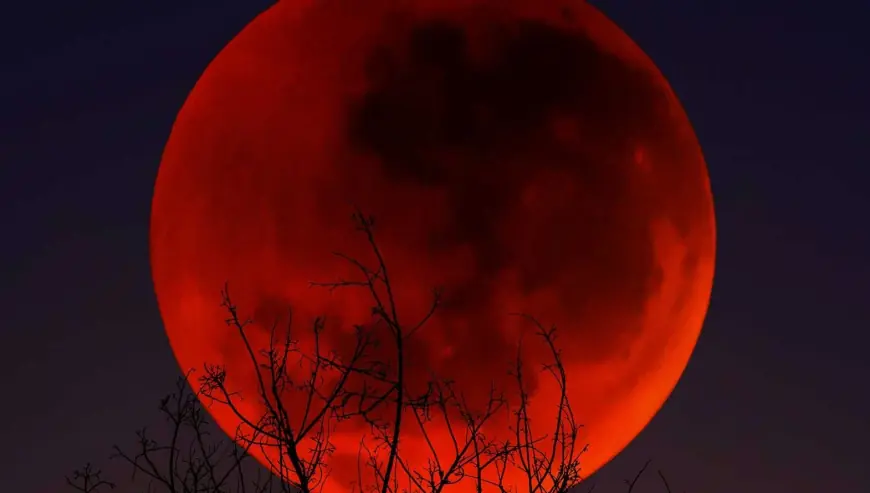
The total lunar eclipse blood moon is unfolding tonight and into the early hours of March 3, 2026, turning the full moon a deep reddish-orange for billions of skywatchers across North America, Australia, New Zealand, and eastern Asia. Totality — the window when the entire lunar surface glows red — lasts 58 minutes, from 6:04 a.m. ET to 7:02 a.m. ET on March 3.
This is the last total lunar eclipse anywhere on Earth until December 31, 2028, making the March full moon of 2026 the final blood moon opportunity for nearly three years.
March Full Moon 2026 Peaks During Totality at 6:33 a.m. ET
The full moon in March 2026 — traditionally called the Worm Moon — reaches peak illumination at 6:38 a.m. ET on March 3, placing the lunar maximum almost exactly at the midpoint of totality. Greatest eclipse, when Earth's shadow cone passes closest to the moon's center, occurs at 6:33 a.m. ET.
The partial phase begins earlier, as Earth's dark umbral shadow first touches the lunar surface at roughly 4:57 a.m. ET. Observers in the western half of North America will have the best sightlines, with the moon still high enough above the horizon during totality to offer an unobstructed view.
Viewers in New York and other eastern cities will see the moon enter totality and turn blood red, but maximum eclipse will occur after moonset, cutting the show short before the deepest red is reached.
When Is the Next Full Moon After the Lunar Eclipse 2026
The blood moon effect is caused by Rayleigh scattering — the same atmospheric process that produces red sunrises and sunsets. Earth's atmosphere strips out blue wavelengths and bends red and orange light around the planet's curvature, projecting the combined light of every sunrise and sunset simultaneously onto the lunar surface.
Weather conditions on March 3 will determine how vivid the red appears. Statistically, the southwest United States, northwest Mexico, and inland Australia offer the strongest odds of clear skies during totality.
The next full moon after this one falls in late March 2026. No total lunar eclipses occur in 2027. The next blood moon total lunar eclipse is confirmed for the night of December 31, 2028, launching a rare run of three successive total lunar eclipses stretching through June 26, 2029, and December 20, 2029.
Viewing the Blood Moon Requires No Equipment
Unlike solar eclipses, a lunar eclipse is completely safe to observe with the naked eye. No filters, no special glasses, no telescope required. The gradual shift from bright silver to deep copper red unfolds over roughly an hour before totality, giving observers a long window to watch Earth's shadow sweep across the surface.
Dark skies remain the single biggest factor in viewing quality. Moving away from urban light pollution — even by 20 to 30 miles — significantly increases contrast and the perceived depth of the blood moon's color. For those under heavy cloud cover, the eclipse falls within the window when the next total lunar eclipse will not return until New Year's Eve 2028 — a gap of nearly three years that makes tonight's event the most consequential blood moon visible from North America since September 2025.