

























Punch Monkey’s isolation is reshaping the troop — how a seven-month-old’s soft‑toy bond exposes social strain

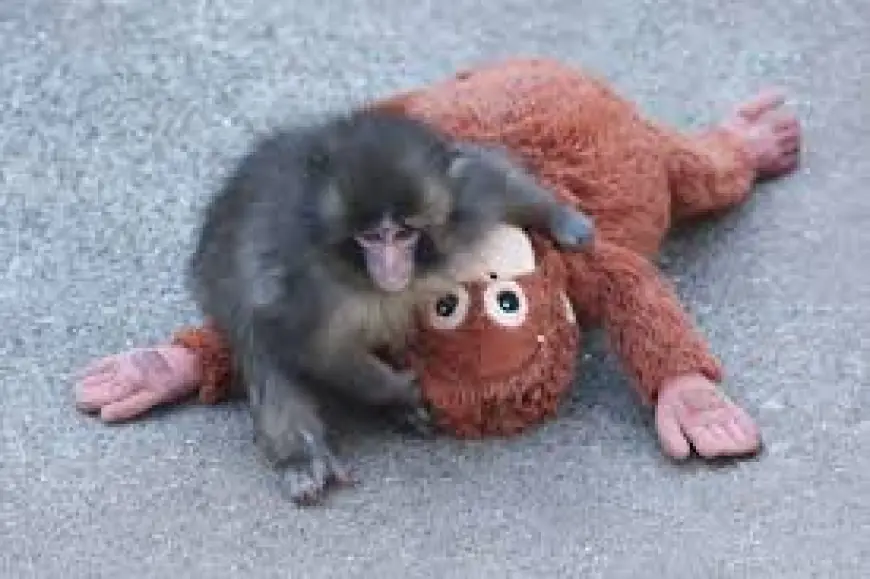
Why this matters now: punch monkey has become the focal point for questions about infant care, troop dynamics and human pressure on captive animals after videos went viral showing him rejected by his mother and clinging to a stuffed toy. The immediate impact is on Punch’s social development and on staff logistics—the troop’s social order, zookeepers’ interventions and a sudden surge of visitors are already being affected.
Punch Monkey’s immediate effects on the infant and the group
Punch, a seven-month-old Japanese macaque born last July at Ichikawa zoo, is the infant at the center of the disruption. Without maternal guidance he has turned to a stuffed orangutan toy given by keepers, and that attachment has become visible in multiple videos. Here’s the part that matters: Punch’s bond with the toy is a short-term comfort but also highlights the practical challenge of integrating an abandoned infant into a strict matrilineal hierarchy.
What happened inside the enclosure (event details)
Footage circulated showing Punch being pushed away, chased and dragged by older Japanese macaques. Early clips show him wandering alone with the toy, clutching it while being harassed; later footage briefly showed another monkey grooming and comforting him. Days after that, a new clip captured Punch being dragged aggressively in a circle by a much larger monkey before he ran to hide behind a rock, still hugging the toy. After the abandonment, zookeepers tried alternatives—rolling towels of different thicknesses for him to cling to—and ultimately introduced the stuffed orangutan to provide something for Punch to hold on to when he had nothing else.
Expert perspective and causes outlined for the public
A primatology expert at Australian National University says abandonment of infants is unusual but can happen under certain conditions, pointing to factors such as age, health and inexperience. In this case the mother was a first-time mother, which suggests inexperience. Keepers have also suggested Punch was born during a heatwave, creating a high-stress environment; when outside stress threatens survival, mothers may prioritise their own health and future reproduction over caring for an infant whose health appears compromised. The expert noted the stuffed orangutan may be serving as an attachment figure, particularly because infants around six months of age still likely need nursing.
It’s easy to overlook, but the expert stressed that the behavior of other macaques toward Punch is not necessarily abnormal: these interactions can be part of regular social dynamics. Japanese macaques live in strict matrilineal hierarchies where higher-ranking families assert dominance over lower-ranking ones. Even if Punch had stayed with his mother, he might still face aggression from higher-ranking animals. Without his mother, however, he may not learn appropriate subordinate responses to show submission to dominance, which could affect how he integrates into the group as an adult.
Zoo response and the public surge
In recent days the zoo has experienced a surge of visitors hoping to see Punch. Officials have enforced stricter barriers around the enclosure and urged visitors to remain quiet, avoid using stepladders or tripods for photography and limit prolonged vi—unclear in the provided context. Staff introduced the stuffed orangutan after trying other tactile substitutes because, as a zookeeper explained, baby Japanese macaques cling to their mother’s body after birth to build muscle strength and gain a sense of security from holding on; abandoned, Punch had nothing to grip on to, and keepers hoped a toy resembling a monkey might help him integrate back into the troop later on.
Short implications and signals to follow
- Punch’s immediate welfare and ability to integrate are the primary concerns; his attachment to the toy may ease short-term stress but is not a substitute for maternal care.
- Troop dynamics could shift if Punch cannot learn subordinate responses without maternal guidance, potentially affecting his adult social standing.
- Visitor behavior and facility management are already changing—barrier enforcement and visitor guidance will signal how institutions balance public interest with animal welfare.
The real question now is whether interventions like the stuffed orangutan and controlled human access will allow Punch to develop social skills the troop expects. What’s easy to miss is that this single infant’s experience touches animal behavior, zoo management and public attention simultaneously.
Writer’s aside: Preventing further stress for Punch while preserving natural social learning is a delicate balance; interventions can soothe an infant but cannot fully replace maternal role-learning.