

























Beit Shemesh Struck: Nine Dead as Iranian Missiles and Drones Roil Region and Trigger Widespread Disruption

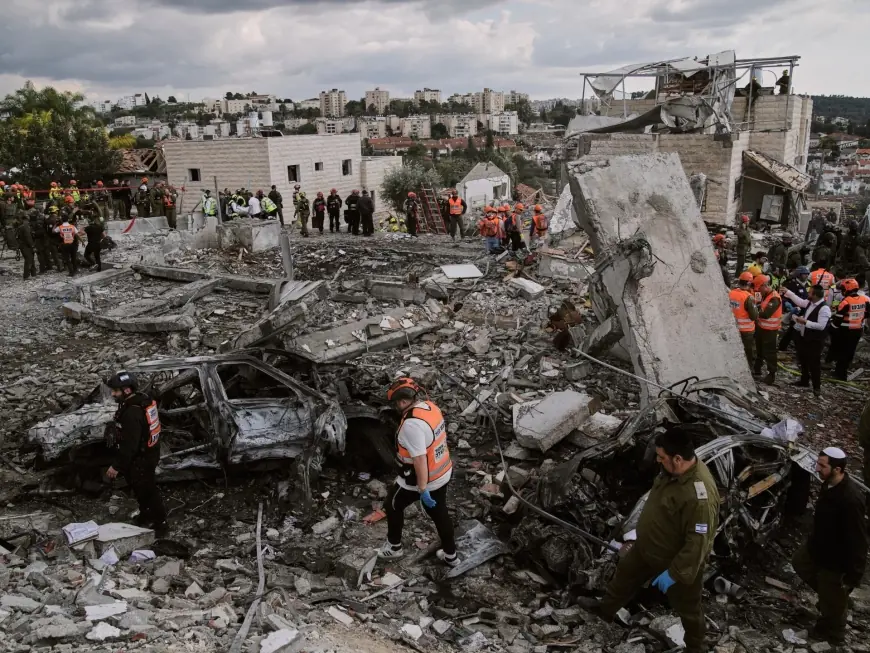
At least nine people have been killed and dozens injured after a missile strike hit the Israeli city of beit shemesh, in an attack that comes as Iran launched strikes across the Middle East in response to a large-scale US–Israel offensive that killed Iran’s supreme leader. The blast destroyed a shelter and a synagogue, prompted a major rescue effort, and forms part of a wider wave of missile and drone strikes that has caused casualties and major travel disruption across the Gulf.
Beit Shemesh impact and immediate rescue operations
Magen David Adom (MDA) emergency services put the death toll at nine and provided differing injury counts in the immediate aftermath; an initial local tally cited 27 wounded while MDA later reported 28 injured, including two in serious condition. Search-and-rescue teams and a helicopter were operating in Beit Shemesh, and police said 11 people remained missing as rescuers combed through rubble.
The building hit was a synagogue where people had been sheltering; the structure was completely destroyed. Rescuers found piles of broken concrete and twisted metal and a large crater indicating the point of impact. Nearby parked cars were completely destroyed. A MDA paramedic, Dror Eini, described destroyed homes, flames and smoke rising from residential buildings, wrecked cars and significant chaos at the scene.
Beit Shemesh: questions over warning systems and casualty counting
Local reporting from the area noted concerns that sirens did not sound in beit shemesh before the impact, and rescuers warned that casualty figures could rise as people were still being pulled from under the rubble. The army’s spokesperson said the circumstances of the impact from the Iranian ballistic missile were under review.
Regional strikes and cross-border effects
The Beit Shemesh strike came amid a coordinated Iranian missile and drone campaign across the Gulf in retaliation for an ongoing US–Israeli air offensive that killed Ayatollah Ali Khamenei and other senior Iranian officials. Across the region, one person was killed in Abu Dhabi and at least one death was reported in Kuwait; Kuwait’s health ministry said one person had been killed and 32 others, all foreigners, had been injured in strikes since the weekend began.
Qatar, Bahrain, Jordan and Kuwait intercepted missiles fired toward them, but falling debris appeared to cause widespread damage. A further drone strike near the US Navy’s 5th Fleet base in Bahrain ignited a major fire; the drone hit close to an adjacent naval facility and there were no immediate reports of casualties from that incident. Overall, four people have been wounded by Iranian attacks in Bahrain.
Explosions were also heard in Doha as defense systems shot down incoming Iranian missiles. The scale of the strikes has forced thousands of flights to be grounded to and from the region, producing one of the most serious disruptions to global travel since the Covid-19 pandemic.
Civilians, maritime operations and backfiring damage
Tourists aboard the cruise ship Mein Schiff 4 described black clouds of smoke over Abu Dhabi while the vessel was docked in Port Zayed, where a large explosion took place midday. the blast was caused by two drones that struck a storage facility near the Al Salam marine base and ignited containers. Passengers received an emergency alert at 4: 30pm to gather inside the ship’s theatre, were told to avoid windows and to remain inside, and reported panic, crying and fear as balconies and decks were closed. The vessel’s itinerary included stops at Dubai, Abu Dhabi, Khasab, Muscat and Doha, and standard-class fares were advertised at Euro 899 per person for the cruise in question.
A hangar at a French naval base adjacent to Emirati facilities was hit in a drone attack targeting the port of Abu Dhabi; France’s defence minister confirmed the hangar was struck, described the damage as material and limited, and said there were no injuries.
Political fallout and the risk of wider escalation
Leaders and officials in the region and beyond have responded to the killing of Ayatollah Ali Khamenei with calls to plan for the future and to seek de-escalation, while Iranian officials have signaled no limits on defending the country. Iran announced a 40-day mourning period. Iran’s foreign minister warned the killing would make the confrontation more complex and dangerous and said the country had no restrictions in defending itself. The president said Iran would follow in the late supreme leader’s footsteps and sought to portray enemies as left hopeless. The assassination has left clerics with the immediate task of choosing a successor.
This remains a rapidly evolving crisis: rescue operations continue in Beit Shemesh, casualty tallies differ between immediate local counts and MDA figures, and regional military and civilian disruptions are significant. Details may change as searches conclude and officials publish consolidated assessments.