























Alireza Arafi Named to Interim Council as Missile Strikes Continue, U.S. Forces Suffer Casualties

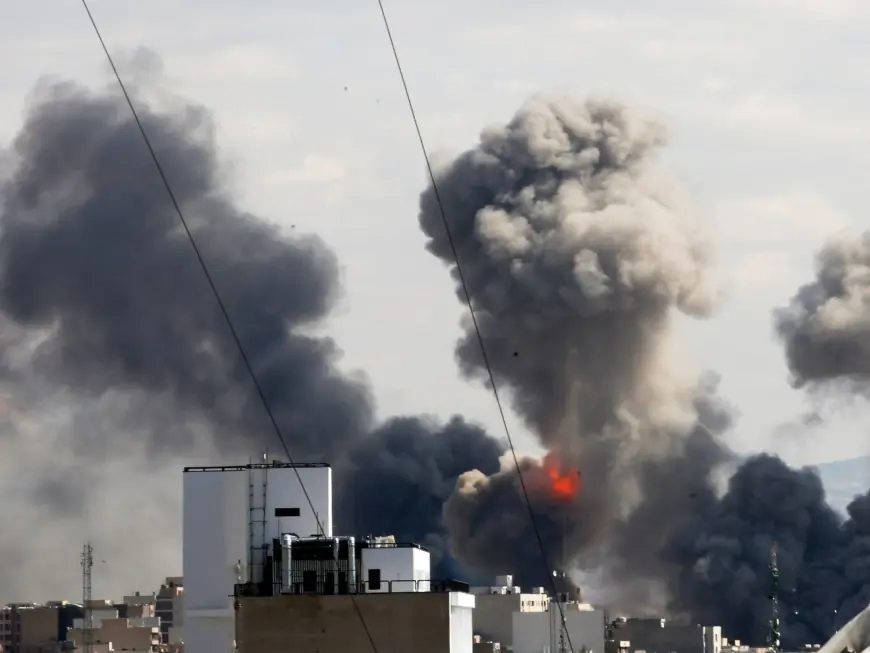
February 28, 2026 — Amid continuing US-Israeli air strikes on Tehran and other cities, alireza arafi was announced as the third member of a three-member interim leadership council as Iran’s surviving authorities closed ranks and vowed revenge after the death of Supreme Leader Ayatollah Ali Khamenei; at the same time three U. S. service members have been killed in action and five others seriously wounded.
Alireza Arafi joins provisional leadership council
The Expediency Council selected Ayatollah Alireza Arafi as the jurisprudence expert to fill the three-member body that will govern until the Assembly of Experts names a new supreme leader under laws enacted after the 1979 Islamic Revolution. Masoud Pezeshkian, the Iranian president, said a new leadership council has begun its work and, in a first video address on Sunday, urged pro-establishment supporters to gather at mosques and on major city streets despite the war.
As members of the council, judiciary chief Gholam-Hossein Mohseni-Ejei and President Pezeshkian have vowed continuity. Iran’s Foreign Minister Abbas Araghchi said the selection process should be complete within days. The Assembly of Experts is the clerical body tasked by post-1979 law with selecting the next supreme leader.
Strikes on Tehran and wider city impacts
Huge air strikes by the United States and Israel have continued to hit Tehran and other cities. The capital was rocked numerous times on Sunday after a series of attacks struck multiple neighbourhoods, with the Israeli army saying military centres were among the targets. Iranian authorities have largely refrained from discussing missile impacts, and internet connectivity remained almost entirely blocked for a second day.
High-level deaths, IRGC response and military claims
Supreme Leader Ayatollah Ali Khamenei and several top commanders were killed in Tehran at the start of the war on Saturday. Mohammad Pakpour, who had been appointed commander-in-chief of the Islamic Revolutionary Guard Corps less than a year earlier after his predecessor was assassinated during the 12-day war with Israel, was killed on Saturday. Abdolrahim Mousavi, chief of staff of Iran’s armed forces; Defence Council chief Ali Shamkhani; and police intelligence chief Gholam-Reza Rezaeian were also among those killed.
The IRGC vowed revenge and announced what it called "the heaviest offensive operations in the history of the armed forces of the Islamic Republic against occupied lands [a reference to Israel] and the bases of American terrorists. " Army chief Amir Hatami pledged to continue defending the country and the army said its fighter jets completed bombing runs of US bases across the region, though no footage was offered.
Domestic security posture and political outreach
Police chief Ahmad-Reza Radan said his forces are prepared to fight for public safety as the US and Israel have openly called on the Iranian people to protest in the streets with the goal of overthrowing the establishment. Security chief Ali Larijani backed the constitutional process for deciding future leadership while reaching out to countries battling incoming Iranian missiles and drones. In a post on X in Arabic, he said Tehran does not — unclear in the provided context.
U. S. casualties, presidential warnings and congressional briefings
The U. S. military announced three service members have been killed in action and five others seriously wounded. Former President Donald Trump said there will "likely be more" American casualties before the U. S. military operation in Iran ends, making the remarks in a video posted online hours after the deaths were announced. He also warned that the United States will not allow Iran to develop long-range missiles and nuclear weapons and urged the IRGC and the Iranian military and police to lay down arms and receive full immunity or face certain death.
One White House official and a congressional official said Congress will receive its first set of briefings on Iran on Tuesday. Named briefers include Secretary of State Marco Rubio, Defense Secretary Pete Hegseth, CIA Director John Ratcliffe and Gen. Dan Caine, chairman of the Joint Chiefs of Staff. The Senate briefing is scheduled for 3: 30 p. m. ET and the House briefing for 5 p. m. ET.
Regional disruptions, diplomacy and public reactions
Flight disruptions continued across the Middle East as multiple airports in the region remained closed amid escalating conflict. More than 1, 500 flights that had been scheduled to fly to destinations in the Middle East were canceled today. Israel’s airspace has been closed to civil aviation. Stranded passengers were reported at an Emirates Airways customer service office at I Gusti Ngurah Rai International Airport in Kuta, Bali, Indonesia.
Demonstrators gathered in New York City’s Times Square to show support for the U. S. and Israeli campaign; many waved pre-Islamic Revolution Iranian flags bearing the lion-and-sun emblem. Omani Foreign Minister Badr al-Busaidi reiterated a push for diplomacy, saying peace in the region is still possible, that talks in Geneva had made genuine progress toward an unprecedented agreement between Iran and the United States, and that although the hope was to avoid war, war should not mean the hope of peace is extinguished. He said he still believes in the power of diplomacy to resolve the conflict and that the sooner talks resume the better. Yesterday he lamented that ongoing negotiations had been undermined by this weekend’s attack and warned that both U. S. and global interests could suffer should military operations escalate.
Some major international carriers announced suspensions and airports and airlines across the region were reporting shutdowns; the full list is unclear in the provided context.
What to watch next
alireza arafi’s role on the interim council, the completion of the Assembly of Experts’ selection process, the IRGC’s declared offensive operations, the pace of military strikes on Tehran and other cities, and U. S. military casualty updates and congressional briefings all remain immediate items to monitor as the situation evolves.