
























Sicario Evidence Burned: How a Bogotá double killing has altered the probe

The discovery that perpetrators actively tried to erase a key trail is changing the investigation’s priorities and raising the stakes for witnesses and prosecutors. The word sicario appears in public files tied to the case, but the immediate shift is practical: investigators are pivoting resources to protect footage, track unusual vehicle movements and counter a pattern of intimidation that could undermine prosecution.
Aftermath and consequences: Sicario tactics forcing a procedural reset
Here’s the part that matters: the alleged use of follow-up killings and direct threats has already redirected operational decisions. Prosecutors now treat neighbor cooperation as a fragile asset and are reallocating attention to digital and physical custody of security recordings rather than presenting a fast, public timeline of evidence. The real question now is how investigators will preserve chain-of-custody and pursue leads while witnesses face pressure.
What’s easy to miss is that the suspected erasure of traces — described in the case as attempts to "borrar" evidence — is not just a forensic headache; it signals an intent by the criminal group to control information flow, which forces silent witnesses to weigh personal risk against civic duty.
Event details and the concrete leads investigators are using
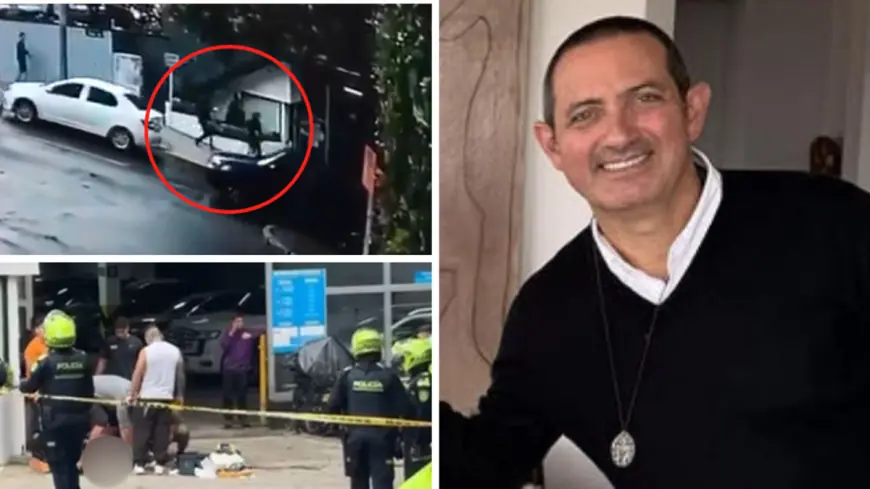
The victim identified in public material is entrepreneur Gustavo Andrés Aponte, who was killed leaving a gym in the La Cabrera area of north Bogotá. His bodyguard, Luis Gabriel Gutiérrez, was also killed. The shooter, described in documents as wearing a suit, fired from behind both victims; investigators recovered clear images of the assailant and of the escape route after reviewing more than 100 hours of security footage.
Footage analysis has produced a notable change in the original reconstruction: investigators found signs that the shooter may have arrived in a black car that circled the area for minutes prior to the attack, rather than arriving on a high‑cylinder motorcycle. In the days that followed, a person believed to have been involved in the operation was killed; that slaying is being seen by authorities as an apparent effort by the same criminal group to remove people who could tie them to the attack.
Authorities have also documented a pattern of intimidation directed at residents in La Cabrera. Neighbors received calls warning against handing over security videos, and a formal complaint was filed with a law enforcement division identified in public material as Dijín. A specialized prosecutor, Yanira Rocío Ochoa Ramírez, is leading the file.
- Investigators reviewed more than 100 hours of video to identify the assassin and the escape route.
- Evidence suggests the shooter in a suit may have been dropped off in a black car that lingered in the area.
- At least one person reportedly involved in the attack was later killed, seen as an attempt to eliminate links.
- Neighbors received threatening calls that tried to block delivery of security footage; a formal complaint was filed with Dijín.
Embedded timeline (reported points):
- Attack on Gustavo Andrés Aponte and his bodyguard occurred outside a gym in La Cabrera.
- Investigators later reviewed over 100 hours of security footage and adjusted the reconstruction of arrival and escape methods.
- Days after the attack, a person linked to the operation was killed in what investigators view as an attempt to remove evidence.
Family and regional context mentioned in the case material note that the family has business ties in Casanare, a region with a history of criminal pressure around the rice sector. A separate killing of a regional agricultural leader was also cited as part of that broader pattern of violence.
Small procedural signals will indicate how the investigation evolves: whether custody of key recordings is centralized, whether protective measures for residents increase, and whether charges expand to include those accused of follow-up violence. If more vehicles or phone records surface that match the video timeline, the probe could shift back into a stronger evidentiary position.
Key takeaways:
- Chain-of-custody for footage is now a primary operational priority.
- Follow-up killings are being treated as evidence‑suppression tactics rather than isolated violence.
- Witness intimidation has been formally flagged to investigative units, complicating community cooperation.
- Forensic reconstruction was updated after analysts identified a likely black car as part of the operation.
The bigger signal here is that the criminal pattern described in the case—direct attacks followed by attempts to remove collaborators or witnesses—forces a slower, more protective investigative posture. That recalibration will determine whether the case can produce prosecutions that survive legal scrutiny while keeping witnesses safe.