

























Strait Of Hormuz: What US–Israeli strikes and a threatened closure of the strait of hormuz mean for oil markets

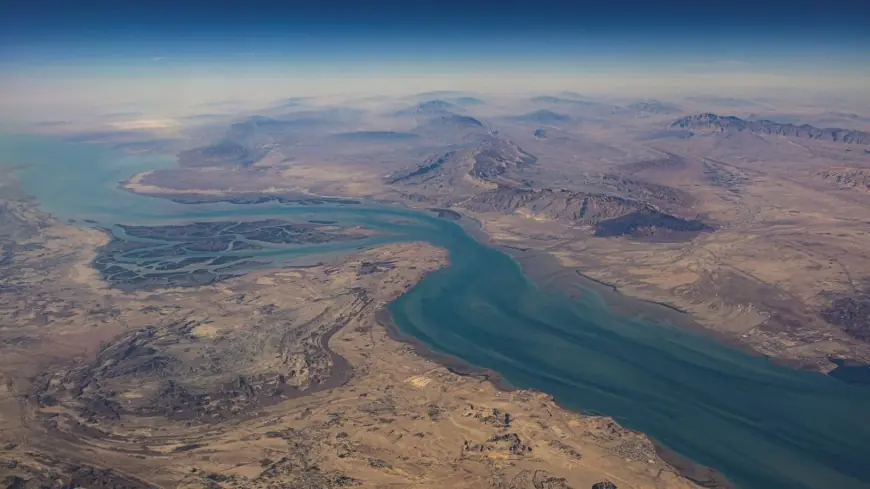
The US began “major combat operations” in Iran on Saturday morning, shortly after Israel launched a strike against Tehran, and the resulting warnings and attacks have focused attention on the strait of hormuz. If the narrow waterway is closed or heavily disrupted, the consequences for oil and gas flows—and for inflation and household costs—could be substantial.
US and Israeli strikes, IRGC warnings and ships avoiding the corridor
The US began what was described as “major combat operations” on Saturday morning, following an Israeli strike on Tehran. Within hours, vessels crossing the channel received warnings from Iran’s Islamic Revolutionary Guard Corps telling tankers that “no ship is allowed to pass the Strait of Hormuz, ” yet Iran has not formally confirmed a blockade. Ships appear to be avoiding the route after an attack on a ship off Oman, and at least 150 tankers carrying crude, liquefied natural gas and oil products had dropped anchor in open Gulf waters on Sunday.
Traffic, volumes and competing estimates through the Strait Of Hormuz
Estimates of the waterway’s share of global trade vary in the coverage: roughly one account puts about 20% of all oil supplies and about 20% of seaborne gas tankers through the strait, another cites a 20–30% range for oil and gas shipments, and one figure given is 21 million barrels a day. Official energy data for 2024 put daily crude transit at about 20 million barrels a day, worth roughly $500 billion in annual global energy trade. Analysts warn that a continued halt could block as much as 15 million barrels a day from reaching destinations. The corridor also carries liquefied natural gas: in 2024 roughly a fifth of global LNG shipments passed through the route, with Qatar supplying the vast majority of that volume.
Iran’s tools to threaten shipping and expert warnings about disruption
Analysts note Iran has a wide range of capabilities it could use to interdict shipping: sea mines, fast attack vessels, submarines, drones and missile systems. Nick Childs of the International Institute for Strategic Studies described a “considerable array” of such capabilities and warned that, if used in a comprehensive campaign, they “could cause very significant disruption and also potentially seriously hazard US and other naval units including mine countermeasures vessels seeking to keep the waterway open. ” Jorge León, head of geopolitical analysis at Rystad Energy, said the country’s geopolitical weight is rooted in its strategic location, its influence over regional security dynamics and its capacity to disrupt critical energy infrastructure and transit routes. Commenting on the political dynamics, Bjarne Schieldrop, chief commodities analyst at SEB, said: “It has become quite clear now that this is the biggest bluff in history and it has gone horribly wrong. Now it is difficult for Trump to back down and pull out all his gunboats and fighter jets without losing face. ”
Price risks, inflation and the wider economic impact
Market scenarios in the coverage point to a sharp price response if the waterway is shut or severely restricted. One set of estimates suggests a worst-case jump from about $67 a barrel on Friday night to $100. Another projection warned that blockades could push prices above $100 per barrel; at the same time, Friday prices were below $70 a barrel. The International Monetary Fund figure cited in the coverage links oil-price rises to inflation: inflation in advanced economies rises by about 0. 4 percentage points for every 10% increase in oil prices. That dynamic would add strain to households already facing a cost-of-living crisis and present renewed difficulties for developed economies, including the US, that have struggled with inflation’s drag on growth and productivity.
Geography, who relies on the route and trade patterns
The strait is a narrow passage linking the Gulf—referred to as the Persian or Arabian Gulf—to the Gulf of Oman and the Arabian Sea, and onward to the Indian Ocean. Descriptions in the coverage place the strait between Oman and Iran, and in other accounts between Oman and the UAE on one side and Iran on the other; one description says it is bound by Iran in the north and by the UAE and Oman in the south. Length and width figures vary across reports: it is described as about 100 miles long and as narrow as 24 miles at its tightest point in one account, while other accounts give a narrowest width of about 20 miles (33 km) or 33 km (21 miles), with shipping lanes reported as roughly 2 miles (3 km) wide in each direction in some descriptions and about 3 km (2 miles) in others. Despite that narrow profile, the channel accommodates the world’s largest crude carriers.
Crude that passes through the corridor originates from Iran, Iraq, Kuwait, Qatar, Saudi Arabia and the UAE, and a large share of those flows head to Asian markets: one estimate put 84% of crude oil and condensate shipments transiting the strait in 2024 bound for Asia, with a similar 83% share for LNG volumes. China, India, Japan and South Korea together accounted for a combined 69% of crude and condensate intake through the route last year. The coverage also notes that countries on the opposite side of the Gulf to Iran— including the UAE, Kuwait, Bahrain and Qatar—produce a significant portion of the world’s oil, and that countries such as Kuwait and the UAE import supplies sourced outside the Gulf, including shipments from the United States and West Africa.
Iran itself is a major hydrocarbon holder and producer: it is said to have the world’s fourth largest proven oil reserves at up to 170 billion barrels, roughly 9% of global crude, behind Venezuela, Saudi Arabia and Canada, and to be the fourth largest oil producer within Opec. Coverage also describes Iran as holding the world’s second largest proven gas reserves—about one-sixth of global gas. Decades of unrest, war and sanctions reduced Iranian crude output from a 1974 peak of about 6 million barrels a day to roughly 3. 5 million, though recent months have seen output reach historic highs despite US sanctions and Israeli bombardments, a rebound linked in the coverage to close ties with China; Beijing is said to import about 90% of Iran’s crude. Even with those figures, Iran’s crude exports make up about 3–4% of the global market.