























F1 monitors Middle East strikes as Pirelli pulls Bahrain wet tyre test

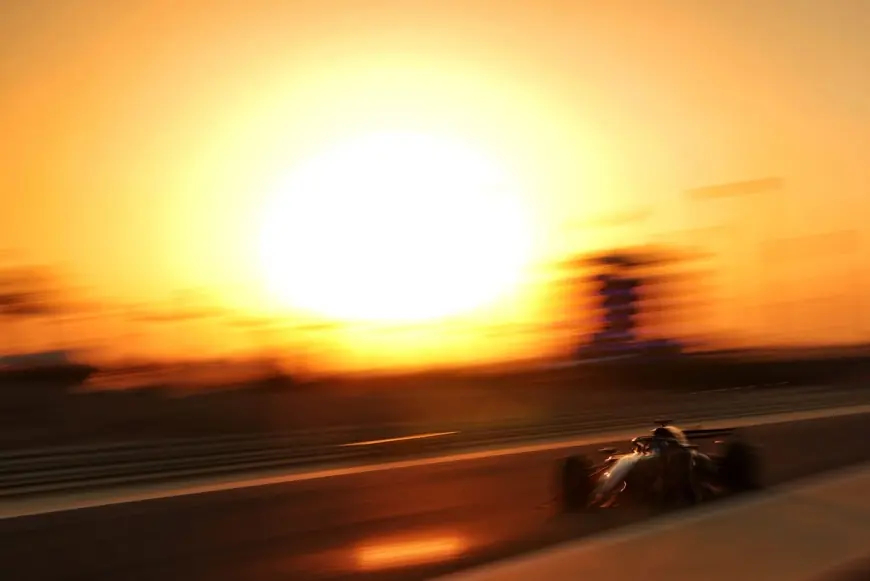
Formula 1 is watching developments after Iran launched missile and drone strikes that hit U. S. military installations near the bahrain circuit, and tyre maker Pirelli canceled a two-day wet-weather test set for Feb. 28–March 1 for safety reasons.
Strikes hit U. S. bases and Gulf nations
Iran’s Islamic Revolutionary Guard Corps struck U. S. military installations and several Gulf countries, naming Qatar, Saudi Arabia, Bahrain and the United Arab Emirates, in a response to a joint U. S. -Israel offensive launched earlier that day on Saturday. The IRGC vowed the strikes will continue "relentlessly until the enemy is decisively defeated, " and an Iranian armed forces spokesman warned that any base used to facilitate the U. S. -Israeli offensive is a legitimate target.
One installation struck, U. S. Naval Forces Central Command, sits roughly 20 miles from the Bahrain circuit and about seven miles from the Bahrain International Airport. A spokesperson for the Bahrain International Circuit said organizers are in close contact with F1. The Bahrain Grand Prix remains scheduled for April 10–12, with the Saudi Arabian Grand Prix scheduled for April 17–19.
Pirelli cancels Bahrain wet tyre test
Pirelli called off its two days of development testing for wet-weather compounds at the Bahrain International Circuit, scheduled for Feb. 28–March 1, saying the sessions "have been cancelled for safety reasons, following the evolving international situation. " all Pirelli personnel currently in Manama are safe in their hotels and that it is working to ensure their continued safety and to arrange their return home as soon as possible.
The test had been an unusual wet-tyre run using sprinklers and was due to take place before the season opener in Melbourne, with Mercedes and McLaren among teams linked to the programme. Pirelli added it is arranging travel back to Italy and the UK for staff affected by the cancellation.
Teams face travel and logistics disruption
Organizers and teams warned the strikes are already affecting travel plans for the Australian Grand Prix: the Middle East is a common transit hub for journeys from the UK to Australia. Airspace over Abu Dhabi and Qatar is currently closed, complicating layovers and onward flights ahead of Melbourne on March 6–8.
Beyond logistics, the situation has a personal toll for people who were in the region: Bahrain had just hosted two weeks of F1 testing, and members of the paddock and media had been staying in the Juffair area, which has been subject to an attack. That proximity has intensified concern for staff from tyre suppliers and teams who were due to be in the area for the test.
What Formula 1 says and what happened before
An F1 spokesperson acknowledged the evolving situation but noted the championship remains in East Asia for the next three races. "Our next three races are in Australia, China and Japan, not in the Middle East — those races are not for a number of weeks, " the spokesperson said, adding: "As always, we closely monitor any situation like this and work closely with relevant authorities. " The calendar lists China on March 13–15 and Japan on March 27–29.
Organizers and teams also recalled a precedent: the Saudi Arabian Grand Prix in 2022 was thrown into doubt mid‑weekend after a Houthi missile struck an oil facility visible from the circuit, prompting emergency discussions among drivers before they ultimately agreed to race. Some analysts have warned the escalation could have further consequences, including potential disruption to the start of F1’s 2026 season.
Recovery and travel arrangements are underway for personnel in Manama, and the immediate schedule remains the season opener in Melbourne on March 6–8, followed by China on March 13–15 and Japan on March 27–29, before the championship returns to Gulf rounds in April.