























Dubai News: Explosions, Hotel Fires and Airport Casualties as Gulf Conflict Spreads

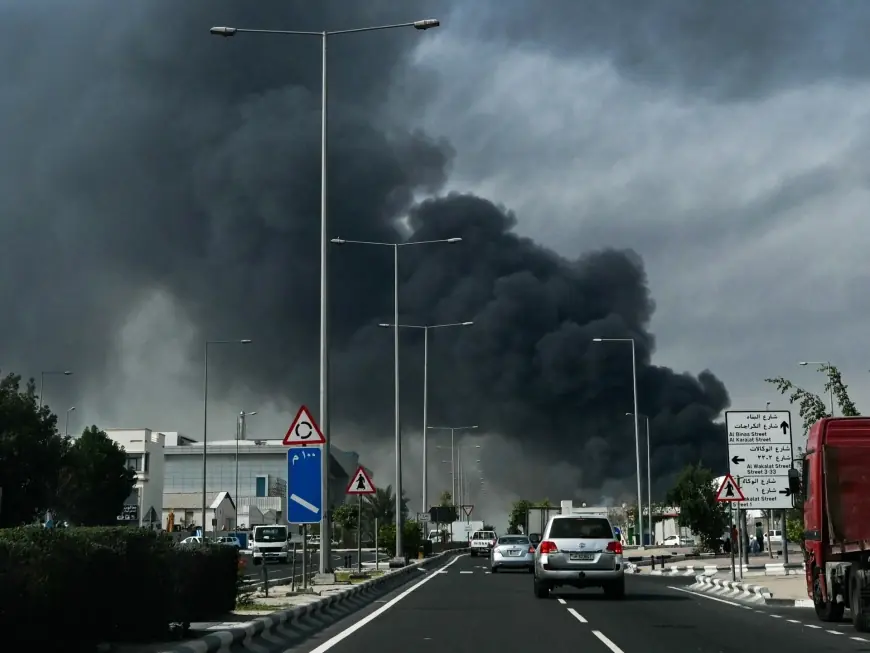
Explosions and drone strikes across the Gulf have left hotels burning, airports damaged and civilians dead after US and Israeli strikes on Iran triggered a broad Iranian response. This dubai news bulletin outlines how the retaliatory barrage has caused immediate casualties, major travel disruption and a rapid widening of the conflict.
Dubai News: Hotels and Airport Damage
An Iranian missile struck the Fairmont hotel in Palm Jumeirah, setting the five‑star property alight and leaving four people injured after fires broke out near the entrance. Debris from an intercepted drone caused a separate fire on the facade of the Burj Al Arab, while another luxury hotel sustained fire damage believed to have been caused by remnants from a falling missile. Dubai's media office said Civil Defence teams responded and brought an incident under control and described a concourse at Dubai International as having sustained minor damage; elsewhere four staff at Dubai International were reported hurt. The combination of terminal damage and ongoing interceptions led to flights being grounded as a precaution.
Abu Dhabi Airports and Casualties
An incident at Zayed International Airport in Abu Dhabi resulted in one fatality involving an Asian national and seven injuries, a statement from Abu Dhabi Airports posted on X said; that post was later deleted. The Ministry of Defence in Abu Dhabi separately said at least three people were killed in attacks across the United Arab Emirates, identifying the dead as Pakistani, Nepalese and Bangladeshi nationals. Despite Dubai's media office saying no injuries had been reported in one statement, other accounts and airport authorities have recorded multiple injuries across UAE facilities.
Iran's Missile and Drone Barrage
Iran launched a widespread counterstrike after US and Israeli strikes on its leadership. The Iranian defence ministry reported that across the UAE it fired 137 missiles and deployed 209 drones on Saturday, with fires and smoke reaching Palm Jumeirah and Burj Al Arab. Qatari Iran launched 65 missiles and 12 drones toward Qatar, most intercepted, and that 16 people were injured in the strikes. In Oman, the Duqm commercial port in Al Wusta Governorate was struck by two drones and an expatriate worker was injured. The immediate cause‑and‑effect is clear: the US–Israeli assault provoked a multi‑front Iranian response using large missile and drone volleys that damaged landmarks and transport hubs.
Bahrain, Kuwait, Jordan and Iraq: Conflict Spreads
The strikes extended beyond the UAE. In Bahrain a drone flew into a high‑rise building and exploded, setting a skyscraper alight; the country’s national security agency was also struck by a missile, and footage circulated of a missile hitting a US naval base. In Kuwait a drone crashed into the main airport, wounding several employees and damaging the facility, and sirens were heard across Kuwaiti airspace. Jordanian defences intercepted missiles that entered Amman and northern areas. In northern Iraq a drone crashed near Erbil International Airport, producing a large plume of smoke. At least two members of the Iran‑backed group Kataib Hezbollah were killed when bases belonging to the Popular Mobilization Forces in Iraq were struck by either US or Israeli forces, and Kataib Hezbollah and Yemen’s Houthis warned they would join strikes on US military bases.
Regional Reaction, Mediation and Travel Disruption
The Gulf Cooperation Council condemned the attack on Oman. Qatar’s Ministry of Foreign Affairs spokesperson Majed al‑Ansari said the strike on Oman was an attack on the principle of mediation. Turkiye’s president Recep Tayyip Erdogan spoke by phone with Saudi Crown Prince Mohammed bin Salman and expressed concern that "unless the necessa" — unclear in the provided context. Thousands of US soldiers remain deployed in the oil‑ and gas‑rich Arab states bordering Iran, a factor cited by regional officials as central to the escalatory dynamics.
Flights Grounded, Thousands Stranded and Civil Precautions
Flights to and from the UAE, Qatar, Israel and Bahrain were among those cancelled; airports in Dubai, Abu Dhabi and Doha were grounded on Saturday as a precaution and expected to remain disrupted on Sunday, leaving thousands stranded. The UK Foreign Office warned British nationals in several Middle East countries to shelter in place, avoid travel to Israel and Palestine, and sign up to Register Your Presence and travel advice emails as it said it was working around the clock to support British nationals. Tourism and travel fears were explicitly linked to what one bulletin called "Trump's war with Iran, " heightening safety concerns for visitors and residents alike.
What makes this notable is the scale and speed of escalation: within hours the fighting extended beyond the geographic limits of the prior conflict, drawing in more than six countries and prompting mass civilian responses. In Lebanon, gas stations developed lines 10 cars deep within an hour of the strikes, Beirut airport saw cancellations and grocery stores filled as people stocked up, the memory of the 2024 war with Israel still influencing public behaviour. Washington has named the operation that followed Operation Epic Fury, and the spread of attacks has already altered travel, public safety measures and regional security calculations.