






















Mick Schumacher’s IndyCar jump shifts his F1 comeback math and raises risks for German racing pipeline

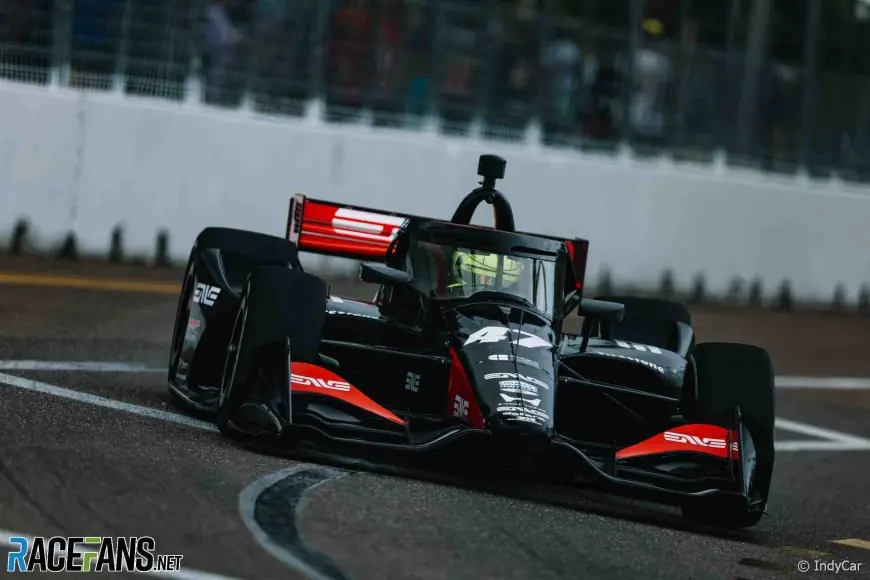
Why this matters now: Mick Schumacher’s debut-level remarks and on-track early pace make his move more than a headline — they redraw who is first affected by the switch: the driver’s own route back to top-tier single-seaters, the perception of American open-wheel as a development path, and the future talent flow in Germany. His comparison of the IndyCar to his old Formula 2 experience signals faster adaptation but also a different competitive trade-off.
Mick Schumacher: immediate impact on his trajectory and German motorsport
Here’s the part that matters: Schumacher’s description of an IndyCar as “an F2 car, just with better tyres” frames the move as a technical lateral step rather than a radical leap. For Mick Schumacher that suggests he can compete and learn quickly, but it also hardens the argument — voiced publicly by his family — that a return to Formula 1 is now less likely. The decision is already influencing three groups: teams and talent scouts recalibrating how they value IndyCar experience, fans tracking a former F1 driver’s second act, and national development programs watching a high-profile pathway choice play out.
What’s easy to miss is how the perceived similarity to F2 (single-spec chassis commonality, tyre differences) both helps adaptation and shifts expectations: rapid learning won’t automatically translate into an F1 door re-opening. The move replaces gradual European progression with a rawer, distinctly American championship environment that includes oval racing and different risk exposures.
On-track reality and family pushback: the facts shaping the debate
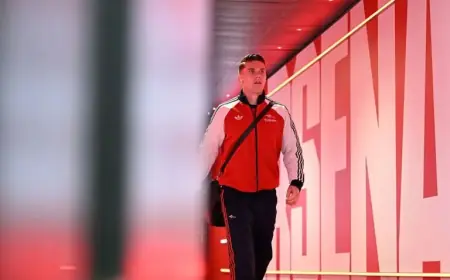
Event details that feed the larger picture: Schumacher has already commented that IndyCar feels close to what he knew in Formula 2, noting chassis commonality and a switch from Pirelli to Firestone tyres. In opening practice at St. Petersburg his lap was roughly one second slower than the session leader, placing him near the back of the field in that run. He confirmed his full-season move last November and has described the championship as a “raw motorsport environment” with ambitious teams and close, challenging racing.
- Recent competitive note: one-second gap to the fastest practice lap left him 23rd in a 25-car session.
- Technical context: both F2 and IndyCar use single-specification chassis; IndyCar runs Firestone tyres while F2 uses Pirelli.
- Chassis lifecycle: the current IndyCar DW12 platform has been used for multiple years and a new model is slated for introduction in 2028.
Parallel to those performance datapoints, a close family voice has been unequivocal. A relative publicly argued that the move effectively closes Mick Schumacher’s path back into Formula 1 — pointing to the different demands of American racing and the specific dangers of oval circuits, which were highlighted as higher-risk environments at very high average speeds. That perspective frames the switch as not merely tactical but potentially final for an F1 comeback.
Embedded timeline (verifiable points):
- 2020 — Formula 2 championship win referenced as part of Schumacher’s background.
- End of 2022 — departure from an F1 race seat noted.
- 2024 — began taking an active interest in the IndyCar championship.
- Last November — confirmed full-season IndyCar move with an American team.
- Late February 2026 — opening practice at St. Petersburg, early adaptation comments.
Who is affected and how: teams evaluating driver pedigrees will watch whether IndyCar performance reshapes talent valuations; young German drivers and national program managers may revisit development priorities if a high-profile name chooses the U. S. route; fans and sponsors decide whether to follow a driver across disciplines or view the move as a career pivot.
The real question now is how quickly Schumacher’s promising technical adaptation converts into race results and whether those results change calculus among decision-makers who had treated a Formula 1 return as unlikely. The presence of oval racing in his programme — highlighted as a particular concern — adds risk that could shorten or redefine his single-seater career arc.
Short editorial aside: The bigger signal here is that a former F1 driver framing IndyCar as similar to F2 both reduces the acclimation headline and increases scrutiny on the long-term meaning of the switch; it’s a technical compliment that doubles as a career crossroads.
Signals that would confirm the next turn: consistent top-10 finishes and clear pace on ovals would argue for a revitalized single-seater reputation; persistent midfield results or a notable oval incident would make the “door closed” assessment harder to reverse.