

























US‑Israeli Strikes Put Strait Of Hormuz and Global Oil Flows at Risk

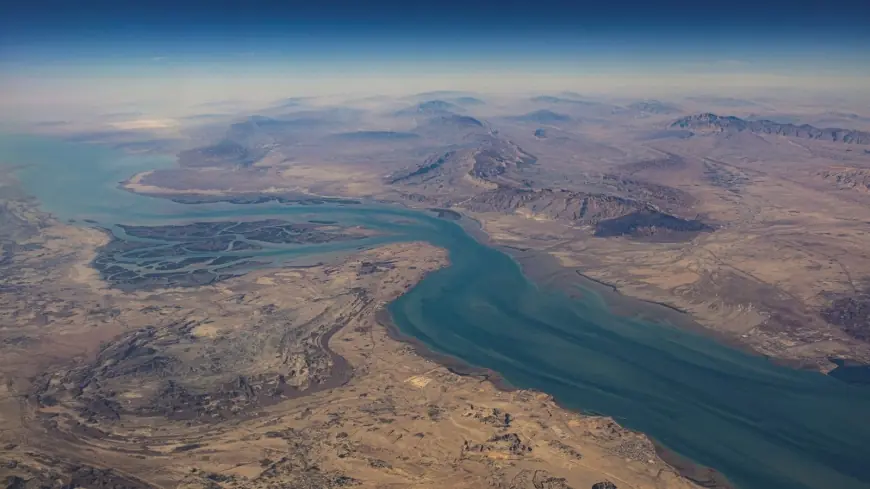
The US began “major combat operations” in Iran on Saturday morning, shortly after Israel launched a strike against Tehran, and warnings from Iran’s Revolutionary Guards have prompted shipowners to avoid the strait of hormuz — a move that has left at least 150 tankers anchored in open Gulf waters and markets braced for disruption.
Warnings at sea and ships dropping anchor
Within hours of the US‑Israeli strikes, Iran’s Revolutionary Guards issued radio warnings telling tankers in the corridor that no ship would be allowed to pass, and an EU official said vessels crossing the channel received very high frequency transmissions to that effect. Iran has not formally confirmed a closure, but ships appear to be avoiding the waterway after an attack on a ship off Oman, and at least 150 tankers carrying crude, liquified natural gas and oil products had dropped anchor in open waters across the Gulf.
Strait Of Hormuz: a narrow gateway for a big share of oil
The strait of hormuz links the Gulf to the north with the Gulf of Oman and the Arabian Sea to the south and lies between Oman and Iran; one description in the context put the channel at 20 miles (33km) wide at its narrowest point with shipping lanes just 2 miles (3km) wide in either direction, while other published figures put the narrowest width at 24 miles or roughly 21 miles (33km) with a shipping lane described as 3km (2 miles) wide. Analysts in the coverage also offered differing estimates of how much oil and gas pass the corridor — figures ranged from about 20% of global oil supplies and 20% of seaborne gas tankers, to 20–30% of global oil and gas, to a nominal 21 million barrels a day in one account.
How a halt could squeeze markets
If the stoppage continues, it could block up to 15m barrels a day of crude from reaching destinations, and some analysts warned prices could surge from about $67 a barrel on Friday night to $100 in a worst‑case scenario. That jump would pressure developed economies already coping with inflation and contribute to higher costs at the pump and broader strains on households facing a cost‑of‑living squeeze.
Iran’s energy heft and regional reach
Iran holds up to 170bn barrels of proven oil reserves, about 9% of global crude reserves and ranking behind Venezuela, Saudi Arabia and Canada, and it is the fourth largest oil producer in Opec. The country also holds the world’s second largest proven gas reserves, estimated at about one‑sixth of global gas. Decades of unrest, war and sanctions cut Iranian crude production from a 1974 peak of about 6m barrels a day to roughly 3. 5m barrels, but recent months have seen output reach historic highs despite US sanctions and Israeli bombardments, tied in part to close sales links with China; Beijing imports about 90% of Iran’s crude, which remains subject to international sanctions.
Capabilities, routes and who depends on the corridor
Analysts note Iran has tools that could disrupt transit, including sea mines, fast attack vessels, submarines, drones and missiles. One maritime security expert described Iran’s “considerable array” of capabilities that, if used comprehensively, could seriously hazard vessels and mine‑countermeasure units. The strait moves crude originating from Iran, Iraq, Kuwait, Qatar, Saudi Arabia and the UAE, and it also carries liquefied natural gas volumes — the US Energy Information Administration estimated about 20 million barrels a day transited the channel in 2024, worth roughly $500bn in annual global energy trade, and roughly a fifth of global LNG shipments passed through the corridor with Qatar accounting for the bulk of those volumes.
Which markets would feel the pain
Most flows head east: the EIA said in 2024 about 84% of crude and condensate shipments through the strait were bound for Asian markets and roughly 83% of LNG volumes also flowed to Asia. China, India, Japan and South Korea together took about 69% of all crude and condensate moving through the route in the last year, underscoring how interruptions in the channel would quickly ripple through industrial and power systems in those countries.
Immediate reactions and what’s next
Several tanker owners have suspended oil and gas shipments through the passage, and a top executive at a major trading desk, speaking on condition of anonymity, said, “Our ships will stay put for several days. ” Countries including Greece have advised their vessels to avoid transiting the waterway. Iranian officials have launched retaliatory strikes targeting assets in multiple Middle Eastern countries — listed in the reporting as Israel, Qatar, the United Arab Emirates, Kuwait, Bahrain, Jordan, Saudi Arabia, Iraq and Oman — but Iran has not officially closed the strait. Shipowners’ plans to keep vessels anchored for several days and the absence of a formal closure leave markets and regional authorities watching whether normal transit will resume or further measures will be taken.