























Deadly Clashes Near US Consulate as Protests Over Khamenei’s Killing Leave At Least 9 Dead in Karachi

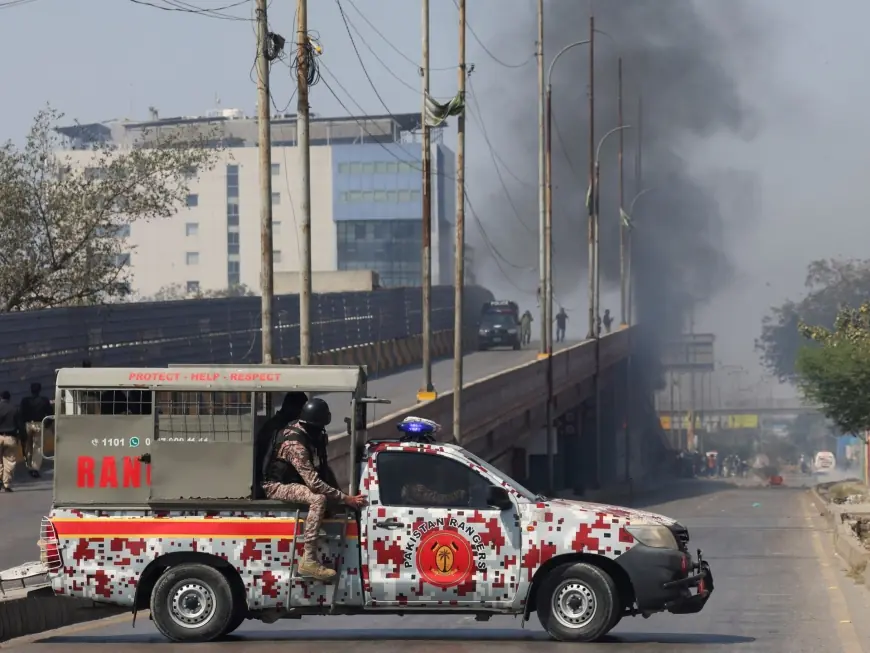
At least nine people have been killed near a United States consulate in karachi after protests erupted following the assassination of Iran’s Supreme Leader Ayatollah Ali Khamenei in joint US-Israeli strikes. The violence marks the most lethal episode in a wave of demonstrations that spread across Pakistan and beyond.
Karachi scene: consulate attack, gunfire and casualties
Hundreds of pro-Iranian protesters tried to storm the United States consulate early on Sunday morning, prompting security forces to open fire in an effort to scatter the crowd. Several others were injured during the clashes. Police surgeon Dr Summaiya Syed said at least nine bodies were brought to Karachi’s civil hospital.
Video footage shared online showed a wounded person being transported by bystanders. Other images captured protesters attempting to breach the US consulate building located on Mai Kolachi Road in the city.
Deaths, injuries and verification of events
Authorities and medical personnel treated wounded people and processed the fatalities at local hospitals. Details remain limited about the identities of those killed and the precise sequence of events that led to the security forces firing on demonstrators. Unclear in the provided context: whether the injured and deceased included security personnel or only protesters.
Protests spread across Pakistan: Skardu, Lahore and Islamabad
Large protests erupted in multiple Pakistani cities. In Skardu, within the Shia-majority Gilgit Baltistan region known for its Himalayan peaks popular with tourists, demonstrators set fire to a United Nations office building. Local government spokesperson Shabbir Mir said a large number of protesters gathered outside the UN office in GB and burned down the building, and that no casualties had been reported there.
In the central city of Lahore, hundreds of protesters gathered outside the US consulate. There were no reports of violence in that city; witness Aqeel Raza said some protesters tried to damage the security gate, hundreds of yards away from the consulate, but police stopped them without using force. A demonstration was also expected near the diplomatic enclave housing the US embassy in the capital, Islamabad, on Sunday afternoon.
Regional reverberations: Baghdad and Indian-administered Kashmir
Demonstrations over Khamenei’s killing also broke out in Iraq and Indian-administered Kashmir. In Baghdad, hundreds of Iraqis, many dressed in black, attempted to storm the compound housing the American embassy despite a heavy security deployment.
A masked protester identified as Ali said the martyrdom of Sayyed Ali Khamenei has hurt us and added, "We are here because we want the withdrawal of the occupying American forces from Iraq. " The comment referenced US-led coalition troops, who have recently reduced their presence and are now mostly stationed in northern Iraq.
In Indian-administered Kashmir, several thousand Shia Muslims joined street demonstrations in the main city of Srinagar. Protesters holding red, black, and yellow flags converged on the main square. Many chanted anti-Israel and anti-US slogans during an emotionally charged but largely peaceful gathering.
Leadership response and national mourning
Iraq’s top Shia Muslim cleric, Grand Ayatollah Ali Sistani, urged Iranians to remain united. The government announced a three-day mourning period for Khamenei, who had been Iran’s top political authority since 1989. These official responses occurred amid the unfolding protests and amid uncertainty about how events might further develop across the region.
What happens next
The situation remains fluid and details may evolve. Protests have already spread to multiple cities and countries, with at least nine dead in karachi and unrest recorded from Skardu to Baghdad and Srinagar. Authorities face the immediate challenge of stabilizing diplomatic zones and preventing further casualties, while political and religious leaders have called for unity and mourning. Unclear in the provided context: potential diplomatic reactions, planned security reinforcements beyond what has been described, or any arrests tied to the violence in karachi.