

























Photos Reveal Poles’ Struggle to Return Home

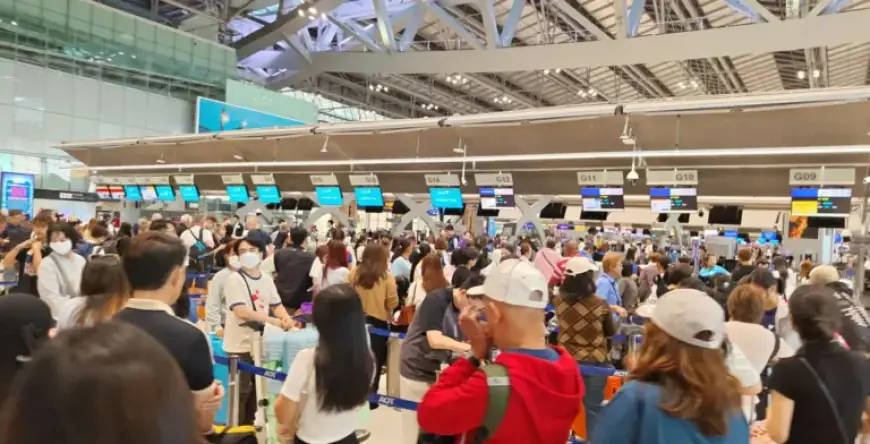
Recent images submitted to Filmogaz.com by Paweł Kołman show the chaos at Bangkok’s Suvarnabhumi Airport. The airport is completely congested, with numerous passengers seeking information about the resumption of flight services. Many travelers have chosen to take refuge in local hotels until the situation stabilizes.
Among those stranded are many Polish citizens, alongside tourists from various European countries, notably the United Kingdom, Sweden, and Germany. According to Kołman, the number of people at the airport continues to rise.
Flight Cancellations and Airspace Closures
The departure board at Suvarnabhumi Airport paints a grim picture. Many flights, especially those heading to the Middle East, have been canceled due to the recent military conflict in the region. The Gulf countries swiftly closed their airspace following escalated tensions, trapping European passengers in Asia.
While travelers from other Asian nations can still depart Thailand without complications, flights for those heading to the Middle East remain grounded. This situation has left many European citizens, especially Poles, stranded.
Personal Accounts from Travelers
Małgorzata, a Polish traveler, shared her experience from Bangkok. “We were supposed to return to Poland on February 28,” she recounted. Her journey included a layover in Sharjah, and all was proceeding smoothly until they noticed luggage being offloaded from their aircraft.
Despite no updates from airport staff, Małgorzata and other passengers remained at the gate, growing increasingly anxious as hours passed. Eventually, they received a delay notification, followed by the announcement of the airspace closure, with promises of updates that never materialized.
After prolonged waiting, passengers were informed they would be transferred to hotels. Attempts to contact the embassy yielded no responses, heightening the uncertainty of their situation. Małgorzata noted that Air Arabia only covered their hotel expenses until 9 PM, leaving them to organize subsequent arrangements themselves.
- Many Polish passengers find themselves in similar situations.
- Families with children and elderly individuals are among those affected.
- Travelers experience high levels of stress and confusion due to lack of information.
Geopolitical Unrest and Its Impact
The crisis stems from a missile attack on Iran by Israel and the United States, which prompted Iran to retaliate. Israel subsequently closed its airspace to civilian flights as a precautionary measure. Travelers have been advised to avoid airports in the region due to ongoing uncertainties.
Major airlines, including LOT Polish Airlines, have also suspended operations from Tel Aviv. Neighboring countries such as Jordan and Bahrain have implemented similar restrictions on their airspaces.
Government and Embassy Guidance
Poland’s Foreign Minister, Radosław Sikorski, noted that several Polish nationals are stranded in the Middle East. For stranded passengers, the Ministry of Foreign Affairs recommends ensuring access to adequate financial resources, maintaining a valid passport, and registering in the Odyseusz system for citizen support. While embassies can offer assistance in emergencies, passenger welfare mainly lies in the hands of airlines.
Airlines are expected to provide basic care—meals, drinks, and accommodation—but passengers should note that compensation for cancellations due to extraordinary circumstances typically does not apply. As tensions continue, stranded travelers remain in limbo, awaiting resolution of the flight disruptions.