

























Planets Aligning Tonight: A Practical Guide for Backyard Skywatchers to Spot the Six-Planet Parade

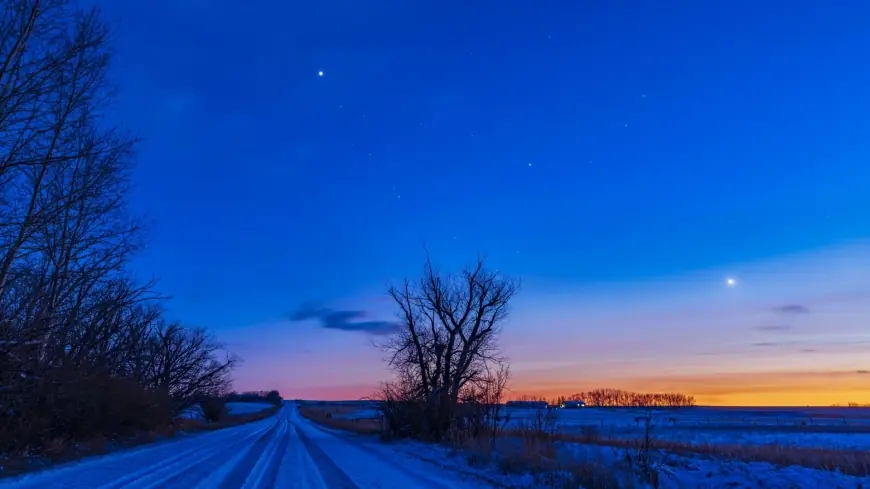
If you plan to watch the planets aligning tonight, this matters most for people with limited horizon views, new stargazers and photographers chasing a tight, low-sky display. The six-planet parade—Jupiter, Saturn, Venus, Neptune, Uranus and Mercury—offers a rare but challenging viewing window: success will hinge on preparation, the right equipment and a little luck with the weather.
What skywatchers should prepare for when the planets aligning tonight
Here’s the part that matters: most of the naked-eye action sits low in the western sky, so stake out a raised location with a clear horizon well before sunset. Your ability to actually spot the planets depends on preparation, equipment and, as always, a spot of luck with the weather. Smartphone stargazing apps can map the local positions for you, reducing guesswork and helping newcomers orient themselves quickly.
The planetary parade — where each planet will appear
The six participants are Jupiter, Saturn, Venus, Neptune, Uranus and Mercury. Expect different visibility challenges for each:
- Mercury: roughly 10 degrees above the late-winter skyline — about the width of a clenched fist at arm's length — with Venus close to its left.
- Venus: close to Mercury but struggling in the glow of the setting sun; both Mercury and Venus will follow the sun out of sight roughly an hour after sunset, briefly brightening as darkness deepens.
- Saturn: positioned less than 10 degrees to the upper left of Venus, with a dim companion nearby.
- Neptune: about two degrees to the right of Saturn but too faint for the unaided eye; low horizon position and solar glare make it a challenge on the nights surrounding Feb. 28.
- Uranus: find it by sweeping a scope across the patch 5 degrees below the Pleiades open cluster, to the right of the "V" in the constellation Taurus in the hours after sunset.
- Jupiter: shines high in the eastern sky, with the waxing gibbous moon below; the moon’s reflected light will obscure stars in the constellation Cancer.
Practical tips: gear, timing and safety
- Location: a raised site with an unobstructed western horizon is essential for the low-sky planets.
- Apps: a smartphone astronomy app using augmented reality helps pinpoint planets, constellations and meteor radiants.
- Telescopes: Neptune and Uranus will need magnification. Under dark skies, a telescope with an aperture of 8 inches (200 millimeters) or more can reveal Neptune’s tiny bluish disk.
- Safety: because Neptune sits low and near the sun’s glare on nights around Feb. 28, ensure the sun is fully below the horizon before aiming any telescopic equipment.
Timing, the moon and observational hurdles
Mercury and Venus drop toward the horizon roughly an hour after sunset and may become briefly more visible as the sky darkens. Uranus and Neptune are best targeted in the hours following sunset with a scope and precise aiming. The waxing gibbous moon sits below Jupiter and will wash out fainter stars in Cancer, reducing contrast for that part of the sky. The next factor is weather—again, hope it doesn't rain on your parade.
Community, coverage and further resources
There are ways to stay involved and learn more: a monthly entertainment newsletter and a skywatching newsletter highlight must-see night sky events, moon phases and notable astrophotos. A Sci-Fi Reader's Club offers a short story each month and a virtual community for enthusiasts. Note: when purchases are made through links on the organizing site, an affiliate commission may be earned. The broader tagline for ongoing updates is breaking space news, plus the latest on rocket launches, skywatching events and more.
It’s easy to overlook, but the finer points—precise horizon clearance, exact local timings and clear weather—will determine whether you get a memorable sighting or a brief glimpse. If you’re wondering why this keeps coming up, it’s because the display mixes naked-eye viewing with targets that require optics and local planning.
One more practical aside: award-winning night sky photographer Josh Dury grappled with the sheer scope of the scene along with the glow of the setting sun and other challenges to capture a — unclear in the provided context.
The real test will be combining a clear westward view, accurate app-based aiming and patience in the hour after sunset. Good planning will turn a frustrating lineup into a satisfying planetary parade.