























Novak: Peers Point to an Underrated Serve as the Secret Weapon Behind His Longevity

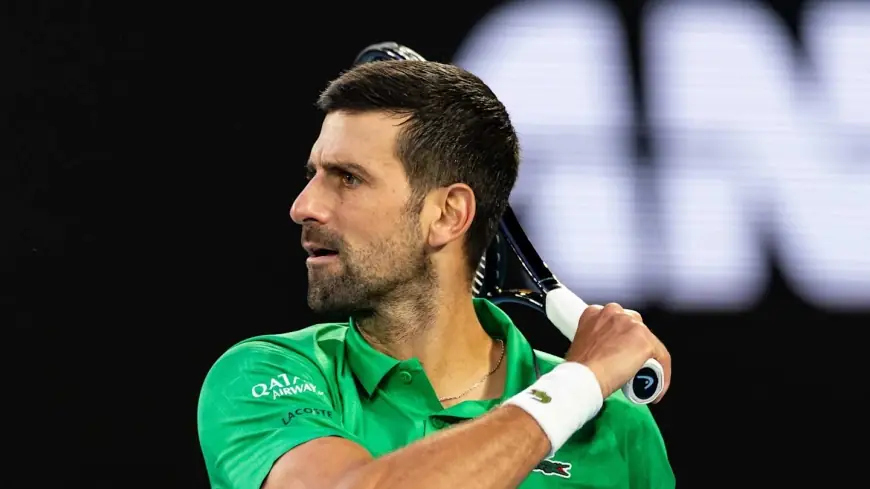
Recent commentary from retired tennis player Christopher Eubanks has renewed attention on novak Djokovic's serve, arguing that many current players on tour see it as an underrated element of his game. That view matters because it reframes one of the staples of an elite career into an underappreciated advantage that peers recognize.
Why Novak's serve is being called underrated
Djokovic is widely presented in the context as a 24-time Grand Slam winner and one of the most complete players in the sport's history. Within that near-flawless profile, Christopher Eubanks has highlighted that the serve is an aspect that does not receive the credit it deserves from observers on tour. Eubanks recently commented on this topic while appearing on Andy Roddick's podcast, Served, and he noted that many current players believe Djokovic's serve is underrated.
What Christopher Eubanks said and his perspective
Christopher Eubanks, identified in the provided context as a retired tennis player, mentioned the view held by many players while speaking on the podcast Served. The context makes clear that Eubanks never had a chance to face Djokovic during his tennis career, and that his remarks reflect impressions shared by a number of ATP Tour peers rather than direct head-to-head experience.
Serve performance: numbers for Djokovic, Federer and Nadal
The contextual information offers career serve statistics that help explain why peers might elevate Djokovic's serve. The numbers stated are:
| Player | First serves landed | First-serve points won | Second-serve points won |
|---|---|---|---|
| Novak Djokovic | 65% | 74% | 55% |
| Roger Federer | 62% | 77% | unclear in the provided context |
| Rafael Nadal | 68% | 72% | unclear in the provided context |
These figures show that Djokovic lands a high share of first serves (65%) and converts a large proportion of those into points (74%), while his points won on second serve fall to 55%. Federer is shown with a slightly lower first-serve landing percentage (62%) but a higher first-serve points-won rate (77%). Nadal is shown with the highest first-serve landing rate (68%) but a lower first-serve points-won rate (72%). What follows next in the original context is incomplete and therefore unclear in the provided context.
How the serve fits into Djokovic's broader profile
Beyond raw numbers, the context frames Djokovic as both extraordinarily complete and not without a recurring shortcoming: a tendency to lose focus or composure in tight matches, which leads to a significant number of errors. At the same time, he is characterized as one of the most mentally tough players in tennis, a trait noted as essential for accumulating so many Grand Slam titles.
Implications: why peers might understate the serve publicly
The combination of a highly effective first-serve profile and a reputation for overall completeness helps explain why contemporary players might privately view Djokovic's serve as underrated. In the provided context, that perspective comes from Eubanks' remarks on Served and is framed as a consensus among a number of current tour players rather than new statistical discovery.
Because the context is a closed set of facts, further developments or expanded analysis are unclear in the provided context and may evolve as additional commentary or data emerge.