

























Is Dubai Airport Closed — is dubai airport closed as flights cancelled after US-Israeli strikes

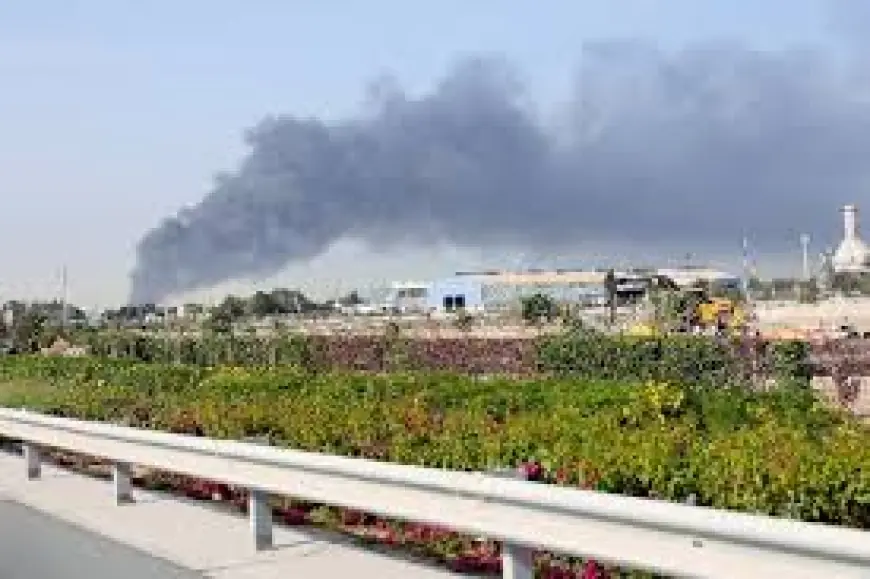
is dubai airport closed has become a pressing question after Emirates suspended all operations in and out of Dubai and key Gulf airspace closures left hundreds of thousands of travellers stranded or diverted. The disruption follows strikes by the US and Israel on Iran and subsequent retaliatory attacks that prompted widespread airport and airspace shutdowns.
Is Dubai Airport Closed now?
Emirates suspended all operations in and out of Dubai, leaving passengers around the world stranded. Emirates said its operations to and from Dubai would be suspended until 15: 00 local time (13: 00 GMT) on Monday, a suspension that was described in other statements as lasting until 3pm UAE time on Monday. Flights in and out of Dubai International and Al Maktoum International airport in Dubai were suspended, and at least one of the region's major hubs has sustained damage.
Flights halted and diversions
Airlines continued to cancel and divert services serving the Middle East after the US and Israel launched strikes against Iran and Iran launched retaliatory attacks on the Gulf states. British Airways and Virgin Atlantic were among carriers that grounded flights. British Airways cancelled services to Tel Aviv and Bahrain until Wednesday and warned services between Heathrow and Abu Dhabi, Amman, Bahrain, Doha, Dubai or Tel Aviv could be affected for several days. Virgin Atlantic suspended services between Heathrow and Riyadh on Sunday, after earlier cancelling flights from Heathrow to Dubai on Saturday and Sunday, and warned flights to India, Saudi Arabia and the Maldives may take longer due to rerouting around the affected region.
Casualties and damage reports
Major international airports in the region became targets of Iran's retaliatory strikes. One person has been killed and 11 others were injured at airports in Dubai and Abu Dhabi; four of those injuries were among members of staff at Dubai International. Separate reporting said Dubai's international airport and its landmark Burj Al Arab hotel sustained damage and four people were injured. A post from Abu Dhabi Airports on a social platform said an incident at Zayed International Airport in the UAE capital resulted in one death and seven injuries; that post was later deleted.
Airspace closures and timings
Countries across the region closed their airspace. Airspace over Iran, Israel, Iraq, Qatar, Bahrain, Kuwait, Syria and the UAE remained closed on Sunday morning, with a partial closure in Saudi Arabia; Jordanian and Lebanese airspace remained open but with limited flight activity. Other accounts noted Israel, Qatar, Syria, Iran, Iraq, Kuwait and Bahrain had shut their airspace, and there were no flights over the UAE after a government announcement of a "temporary and partial closure. " A tracking service issued a notice extending closure of Iranian airspace until at least 8. 30am UK time on Tuesday. Etihad suspended flights out of Abu Dhabi until 02: 00 local time and described suspensions as running until 2am UAE time on Monday. Qatar Airways said it would resume operations when the Qatar Civil Aviation Authority announced the safe reopening of Qatari airspace and that it would provide a further update by 9am Doha time on Monday.
Scale of cancellations and passenger impact
Key transit hubs in Dubai, Abu Dhabi and Doha closed, and more than 1, 000 flights by Middle Eastern carriers were cancelled. On Sunday, more than 3, 400 flights were cancelled across the seven main airports in the Middle East. The three major airlines that operate at those hubs — Emirates, Qatar Airways and Etihad — typically have about 90, 000 passengers a day passing through those airports, and Dubai is the world's busiest airport for international traffic. Of about 4, 218 flights scheduled to land in Middle Eastern countries on Saturday, 966 (23%) were cancelled; that figure rose above 1, 800 if outbound flights were included. A global tracking service showed more than 18, 000 flights had been delayed worldwide and more than 2, 350 cancelled as of 10. 30pm GMT on Saturday.
Passenger experiences and warnings
The Foreign Office warned British citizens against all but essential travel to Bahrain, Kuwait, Qatar and the United Arab Emirates and advised those already there to shelter. Travelers described disruption: Richard and Hannah, from London, had been en route to Oman but were stuck in Bahrain. "In the early hours of this morning a drone attacked the airport so we can't reach Oman this evening as planned, " Hannah said on Sunday, describing an "uneasy 24 hours. " Given the situation in the region could escalate, Richard said they were looking to return home. An airline industry analyst, Henry Harteveldt, warned travellers to prepare for delays or cancellations over the next few days as the attacks evolve and hopefully end.
The strikes and counterstrikes have forced airlines to reroute flights around the conflict, with many routes now flying south over Saudi Arabia; this will add hours to journeys and consume additional fuel, increasing costs for carriers. The full economic and operational impact remains unclear in the provided context.
Iran confirms killing of Ayatollah Khamenei. The situation remains fluid, with official reopenings and further updates tied to declarations by civil aviation authorities across the region.