

























Full Moon March 2026: The Blood Worm Moon Total Lunar Eclipse Arrives Tuesday March 3

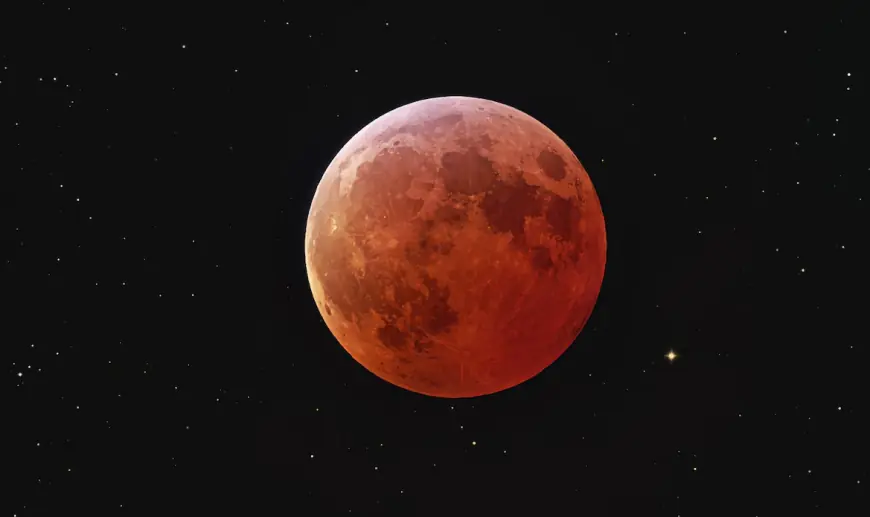
The next full moon is just two days away — and it is one of the most significant lunar events in years. The March 2026 full moon, known as the Worm Moon, peaks at 6:38 a.m. ET on Tuesday, March 3, 2026, and arrives simultaneously with a total lunar eclipse that transforms it into a spectacular Blood Moon. Here is everything you need to know about the full moon March 2026 and how to watch it.
Full Moon March 2026: The Worm Moon Explained
The Full Worm Moon reaches its peak on the morning of Tuesday, March 3, 2026, at 6:38 a.m. ET. This year's March Moon is especially notable because it coincides with a total lunar eclipse. The eclipse reaches its greatest point at 6:33 a.m. ET — just minutes earlier — and during totality, the Moon takes on a coppery red or orange glow. You don't need any special equipment to enjoy this celestial pairing. Simply step outside and watch as the full moon changes color over several hours.
The March full moon is known as the Worm Moon. For many years it was believed this name referred to earthworms appearing as the soil warms in early spring — drawing birds such as robins and signaling the changing season. Historical research suggests another explanation: in the 1760s, Captain Jonathan Carver recorded that the name referred to beetle larvae which emerge from thawing tree bark at this time of year. Either way the name reflects the same idea — the land is beginning to wake up.
The Moon will look full for about three nights — from around March 2 through March 4 — so even if clouds block your view on the exact peak morning of March 3, you will have multiple opportunities to enjoy the Worm Moon's brilliance.
Blood Worm Moon: Total Lunar Eclipse Times for March 3
The eclipse officially starts at 3:43 a.m. ET as the Moon first moves into the outer regions of Earth's shadow, called the penumbra. Over the next hour the Moon will slowly begin to darken — subtle at first, so give it time. At 4:49 a.m. ET the Moon reaches the darker inner shadow called the umbra, growing noticeably darker. Totality — the full Blood Moon — begins at 6:03 a.m. ET.
During a total lunar eclipse, Earth's shadow gradually moves across the full moon, causing it to darken and take on a warm, coppery glow — often called a Blood Moon. This color change happens slowly and can be safely watched with the naked eye. No glasses, filters, or telescopes are required.
After this Blood Moon, our natural satellite will not fully disappear into Earth's shadow again for nearly three years — until a rare trifecta of total lunar eclipses in 2028 and 2029 ends the drought.
Full Moon March 2026 Calendar: Every Full Moon This Year
Here is the complete 2026 full moon calendar. The Wolf Moon peaked January 3 at 5:03 a.m. ET. The Snow Moon peaked February 1 at 5:09 p.m. ET. The Worm Moon peaks March 3 at 6:38 a.m. ET alongside a total lunar eclipse. The Pink Moon peaks April 1 at 10:12 p.m. ET. The Flower Moon peaks May 1 at 1:23 p.m. ET. The Blue Moon peaks May 31 at 4:45 a.m. ET. The Strawberry Moon peaks June 29 at 7:57 p.m. ET. The Buck Moon peaks July 29 at 10:36 a.m. ET. The Sturgeon Moon peaks August 28 at 12:19 a.m. ET alongside a partial lunar eclipse.
Full Moon March 2026 Astrology: Virgo Worm Moon and What It Means
The March 2026 Worm Moon is not just a full moon — it peaks with the Moon at 12 degrees 51 minutes Virgo opposite the Sun at 12 degrees 53 minutes Pisces, placing it at a turning point in the Pisces-Virgo nodal cycle. This axis in astrology governs the tension between idealism and practicality, spiritual surrender and daily discipline.
No matter your sign, astrologers advise slowing down and reflecting under this lunation — taking the lessons learned into the coming spring season rather than rushing forward into new commitments during the eclipse's charged energy window.
Where to See the March 2026 Full Moon Blood Worm Moon
The Blood Worm Moon is best seen from western North America, the Pacific region, eastern Asia, Australia, and New Zealand. In Europe and Africa the eclipse will not be visible at all. East Coast viewers should find a clear western horizon before 6:00 a.m. ET on March 3 to catch totality before the Moon sets at sunrise.
Set your alarm for before 4:00 a.m. ET on Tuesday, March 3, head somewhere with a clear unobstructed western horizon, and look up — the full moon March 2026 Blood Worm Moon will do the rest entirely on its own.