























Noel Gallagher booed and censored after Songwriter of the Year win at BRITs in Manchester

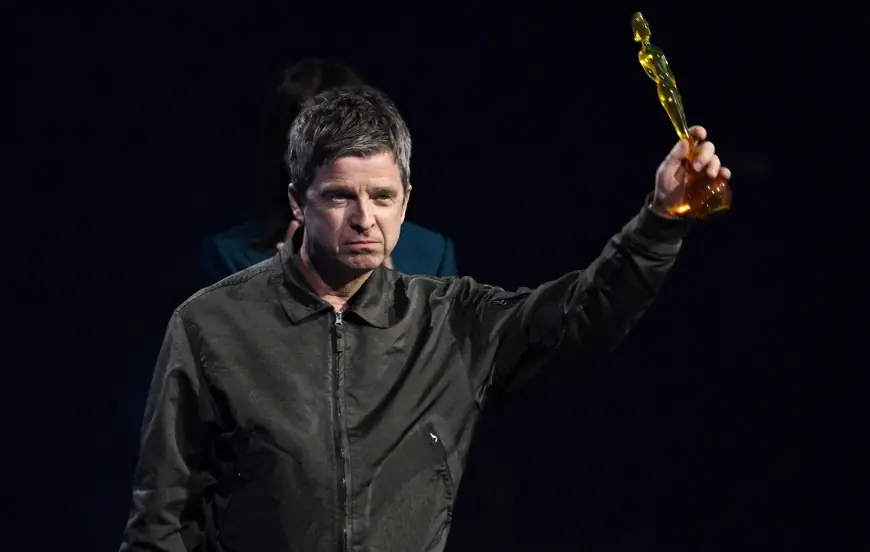
Noel Gallagher accepted the Songwriter of the Year award at the BRIT Awards in Manchester, praising his brother Liam and the band members who brought his songs to life. The win, delivered on a night when the ceremony moved outside London for the first time in its history, sparked backlash over Gallagher’s recent output and prompted both boos and censorship of his acceptance speech.
Noel Gallagher’s acceptance at Co-op Live Arena
The Oasis guitarist collected the Songwriter of the Year prize on the Saturday night ceremony at the Co-op Live Arena in Manchester, the event held on February 28. He was presented the award by Primal Scream frontman Bobby Gillespie in front of a packed crowd. A video package before his stage appearance included a personal message from Pep Guardiola, manager of Manchester City; elements of that presentation drew a mixed response from the audience.
Speech content and broadcast censorship
As he took the stage, Noel Gallagher opened with: “Yes Manchester. I’m gonna start by saying, I’ve gotta thank my brother, and Bonehead, Guigsy, Tony McCarroll, Alan White, Gem and Andy – they brought those songs to life. Without them, I’d just be a singer-songwriter, and no-one gives a shit about singer-songwriters. ” He went on to thank the public for keeping the songs alive “for the last 35 years” and closed with: “Have a great night. Up the fucking Blues. ” ITV censored parts of the speech for broadcast. The censorship followed audible reactions from the audience, including booing that occurred within seconds of his acceptance.
Liam Gallagher’s response on X and family acknowledgement
Liam Gallagher did not attend the BRITs, but minutes after his brother’s speech posted on X: “All hail the greatest songwriter this country has ever seen since Lennon n McCartney ps my name is liam x”. Noel had publicly acknowledged Liam during his speech, and the brothers’ fraught history since Oasis split in 2009 was referenced by Noel when he credited Liam’s distinctive voice and presence as a crucial part of their shared musical legacy. The article that covered the ceremony lists Noel’s age as 58 and Liam’s age as 53.
Selection rationale, sales claims and the controversy over new material
BRITs organisers selected Gallagher for Songwriter of the Year on the grounds that he has “permeated the fabric of British culture for over 30 years” and written songs that continue to resonate globally. That rationale coexisted with criticism: commentators noted he had not released any new songs over the past 12 months, and Noel himself admitted on talkSPORT that he “hasn’t written a song for two years. ” He defended the award by pointing to record sales, saying “we sold a million records last year, ” and challenged detractors to “meet me there” on the red carpet, taunting rival songwriting teams as “those wet wipes” and referencing “all 11 of them. ”
Oasis reunion tour, studio work and uncertain future projects
The ceremony followed a hugely successful Oasis reunion tour last year, which Noel referenced in thanking the rest of the Roll With It band. He has since said he is back in the studio, but it remains unclear in the provided context whether that work is for an Oasis project or a solo venture. During his acceptance he also suggested the Manchester location influenced the choice, saying he thought organisers were “desperate to get someone from Oasis up there ’cos it is in Manchester. ”
BRITs context: history and other winners
The BRIT Awards took place in Manchester for the first time in its long history; one account described the ceremony as the 46th edition taking place at Co-op Live Arena for the first time on Saturday, while another noted it was the first time the BRITs had been held outside London in its 47-year history. The Songwriter of the Year prize, which recognises “exceptional songwriting, ” has previously been awarded to artists including Ed Sheeran, Kid Harpoon, RAYE and Charli XCX. Olivia Dean dominated the night by winning four awards, including Artist of the Year, Song of the Year and Album of the Year.
What makes this notable is the collision between legacy recognition and current output: organisers framed the award as a cultural acknowledgement spanning more than three decades, while listeners and some critics focused on a recent absence of new material. That tension played out onstage, in the crowd’s divided reaction, and in the public exchanges that followed.