
























Doha among Gulf hubs closed as strikes and airspace shutdowns strand hundreds of thousands

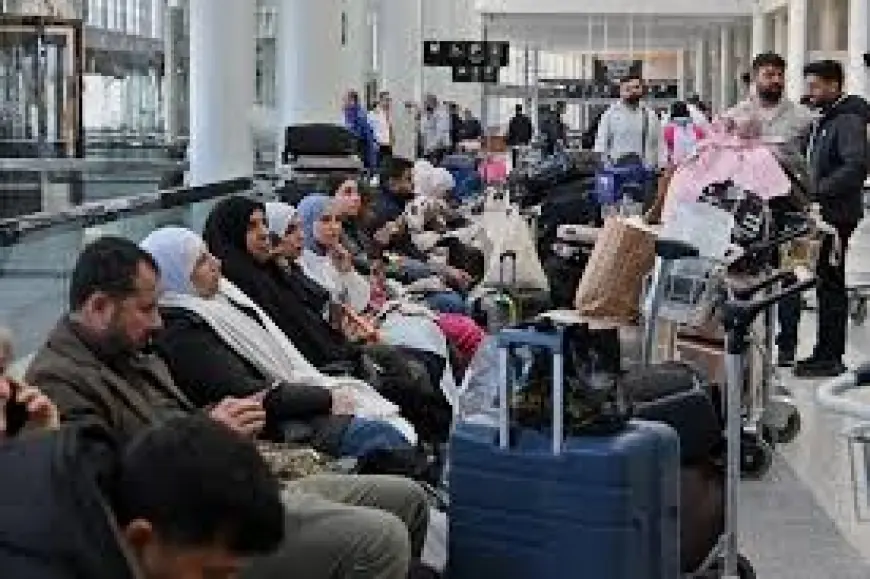
US and Israeli strikes on Iran have prompted widespread airspace closures that forced the temporary shutdown of major Gulf transit hubs, including doha, leaving hundreds of thousands of travellers stranded or diverted. The disruption to long‑haul routes and hub operations has prompted airline suspensions and government travel warnings across the region.
Emirates suspends Dubai operations and Dubai International sustains damage
Emirates has suspended all operations in and out of Dubai until 15: 00 local time (13: 00 GMT) on Monday, with flights at Dubai International and Al Maktoum International halted and passengers stranded worldwide. Dubai International and the landmark Burj Al Arab hotel sustained damage, and four people were injured at the Dubai site. Across Dubai and Abu Dhabi airports, one person was killed and 11 others injured; four of those injured at Dubai International were members of staff.
Etihad and Abu Dhabi: Zayed incident and service suspensions
Etihad suspended flights to and from Abu Dhabi until 02: 00 local time on Monday. Abu Dhabi Airports posted that an incident at Zayed International resulted in one death and seven injuries, a post it later deleted. British Airways cautioned that services between Heathrow and Abu Dhabi, Amman, Bahrain, Doha, Dubai or Tel Aviv could be affected for several days, and it has cancelled services to Tel Aviv and Bahrain until Wednesday.
Doha and Qatar Airways halt operations as Qatari airspace closes
Qatar closed its airspace and halted operations at its main hub; Qatar Airways said it will resume flights only when the Qatar Civil Aviation Authority declares Qatari airspace safe and will provide a further update by 09: 00 Doha time on Monday. Flight tracking data showed no flights over the United Arab Emirates after a government announcement of a temporary and partial airspace closure, a development that coincided with suspended operations at the airports in Dubai, Abu Dhabi and Doha.
Flight cancellations and global knock‑on effects tracked by FlightRadar24, Cirium and FlightAware
Flight tracking and analytics services recorded severe disruption: more than 3, 400 flights were cancelled across seven main Middle Eastern airports, and maps showed airspace over Iran, Iraq, Kuwait, Israel, Bahrain, the UAE and Qatar was virtually empty. An aviation analytics firm estimated that the three major Gulf carriers operating at Dubai, Abu Dhabi and Doha typically move about 90, 000 passengers a day. Of roughly 4, 218 flights scheduled to land in Middle Eastern countries on Saturday, 966 (23%) were cancelled; the tally rose above 1, 800 when outbound flights were included. Separately, a global tracker logged more than 18, 000 delayed flights and over 2, 350 cancellations worldwide as of 22: 30 GMT on Saturday. A new notice to airmen extended the closure of Iranian airspace until at least 08: 30 UK time on Tuesday.
Foreign Office warning, airline route changes and stranded travellers
The Foreign Office has warned British citizens against all but essential travel to Bahrain, Kuwait, Qatar and the United Arab Emirates and advised those already in the region to shelter. Airlines across Europe, Asia and the Middle East have cancelled or rerouted services: Virgin Atlantic suspended Heathrow–Riyadh services and earlier cancelled Heathrow–Dubai flights, and warned that routes to India, Saudi Arabia and the Maldives may take longer because of rerouting. A traveller stranded in Bahrain described a drone attack on the airport that left plans to reach Oman disrupted and prompted consideration of returning home. Henry Harteveldt, an industry analyst, warned there is no way to sugarcoat the outlook for travellers and urged preparation for delays or cancellations over the coming days.
What makes this notable is the concentration of global connectivity through a few Gulf hubs: the simultaneous suspension of operations at Dubai, Abu Dhabi and Doha — which together typically handle tens of thousands of passengers daily — has produced cascading cancellations and reroutings that are measurable in thousands of flights and felt worldwide. Iran has confirmed the killing of Ayatollah Khamenei in the broader sequence of events that prompted the strikes, a development that has further heightened the regional security impact.