
























World War III Fears Erupt After Operation Epic Fury: Is This the Start of World War 3?

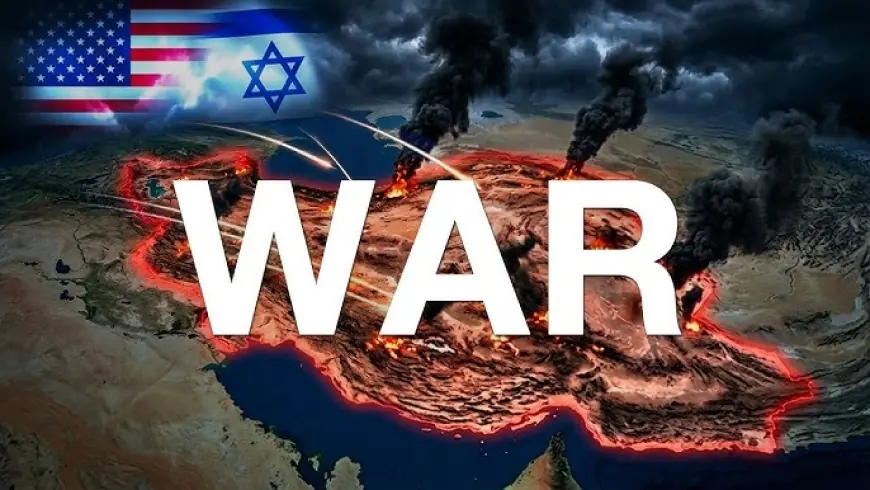
The question spreading faster than any other across the internet on Sunday, March 1, 2026 ET is also the most consequential one in modern history: is this World War III? The joint US-Israel Operation Epic Fury against Iran — the assassination of Supreme Leader Ali Khamenei, the Gulf-wide missile campaign, the Strait of Hormuz closure, and the retaliatory strikes on American bases — has forced world leaders, analysts, and ordinary citizens to confront a scenario most hoped would never arrive.
How We Got Here: Operation Epic Fury and the World War III Trigger Point
On February 28, 2026, Israel and the United States launched a joint attack on various sites in Iran. The operation, codenamed Roaring Lion by Israel and Operation Epic Fury by the United States Department of Defense, targeted key officials, military commanders, and facilities — including the assassination of Supreme Leader Ali Khamenei. The attack was preceded by the largest US military buildup to have occurred in the Middle East since the 2003 invasion of Iraq.
Trump deployed two aircraft carriers — the USS Gerald R. Ford and the USS Abraham Lincoln — with thousands of troops, dozens of warplanes, and accompanying warships to waters off Iran ahead of the strike. The operation came just days before a second round of nuclear talks had been scheduled to be held in Geneva, following Omani-mediated indirect negotiations.
World War 3 fears exploded across global social media within hours of the strikes being confirmed. US President Donald Trump confirmed that "major combat operations" were underway, while Israel acknowledged its role in the attack. Social media was flooded by speculation that a global conflict could be imminent.
World War III Alliance Lines: Who Is With the US and Who Is Against It
As Operation Epic Fury and Israel's Operation Lion's Roar unleashed devastation across Iran, the conflict immediately polarized the globe. Much like the lead-up to previous world wars, regional actors and global superpowers rapidly fell into two distinct geopolitical camps. The primary offensive bloc is firmly anchored by the United States and Israel, backed by intelligence and logistical support of the broader Western alliance, with NATO allies providing diplomatic cover and early-warning radar support.
Russia and China swiftly condemned the US-Israeli strikes at the United Nations, maneuvering to capitalize on the chaos to advance a multipolar world order. Both nations share a mutual interest in seeing American military power bogged down in the Middle East — Moscow relies heavily on Iranian drone technology for its own conflicts, while Beijing relies on heavily discounted Iranian oil.
North Korea condemned the strikes in the strongest terms, describing them as shameless and gangster-like behavior and calling the military action against Iran a war of aggression. Norway declared the attack not in line with international law, while Oman's foreign minister urged the United States to not get sucked in further, saying directly: "This is not your war."
World Leaders React: Europe Holds Emergency Meetings, UN Security Council Convenes
World leaders reacted warily to US and Israeli strikes on Iran. European leaders held emergency meetings and took measures to protect their citizens in the Middle East, with key leaders calling for a negotiated settlement between Iran and the United States.
The central questions echoing across every capital on Earth are the same: How long will it last? Will it grow? What will the death of Khamenei mean for global security? Those questions are reverberating across the Middle East and the planet as world leaders react with a mixture of alarm and calculated silence.
Al Jazeera analysts drew sharp comparisons between Operation Epic Fury and the 2003 Iraq invasion, noting that in 2026 the US is operating in stark diplomatic isolation without a coalition of the willing. Unlike 2003, when US intelligence was at least shaped to align with the stated case for war, in 2026 the intelligence assessments actively contradict the Trump administration's public justifications.
Gulf States Caught in the Middle: Saudi Arabia, UAE, and Bahrain's Impossible Position
Nations like Saudi Arabia, the UAE, and Bahrain find themselves in a terrifying geopolitical dilemma. While they have historically relied on the US security umbrella and secretly favored the degradation of Iran's military power, they are now directly in the crosshairs of Tehran's retaliation. As US bases within their borders are struck, these nations are desperately trying to maintain defensive postures without officially joining the offensive coalition, fearing total economic devastation.
Russia could activate its alliances if escalation continues, European officials fear Trump's soft approach toward Moscow will only embolden further aggression, and the Baltic states have already begun withdrawing from landmine treaties to shore up border defenses as they watch the Middle East crisis unfold.
Is This Actually World War III? What Experts Say
Iran has nowhere near the capabilities of the United States military and is even more vulnerable after last year's war with Israel and recent anti-government protests. However, it still possesses hundreds of missiles capable of hitting Israel and has already demonstrated willingness to strike American bases across the Gulf simultaneously.
Iran's top security official Ali Larijani announced a temporary leadership council following Khamenei's death and accused the United States and Israel of trying to dismantle Iran entirely, warning secessionist groups of severe consequences if they take action while threatening that Trump and Netanyahu had crossed a red line and would pay for it.
The critical question is not only whether escalation between Iran and the United States seems imminent, but whether the world is prepared for the consequences if restraint fails entirely. Analysts note that what separates a regional conflict from a genuine World War III scenario is whether Russia, China, or a NATO member is drawn into direct military confrontation — a threshold that has not yet been crossed, but has never felt closer.